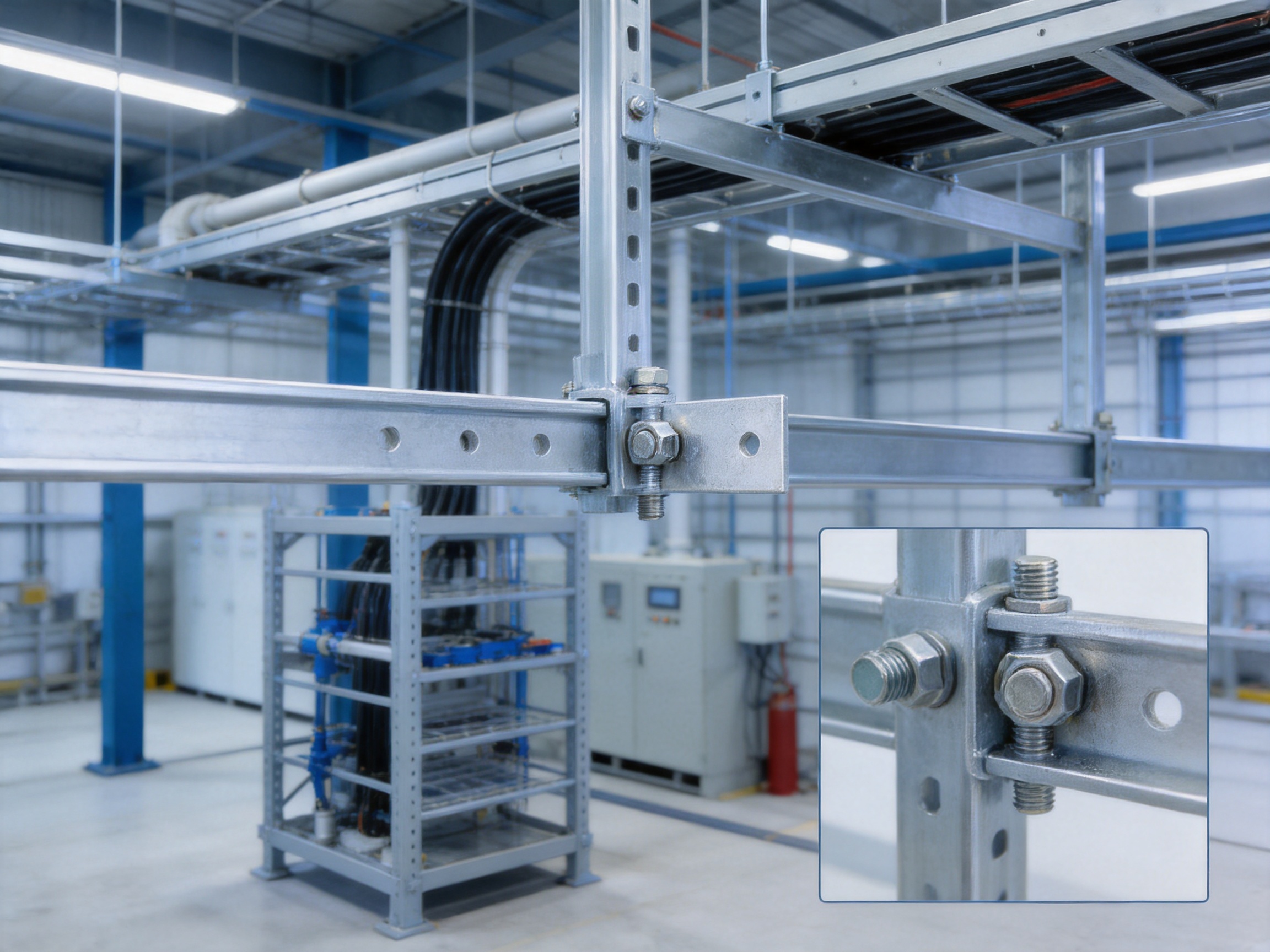
Modern assembly systems depend on small components that deliver dependable performance under demanding conditions. Among these components, the three-hole flat plate strut channel connector provides a simple but highly effective solution for joining channels, frames, brackets, supports, and other structural members. Its flat profile, evenly spaced holes, and strong steel construction make it suitable for construction, machinery, automotive, electrical support systems, equipment installation, and general industrial assembly.
The three-hole flat plate is designed to make structural connections faster, more consistent, and easier to maintain. Instead of fabricating a special joining plate for every installation, engineers and installers can use a standardized fitting that is compatible with common bolts, screws, threaded rods, and strut channel systems. This reduces preparation time, simplifies inventory management, and supports efficient field installation.
Manufactured by Lizhan Hardware Co., Ltd., this product is developed for customers that require dependable stamped metal components, repeatable dimensions, and flexible supply support. The company operates a factory in Zhejiang, China, together with a warehouse in Thailand, allowing it to support international customers with manufacturing, export, and regional distribution capabilities.
The following article explains the product design, material advantages, manufacturing process, quality considerations, application benefits, customization possibilities, and purchasing factors associated with the three-hole flat plate strut channel connector.
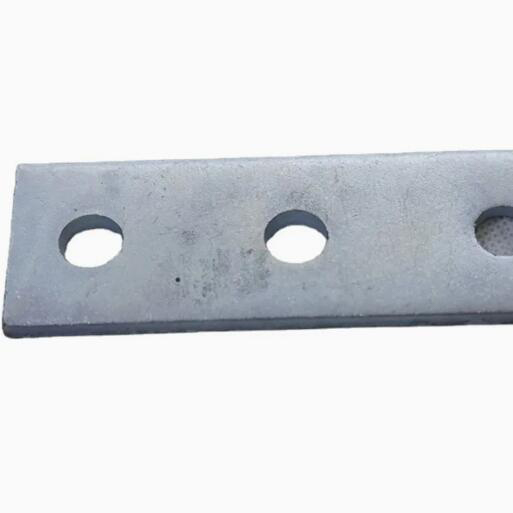
Three Hole Flat Plate Strut Channel General Fittings 3 Hole Splice Plate Hole Channel Connector
1. What Is a Three-Hole Flat Plate Strut Channel Connector?
A three-hole flat plate strut channel connector is a flat metal joining component with three precision-formed or precision-cut holes. The holes are arranged to support the connection of two or more structural members, typically through bolts, screws, nuts, washers, or threaded fasteners. Depending on the installation design, the plate may be positioned across a channel joint, beneath a frame member, against a bracket, or between two surfaces requiring reinforcement.
The product is also commonly described as a three-hole splice plate, flat channel connector, general fitting, joining plate, or structural reinforcement plate. Although the part has a relatively simple shape, its performance depends on several important details, including material grade, thickness, hole location, flatness, edge quality, surface treatment, and dimensional consistency.
In practical use, the connector performs several functions. It can join separate strut channel sections, strengthen a corner or intersection, reinforce a light structural frame, provide a mounting interface, or help align components during assembly. Its three-hole configuration creates multiple fastening points without adding unnecessary material or excessive installation complexity.
Unlike a custom-fabricated plate, a standardized three-hole fitting can be stored and used whenever a compatible connection is needed. This makes it useful for manufacturers, contractors, maintenance teams, equipment builders, and distributors that need reliable general-purpose hardware.
2. Product Design and Functional Characteristics
2.1 Flat Plate Geometry
The flat plate design provides a broad contact surface between the connector and the components being joined. A broad contact area helps distribute fastening pressure and reduces the concentration of force around a single point. This is particularly useful when the connected members are made from thin sheet metal, strut channel, light structural steel, or fabricated frames.
The plate geometry is intentionally straightforward. A simple profile can be produced efficiently, inspected easily, and installed without specialized tools. It also allows the same fitting to be used in many orientations, including horizontal, vertical, overhead, and side-mounted positions.
2.2 Three Evenly Spaced Holes
The three-hole configuration offers a balance between connection strength and material efficiency. One hole can be used to establish the primary attachment point while the remaining holes provide additional retention and resistance against movement. In other assemblies, all three holes can be used to secure two overlapping members or to create a rigid connection across a channel joint.
Even spacing is important because it supports predictable assembly and helps installers align the plate with existing channel slots or pre-drilled holes. Consistent hole positioning also improves interchangeability. When multiple connectors are used in the same project, dimensional consistency helps ensure that the components fit together without repeated adjustment.
2.3 Reinforced Fastening Area
A properly manufactured flat plate should maintain sufficient material around each hole. Adequate edge distance helps reduce the risk of deformation, tearing, or localized failure during tightening and service. The reinforced fastening area also supports more stable contact with washers and fastener heads.
For applications involving vibration, repeated loading, or equipment movement, the plate can be combined with suitable washers, locking nuts, thread-locking products, or other retention methods. The connector itself provides the joining surface, while the complete fastening system should be selected according to the expected load, environment, and installation standard.
2.4 Compatibility with General Assembly Systems
The three-hole flat plate is intended for broad compatibility with common industrial assembly methods. It can be used with strut channel systems, support rails, metal frames, equipment bases, brackets, cable support structures, and fabricated assemblies. Its general-purpose design allows engineers to incorporate it into both new construction and repair work.
Compatibility does not depend only on the number of holes. Buyers should also confirm hole diameter, hole spacing, plate thickness, material grade, surface treatment, and the dimensions of the channel or frame being joined. Lizhan Hardware can support OEM and ODM requirements based on drawings or samples when a standard configuration does not meet a project’s needs.
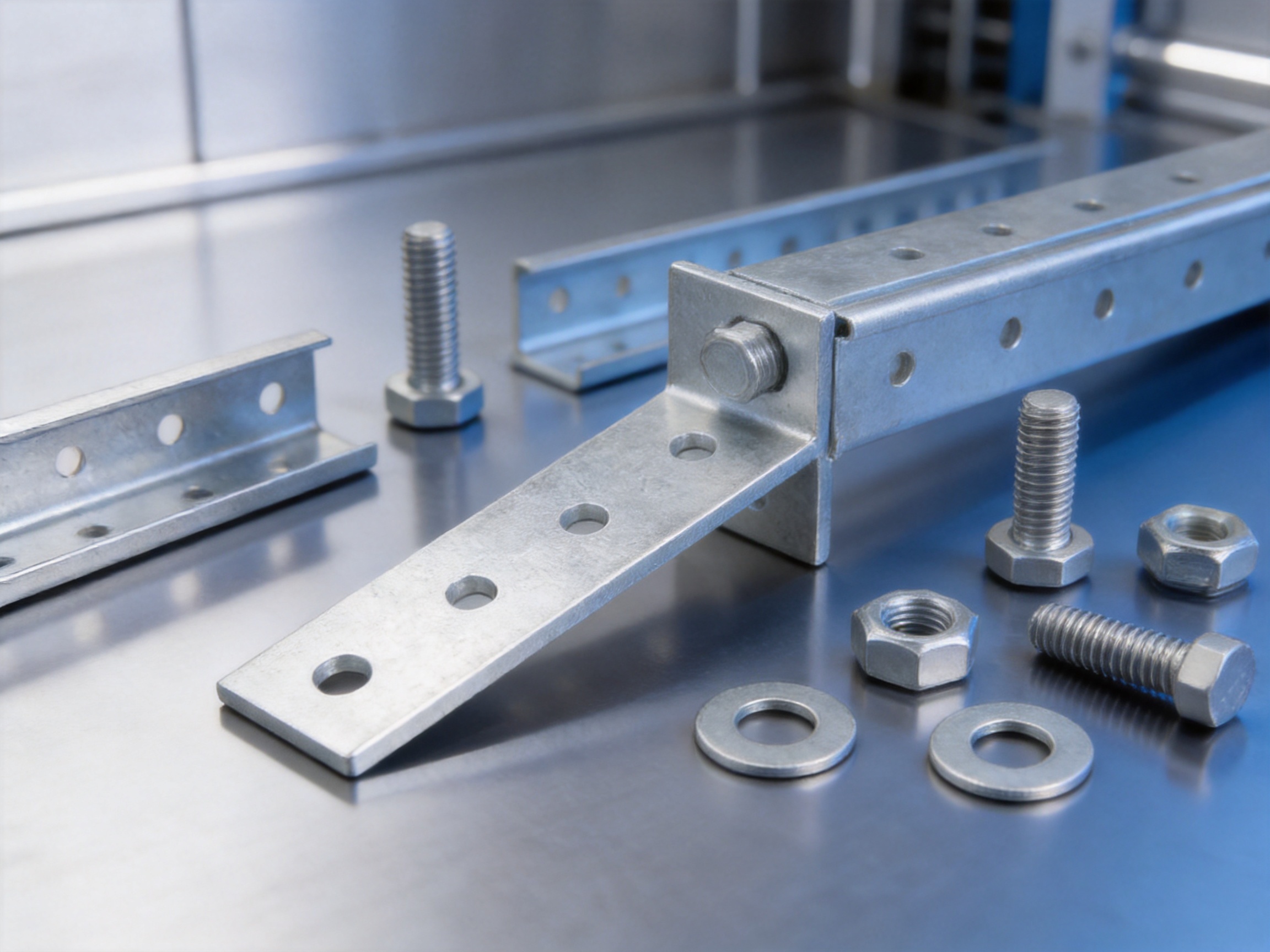
3. Material Selection and Corrosion Protection
Material selection has a direct effect on the service life and reliability of any stamped metal fitting. The three-hole flat plate is manufactured from high-grade steel selected for strength, formability, and suitability for industrial use. Steel provides a strong foundation for a compact connector while remaining economical for large-volume production.
High-quality steel also supports consistent stamping and machining results. A controlled material structure helps reduce variation in hole quality, edge condition, and plate flatness. For customers purchasing thousands of pieces, this consistency is important because small dimensional variations can create problems during automated or semi-automated assembly.
3.1 Surface Treatment
Steel components used in construction, equipment rooms, workshops, warehouses, and outdoor installations may be exposed to humidity, condensation, dust, chemicals, or handling damage. An anti-corrosion treatment helps protect the surface and extends the useful life of the connector.
The appropriate finish depends on the application. Typical options for stamped steel hardware may include zinc plating, other protective coatings, or specialized treatments requested by the customer. The final selection should consider indoor or outdoor use, humidity, salt exposure, chemical contact, temperature, appearance requirements, and applicable standards.
A protective finish also improves product presentation. A clean and uniform surface gives distributors, contractors, and equipment manufacturers greater confidence when the part is included in a finished installation. Surface treatment can additionally reduce the risk of premature rust during transportation and storage when suitable packaging is used.
3.2 Balancing Strength and Formability
A connector must be strong enough for its intended use, but the material must also be suitable for cutting, punching, stamping, and finishing. Excessively hard material may increase tool wear or create difficulties during production. Material that is too soft may deform under fastening pressure. Professional material selection balances mechanical performance with manufacturing efficiency.
For this reason, product development should consider the complete assembly rather than the plate alone. The connector, fasteners, channel, brackets, and supporting structure must work together. Customers should provide application details if they require recommendations for thickness, coating, or material grade.
4. Precision Manufacturing Process
The performance of a three-hole flat plate begins with a controlled manufacturing process. Although the finished component is compact, reliable production requires accurate tooling, stable material handling, careful dimensional control, and effective inspection procedures.
4.1 Engineering Review and Drawing Confirmation
Production normally begins with a review of the product drawing, sample, or technical specification. This stage confirms the overall length and width, plate thickness, hole diameter, hole spacing, edge distance, corner profile, surface finish, and packaging requirements.
For standard products, an established production design can be used. For OEM or ODM projects, the engineering team reviews customer drawings or samples to determine whether the part should be laser cut, punched, stamped, bent, or produced through a combined process. Manufacturing feasibility is considered before tooling or mass production begins.
This early review helps prevent avoidable problems such as insufficient edge distance, unsuitable hole tolerances, interference with fastener heads, or an incorrect coating specification. It also gives the customer an opportunity to confirm the intended installation method before production is released.
4.2 Material Preparation
Steel sheet or coil is prepared according to the approved specification. Material identification and incoming inspection help confirm thickness, surface condition, and general suitability for the product. Consistent material preparation supports stable production and reduces dimensional variation between batches.
Material may be cut into blanks or fed through a progressive production line, depending on order volume and product design. For larger quantities, efficient material utilization is important because it reduces waste and helps maintain competitive pricing. Nesting layouts and production planning can be optimized to make better use of each sheet or coil.
4.3 Laser Cutting and Hole Formation
Laser cutting can be used for prototypes, low-volume orders, special designs, or applications that require flexible geometry. It allows the manufacturer to produce accurate profiles without immediately investing in dedicated stamping dies. This is useful during product development and when customers need variations based on drawings or samples.
For larger production runs, punching or stamping may provide higher productivity. The holes are formed using controlled tooling designed for the required diameter and spacing. A stable die design helps produce repeatable results across a large number of pieces.
Hole quality is an important factor. Poorly formed holes may have excessive burrs, distortion, or inconsistent dimensions. Controlled tooling and inspection help ensure that bolts and screws pass through smoothly and that washers seat properly during installation.
4.4 Stamping and Forming
Stamping is a highly efficient process for producing repeatable metal fittings. The sheet is positioned in a die, and controlled pressure is applied to cut, pierce, or shape the part. For a flat connector, stamping may focus on blanking and hole punching, although additional forming operations can be added if the design requires reinforcement, offsets, or special contours.
The main advantage of stamping is repeatability. Once the tooling is correctly designed and adjusted, large quantities can be produced with consistent dimensions. This makes stamping especially suitable for distributors and industrial customers that need stable supply over multiple orders.
Tool maintenance is also important. Punches, dies, guides, and other tooling components must be monitored because wear can affect hole size, edge quality, and part flatness. A professional production system includes regular checks and corrective maintenance to protect product consistency.
4.5 Deburring and Edge Control
After cutting and punching, metal edges may contain small burrs. Deburring removes sharp projections and improves safety during handling and assembly. It also helps ensure that the connector sits correctly against the mating surface.
Edge control is valuable for both workers and end users. Installers often handle large quantities of small fittings, and a smooth edge reduces the risk of cuts or snagging gloves. For finished equipment, controlled edges help prevent damage to cables, insulation, painted surfaces, and adjacent components.
4.6 Surface Treatment and Finishing
After cleaning and preparation, the connector receives the specified anti-corrosion treatment or surface finish. Process control is necessary to ensure that the finish covers the exposed steel evenly and does not excessively reduce hole clearance.
Finished parts are checked for coating appearance, exposed areas, discoloration, excessive buildup, and surface damage. Packaging should then protect the product from moisture, impact, and contamination during transportation and storage.
4.7 Final Inspection and Packaging
Final inspection can include dimensional checks, hole gauge verification, visual examination, flatness checks, coating inspection, and quantity verification. Depending on customer requirements, inspection records or quality documentation may be provided for production batches.
Appropriate packaging is especially important for small metal fittings because loose parts can rub against one another during transportation. Bulk packaging, carton packaging, palletized shipments, or customized labels may be arranged according to customer needs and distribution methods.
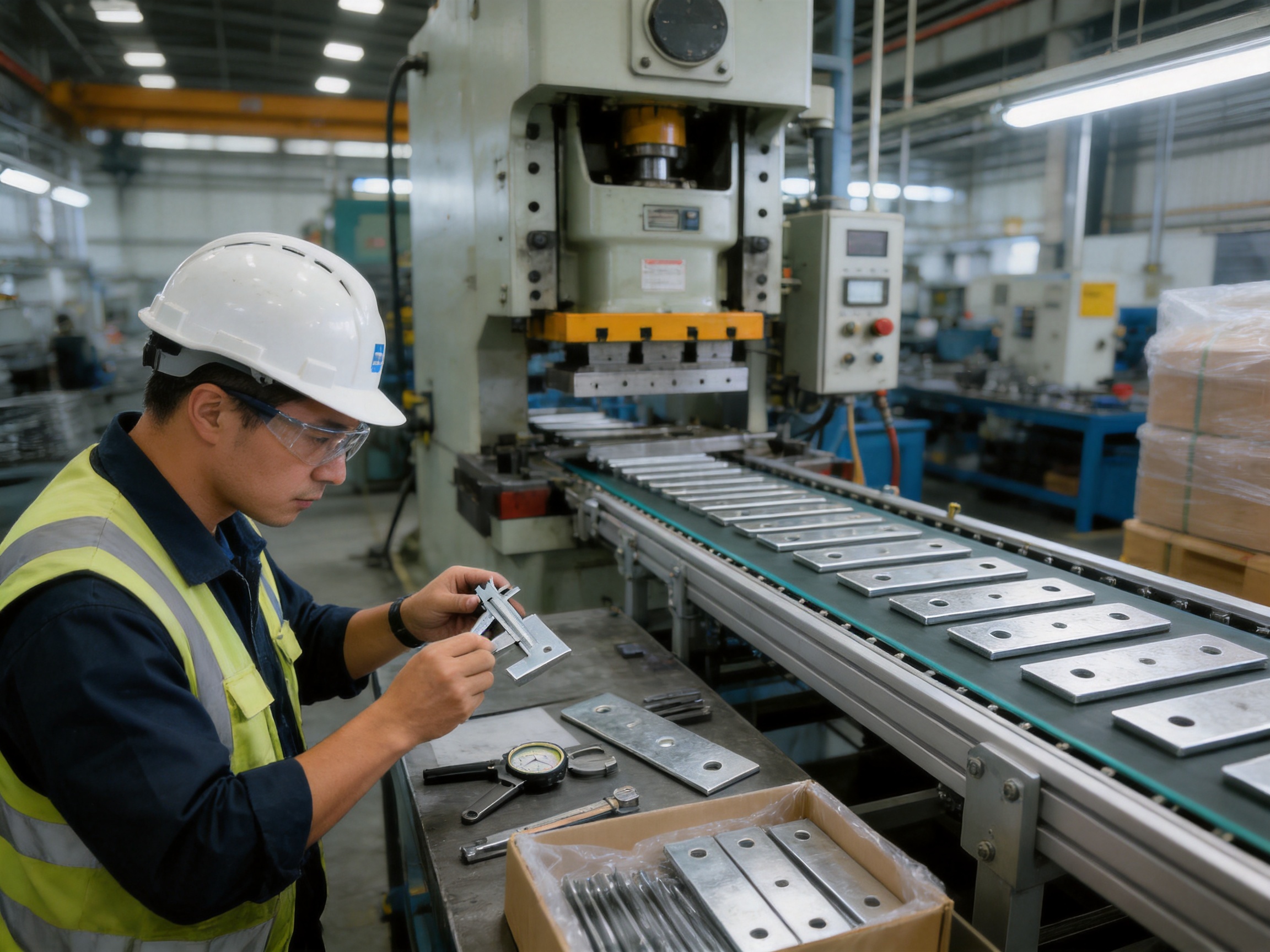
5. Quality Management and Manufacturing Strengths
Lizhan Hardware Co., Ltd. presents itself as an ISO 9001-certified manufacturer with approximately 20 years of export experience. Its business focuses on metal hardware products, including screws, stamped parts, fasteners, and related components. This manufacturing background is relevant to the production of three-hole flat plates because the product requires experience in material control, metal forming, finishing, inspection, and international order fulfillment.
An ISO 9001 quality management approach emphasizes documented processes, customer requirements, corrective actions, traceability, and continuous improvement. Certification alone does not replace product-specific inspection, but it provides a structured framework for managing production and customer service.
5.1 Factory-Based Production
Direct factory production can offer several advantages over purely trading-based supply. The manufacturer can communicate directly with engineers, review drawings, coordinate tooling, control production schedules, and address quality questions without relying on multiple intermediaries.
Factory-based production may also provide better flexibility for customized dimensions, packaging, and surface treatments. When a customer needs a sample or modification, direct communication with the manufacturing team can shorten the feedback cycle.
5.2 Testing and Inspection Capability
A manufacturing and testing system supports more reliable control of incoming materials, in-process parts, and finished products. Inspection tools may be used to verify hole diameter, hole spacing, plate dimensions, thickness, flatness, and surface condition.
For customers with more demanding requirements, inspection criteria can be agreed before production. These criteria may include sampling plans, acceptable tolerance ranges, appearance standards, coating requirements, packaging specifications, and documentation needs.
5.3 OEM and ODM Support
OEM and ODM support is a significant advantage for customers that cannot use a standard catalog part. A buyer may need a different hole pattern, a longer or wider plate, a special thickness, a particular material, or a coating designed for a specific environment.
Production based on drawings or samples can help customers convert a design concept into a repeatable manufactured component. During this process, the manufacturer can review the design for tooling feasibility, material utilization, assembly compatibility, and production cost.
5.4 Export and Regional Distribution
International customers often need more than manufacturing capacity. They also require export experience, clear documentation, dependable packaging, and practical delivery coordination. Lizhan Hardware supports overseas business from its China factory and maintains a Thailand warehouse, which can be useful for customers serving Southeast Asian markets or requiring regional inventory support.
Export experience can help reduce common supply problems, including incorrect labeling, insufficient packaging protection, incomplete documents, and misunderstandings about product specifications. A supplier familiar with international orders can also help customers plan quantities and shipment arrangements more effectively.
6. Advantages Compared with Generic or Lower-Quality Alternatives
6.1 More Consistent Hole Alignment
One of the most important differences between a professionally manufactured connector and a low-quality generic fitting is hole alignment. Inconsistent hole spacing can make installation difficult, especially when the plate must match a channel, bracket, or preassembled frame.
Precision machining, laser cutting, punching, and inspection help maintain the intended hole pattern. Better alignment reduces the need for manual drilling, filing, or forced assembly. It also supports a cleaner final installation.
6.2 Better Edge Quality
Low-cost components may leave sharp burrs or rough edges after cutting. These defects can create handling risks and may damage nearby cables, coatings, insulation, or protective materials. Deburring and edge inspection improve safety and overall installation quality.
6.3 More Reliable Surface Protection
An inconsistent coating can leave exposed areas vulnerable to rust, particularly around holes and cut edges. A controlled anti-corrosion treatment helps create a more uniform protective layer. This can extend service life and reduce the frequency of replacement in normal operating environments.
6.4 Stable Supply for Repeated Projects
Project customers often need the same fitting for multiple installations or production batches. A supplier with controlled tooling and documented manufacturing procedures is more likely to maintain consistent dimensions over time than a supplier that changes production sources frequently.
Stable supply is valuable to equipment manufacturers because it reduces the need to redesign assemblies or requalify substitute parts. It also helps distributors maintain a dependable product range for contractors and maintenance customers.
6.5 Lower Total Installation Cost
The purchase price of a small connector is only one part of its total cost. Installation labor, rework, delays, damaged fasteners, rejected parts, and inventory complexity can have a greater effect on the final project cost.
A precise, ready-to-install connector can reduce the time required for alignment and adjustment. Its standardized design also allows customers to keep a smaller range of joining plates in stock while covering more general assembly needs.
6.6 Customization Without Abandoning Production Discipline
Some suppliers offer customization but lack sufficient process control for consistent mass production. Other suppliers provide standardized products but cannot respond to special designs. A manufacturer with stamping, laser cutting, inspection, and OEM support can offer a more practical balance between customization and repeatability.
| Evaluation Factor | Professionally Manufactured Three-Hole Flat Plate | Uncontrolled Generic Alternative |
|---|---|---|
| Hole alignment | Designed and checked for repeatable positioning | May vary between batches |
| Edge condition | Deburred and reviewed for safe handling | May contain sharp burrs or rough edges |
| Surface protection | Specified anti-corrosion treatment | Finish may be inconsistent or undocumented |
| Material control | Material grade and thickness can be specified | Material information may be unclear |
| Customization | OEM and ODM production based on drawings or samples | Limited options or uncertain feasibility |
| Quality support | Structured inspection and production communication | Limited traceability or technical support |
| Supply continuity | Suitable for repeat orders and project supply | Dimensions and source may change unexpectedly |
7. Application Areas
7.1 Strut Channel and Support Systems
The most direct application is the joining of strut channels and support rails. The plate can bridge a channel connection and provide multiple fastening points for a secure assembly. It may be used in electrical support systems, mechanical service supports, equipment racks, pipe support structures, and suspended installation frameworks.
Installers should select fasteners that match the channel profile and load requirements. The connector should be positioned so that the fastening points engage the strongest practical area of the channel or support member.
7.2 Construction and Building Services
Construction teams can use flat joining plates in light framing, service supports, equipment mounting, temporary structures, and general fabrication. The product is useful when a connection must be reinforced without creating a complex custom bracket.
In building services, connectors may assist with support arrangements for cable trays, conduit systems, ventilation components, pipework, and mechanical equipment. The final design must consider local building codes, load requirements, fire safety, corrosion exposure, and the suitability of the complete support system.
7.3 Machinery and Equipment Frames
Machine builders often require simple connectors for guarding, access frames, base supports, sensor brackets, and auxiliary structures. A flat plate can provide a convenient attachment surface while allowing future disassembly or adjustment.
For machinery exposed to vibration, the fastening method should be selected carefully. Locking devices and appropriate tightening procedures may be required. The plate is a connection component and should be evaluated together with the machine frame and operating conditions.
7.4 Automotive and Transportation-Related Assembly
Stamped steel joining components are widely used in automotive and transportation-related manufacturing because they can be produced in repeatable quantities. The three-hole flat plate may be suitable for non-safety-critical brackets, equipment supports, workshop fixtures, storage systems, or auxiliary assemblies.
Applications involving vehicle safety, suspension, steering, braking, occupant protection, or other regulated systems require specialized engineering validation and should not rely on a general-purpose fitting without appropriate testing and approval.
7.5 Maintenance and Repair
Maintenance teams benefit from standardized fittings because they can keep versatile repair components in inventory. When an existing bracket or channel joint becomes damaged, a flat splice plate may provide a quick reinforcement or replacement solution.
Using a standard connector can reduce equipment downtime. Instead of waiting for a custom plate to be fabricated, technicians may be able to complete a repair with an available fitting and compatible fasteners.
7.6 Retail Fixtures and Workshop Structures
Retail shelving, storage racks, workbenches, display frames, and workshop structures often require simple joining plates. The three-hole design can support modular construction and allow components to be assembled, disassembled, or reconfigured as needs change.
8. Installation Recommendations
Before installation, confirm that the plate dimensions and hole pattern match the channel or structural member. Check that the fasteners pass through the holes without excessive clearance and that the washers fully cover the fastening area.
Clean contact surfaces if dirt, oil, loose paint, or heavy corrosion could prevent the plate from sitting flat. Position the connector so that the load is distributed across the available surface and the holes are not too close to unsupported edges.
Use fasteners with suitable strength, length, thread type, and corrosion resistance. Tighten them according to the design requirements. Excessive tightening may distort thin channel material or damage the protective finish, while insufficient tightening may allow movement during service.
For installations exposed to vibration, consider locking nuts, spring washers, thread-locking compounds, or other approved retention methods. For outdoor or corrosive environments, make sure the plate and fasteners have compatible corrosion resistance. Mixing dissimilar metals without proper consideration can increase galvanic corrosion risk.
After installation, inspect the connection for plate distortion, gaps, loose fasteners, damaged coating, and signs of movement. Periodic inspection is recommended where the assembly is exposed to vibration, weather, chemical vapors, or repeated loading.
9. Customization and Specification Support
Although the three-hole flat plate is designed as a general fitting, many industrial customers require modifications. Common customization requests may include changes to overall length, width, thickness, hole diameter, hole spacing, corner radius, surface finish, packaging, labeling, or material grade.
Customers requesting a quotation should provide as much technical information as possible. A drawing is preferred, but a clear sample, dimensioned sketch, or written specification may also be useful. The following information can help the manufacturer evaluate the project:
1. Overall plate length and width.
2. Material grade and thickness.
3. Hole diameter and center-to-center spacing.
4. Required tolerance range.
5. Surface treatment or corrosion requirement.
6. Intended application and environmental conditions.
7. Estimated order quantity and annual demand.
8. Packaging, labeling, and inspection requirements.
9. Required sample quantity and approval procedure.
10. Target delivery schedule and destination market.
Providing complete information at the beginning reduces quotation delays and helps avoid misunderstandings about the final product. For high-volume programs, prototype approval and a pre-production sample may be recommended before mass production.
10. Purchasing and Supply Considerations
When selecting a supplier, buyers should evaluate more than the unit price. Important factors include material consistency, tooling capability, inspection standards, surface treatment, production capacity, packaging, communication, export experience, and response to corrective actions.
A low initial price may not represent the lowest total cost if the parts require rework or if inconsistent dimensions interrupt production. Buyers should consider the cost of installation labor, rejected components, delays, inventory, and potential field replacement.
For repeat orders, it is useful to establish a controlled product specification. This document can identify the approved drawing, material, finish, hole pattern, tolerances, packaging, and inspection method. A controlled specification helps ensure that future orders match the originally approved product.
Sample approval is another effective purchasing practice. The buyer can inspect the sample for fit, hole alignment, surface appearance, edge quality, and compatibility with the intended fasteners. Any changes should be documented before mass production begins.
For international supply, customers should also confirm shipping terms, carton dimensions, pallet requirements, customs documentation, country-of-origin information, and delivery responsibilities. Lizhan Hardware’s China manufacturing base and Thailand warehouse may provide different logistical options depending on the destination and order structure.
11. Sustainability and Production Efficiency
Efficient metal production can contribute to lower material waste and better resource utilization. Stamping layouts can be planned to use sheet or coil material effectively, while standard product dimensions can simplify production and reduce unnecessary tooling changes.
Durable connectors also support sustainability by reducing premature replacement. A fitting that maintains its fastening function and resists normal corrosion may remain in service longer than a poorly protected alternative. Longer service life can reduce material consumption, maintenance work, and disposal requirements.
Packaging efficiency is another consideration. Small fittings can often be packed in organized bulk quantities, reducing unnecessary space and handling. Customers can discuss recyclable packaging, carton optimization, and labeling requirements with the manufacturer when planning larger programs.
Sustainability should always be evaluated together with product safety and service performance. The most appropriate material and coating are those that provide the required durability while meeting the customer’s environmental and regulatory objectives.
12. Frequently Asked Questions
Q1: What is the primary purpose of a three-hole flat plate?
The primary purpose is to join, reinforce, or align strut channels, metal frames, brackets, supports, and other structural members. Its three fastening holes provide multiple attachment points in a compact, easy-to-install format.
Q2: Is the connector suitable for outdoor use?
It may be suitable for outdoor use when the material and surface treatment are selected for the environmental conditions. Buyers should specify exposure to rain, humidity, salt, chemicals, and temperature changes so that an appropriate corrosion protection system can be evaluated.
Q3: Can the hole spacing be customized?
Yes. Hole spacing, hole diameter, plate dimensions, thickness, and other characteristics may be customized for OEM or ODM production. A technical drawing or sample is recommended for accurate evaluation.
Q4: Can the plate be used with any strut channel?
Compatibility depends on the channel width, slot pattern, hole diameter, fastening method, and load requirements. The connector should be checked against the dimensions of the intended channel before purchase.
Q5: What fasteners should be used?
The fasteners should be selected according to the plate thickness, channel design, load, environment, and applicable engineering requirements. Common options may include bolts, nuts, washers, threaded fasteners, or channel-specific hardware.
Q6: Does the product require special tools for installation?
In many general applications, ordinary hand tools suitable for the selected bolts or screws are sufficient. Specialized tools may be needed for high-volume assembly, torque-controlled installation, or applications with specific safety requirements.
Q7: How does a professional manufacturer improve product quality?
Quality is supported through controlled material preparation, accurate tooling, repeatable stamping or cutting, deburring, surface treatment, dimensional inspection, and organized packaging. A documented quality management system further supports process consistency and corrective action.
Q8: Can customers request a sample before placing a large order?
Sample evaluation is commonly used for customized or high-volume projects. The customer can confirm fit, appearance, hole alignment, coating, and packaging before approving mass production.
Q9: What information is needed for a quotation?
Useful information includes dimensions, material, thickness, hole details, finish, quantity, application, packaging, destination, and any required certifications or inspection documents. A drawing or physical sample can accelerate the quotation process.
Q10: Is the product suitable for safety-critical structures?
A general-purpose fitting should not be used in safety-critical structures without professional engineering review, testing, and approval. The complete connection system must be evaluated for load, fatigue, vibration, corrosion, and applicable regulations.
Q11: How should the connectors be stored?
Store the parts in a dry, clean area away from corrosive chemicals and standing water. Keep the original packaging intact when possible, and avoid excessive contact with materials that may damage the protective coating.
Q12: What makes this product more efficient than a custom-fabricated plate?
A standardized three-hole connector can be kept in inventory and installed without waiting for individual fabrication. Its repeatable hole pattern, ready-made finish, and general compatibility can reduce preparation time, labor, and project delays.
13. Recommended Quality Checklist
Before accepting a shipment, buyers may use a practical checklist to verify that the product matches the approved specification. The first step is to compare the received parts with the purchase order and technical drawing. Confirm the part name, quantity, dimensions, material, finish, and packaging labels.
Next, inspect a representative sample for overall flatness and visible damage. Check that the plate does not show severe bending, cracks, deep scratches, peeling coating, or excessive discoloration. Examine the hole edges for unacceptable burrs or deformation.
Use suitable gauges or measuring tools to confirm hole diameter and hole spacing. If the connector is intended for a specific channel system, perform a practical fit check using the approved channel and fasteners. This can reveal problems that may not be obvious during a visual inspection.
For larger or more critical orders, customers may request material documentation, coating information, inspection reports, or a pre-shipment quality report. The exact documentation should be agreed before production rather than requested after delivery.
14. Why This Connector Is a Practical Industrial Choice
The value of the three-hole flat plate comes from its combination of simplicity and controlled performance. It does not require a complex mechanism, yet it can solve many common joining and reinforcement problems. Its compact profile is easy to store, transport, install, and replace.
Compared with improvised plates or inconsistent generic fittings, a professionally manufactured connector provides better confidence in hole alignment, edge condition, material consistency, and surface protection. These benefits can make a meaningful difference in large projects where hundreds or thousands of connections must be assembled efficiently.
The product also supports flexibility. It can serve as a standard inventory item for maintenance teams or become a customized OEM component for equipment manufacturers. Customers can select dimensions, materials, finishes, packaging, and inspection requirements according to their application.
Lizhan Hardware combines stamped metal production, screw and fastener manufacturing experience, factory-based engineering, quality management, export support, and regional warehouse capability. These strengths make the company a suitable supplier to evaluate when reliable flat connectors are needed for industrial assembly, construction support, equipment frames, and general metal fabrication.
Conclusion
The three-hole flat plate strut channel connector is a versatile and cost-effective component for joining and reinforcing metal structures. Its evenly spaced holes, flat geometry, steel construction, and anti-corrosion treatment support secure and efficient assembly across a wide range of applications.
Its advantages are strengthened when the product is manufactured through a controlled process. Accurate material preparation, laser cutting or stamping, deburring, surface finishing, inspection, and protective packaging all contribute to dependable performance. For customers requiring special dimensions or finishes, OEM and ODM support provides an additional level of flexibility.
When selecting this type of connector, buyers should evaluate the complete application, including load, environment, channel compatibility, fastener selection, corrosion conditions, and regulatory requirements. With the correct specification and installation method, the three-hole flat plate can reduce assembly time, simplify inventory, support repeatable production, and improve the reliability of general industrial connections.
References
1. ISO 9001, Quality Management Systems—Requirements.
2. ISO 898-1, Mechanical Properties of Fasteners Made of Carbon Steel and Alloy Steel.
3. ISO 12944, Paints and Varnishes—Corrosion Protection of Steel Structures by Protective Paint Systems.
4. ASTM A1008/A1008M, Standard Specification for Steel, Sheet, Cold-Rolled, Carbon, Structural, and High-Strength Low-Alloy.
5. ASTM A653/A653M, Standard Specification for Steel Sheet, Zinc-Coated or Zinc-Iron Alloy-Coated by the Hot-Dip Process.
6. Metal Stamping Design Guidelines, manufacturing engineering reference materials for sheet-metal forming and punching.
7. General industrial fastening and structural support installation practices.
8. Manufacturer-provided product information for three-hole flat plates, stamped fittings, fasteners, and related hardware.