Introduction
Roller shutter doors depend on a series of carefully matched components to provide smooth movement, dependable security, and long service life. While the door curtain, guide rails, shaft, and motor often receive the most attention, the motor bracket and supporting steel plate are equally important. These components connect the drive system to the door structure, maintain alignment, absorb operating loads, and help ensure that the shutter opens and closes consistently.
The Door and Window Accessories Motor Bracket Steel Plate Roller Shutter Door Part is designed for applications that require a strong, stable, and accurately manufactured support component. Produced for roller shutter door systems and related architectural hardware, this steel accessory combines structural durability with practical compatibility. It is suitable for new construction, renovation, commercial maintenance, security upgrades, and replacement projects where dependable hardware is essential.
Manufactured by Lizhan Hardware Co., Ltd., the product reflects the company’s experience in metal fabrication, stamping parts, fasteners, home tools, and hardware accessories. The company supports customers with standard components, bulk supply, custom solutions, multiple finishes, and international distribution. Its manufacturing and service capabilities make the product suitable for contractors, door manufacturers, building-material distributors, wholesalers, maintenance companies, and professional installers.
This article examines the product’s function, construction, manufacturing advantages, application value, quality considerations, purchasing factors, and installation requirements. It also explains why a properly engineered motor bracket can offer advantages over inconsistent or low-quality alternatives.
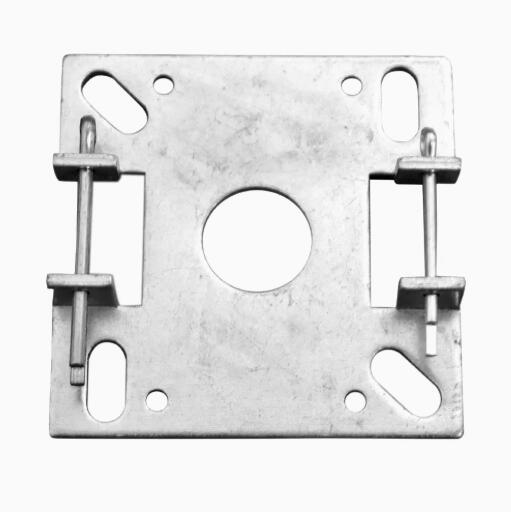
Door and Window Accessories Motor Bracket Steel Plate Roller Shutter Door Part Roller Shutter Accessories
Product Overview
A roller shutter motor bracket is a load-bearing accessory used to secure or support the motor and associated drive assembly within a roller shutter door system. Depending on the door design, the bracket may be installed near the roller tube, side plate, bearing support, or mounting frame. Its exact shape and hole arrangement can vary according to the motor type, shutter dimensions, installation space, and system configuration.
The steel plate construction gives the component a firm structural base. When the motor operates, it generates torque and vibration. The bracket must resist these forces without excessive deformation, movement, or loss of alignment. A properly manufactured plate helps keep the motor in its intended position and supports the reliable transfer of drive power to the shutter mechanism.
The product is categorized as a stamping part and roller shutter accessory. This classification reflects its suitability for metal forming and precision production processes. Stamped steel components can be manufactured consistently in repeated production runs, making them practical for original equipment manufacturers and distributors that require stable dimensions across large quantities.
The accessory may be supplied as an individual component or as part of a broader door and window hardware package. Customers can use it alongside other steel parts, fasteners, brackets, plates, and mounting accessories. This flexibility is valuable for projects that do not require a complete door system but need reliable replacement or support hardware.
Primary Product Functions
The first function of the motor bracket is mechanical support. It holds the motor or related assembly in a fixed position and helps distribute operating loads across the surrounding structure. By maintaining a stable connection, the bracket reduces the possibility of shifting during repeated opening and closing cycles.
The second function is alignment support. A roller shutter drive system works best when the motor, roller tube, shaft, bearings, and curtain remain correctly positioned. A distorted or poorly fitted bracket can contribute to uneven movement, noise, wear, and stress on other components. A rigid steel plate provides a more dependable mounting foundation.
The third function is vibration management. Motors and gear systems naturally create vibration, especially during start-up, stopping, reversing, or operation under heavy loads. A suitably designed bracket helps keep these forces controlled. When paired with correct fasteners and an appropriate mounting surface, it can contribute to quieter and more stable operation.
The fourth function is system integration. The bracket must work with the wider roller shutter assembly rather than operate as an isolated part. Its dimensions, hole locations, thickness, finish, and shape should correspond with the installation design. This is why accurate fabrication and careful confirmation of technical requirements are important before production or purchase.
Construction and Material Advantages
Steel is widely used for roller shutter hardware because it offers a practical balance of strength, rigidity, availability, and cost. Compared with many lighter materials, steel provides a solid foundation for components that experience repeated mechanical loading. It is particularly suitable for brackets that support motors, shafts, or other moving assemblies.
The steel plate construction helps resist bending when the motor applies torque to the mounting structure. It also provides a stable base for fastening. When the mounting holes and formed sections are manufactured accurately, the component can be installed with less adjustment and can help preserve the intended geometry of the door system.
Another advantage of steel is its compatibility with different surface treatments. The product can be supplied in finish options such as brushed steel, powder-coated, or galvanized surfaces, subject to project requirements. These finishes can improve corrosion resistance, appearance, and suitability for specific indoor or outdoor environments.
For indoor applications, a standard or decorative finish may be sufficient when the component is protected from moisture. For exposed locations, galvanized or powder-coated treatment can provide an additional protective barrier. The appropriate choice depends on humidity, salt exposure, pollution, temperature changes, cleaning chemicals, and the expected service environment.
Strength Under Repeated Use
Roller shutter doors are often operated many times each day. Commercial premises, warehouses, garages, retail entrances, industrial buildings, and secure storage areas may place continuous demands on the door assembly. The motor bracket must therefore withstand repeated loading rather than only support the system during a single installation.
A robust steel bracket helps reduce the risk of fatigue-related movement and mounting instability. Its performance is influenced by several factors, including material grade, thickness, geometry, bend accuracy, hole placement, surface treatment, fastening method, and the weight of the door curtain. No bracket can compensate for an incorrectly sized motor or an unsuitable door system, but a properly manufactured bracket provides a reliable foundation for the equipment it supports.
Resistance to Operating Conditions
Door and window hardware may be exposed to dust, moisture, condensation, temperature variation, handling impact, and airborne contaminants. In outdoor or semi-outdoor environments, untreated steel can be vulnerable to corrosion. For this reason, the availability of galvanized and powder-coated options is a practical advantage.
Surface protection should be selected according to the application rather than appearance alone. A coating must cover the relevant surfaces consistently, including edges and formed areas. During installation, scratches, drilled holes, and cut edges should be protected when necessary. Good installation practice complements the factory finish and helps extend the useful life of the component.
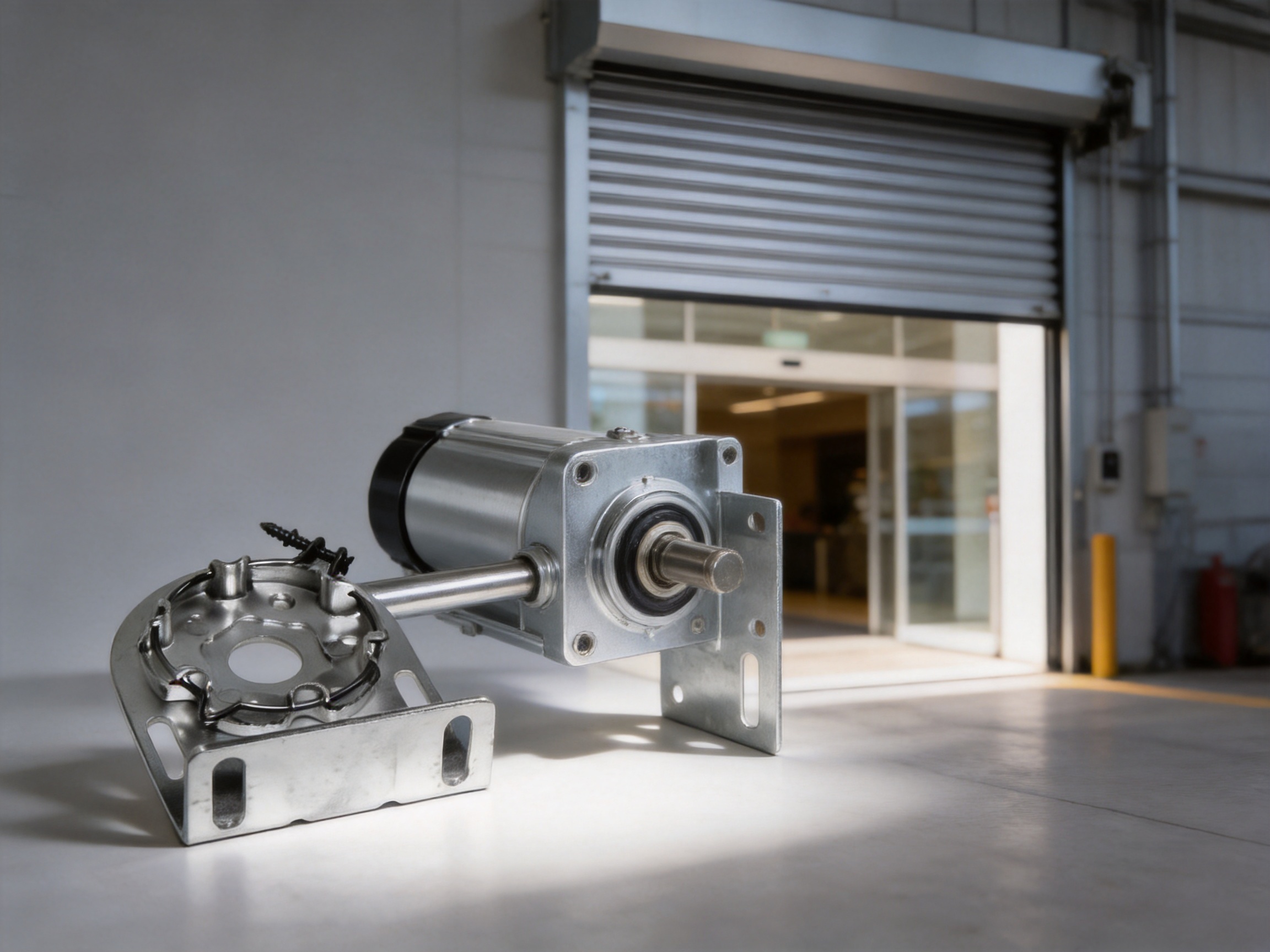
Precision Stamping and Advanced Manufacturing
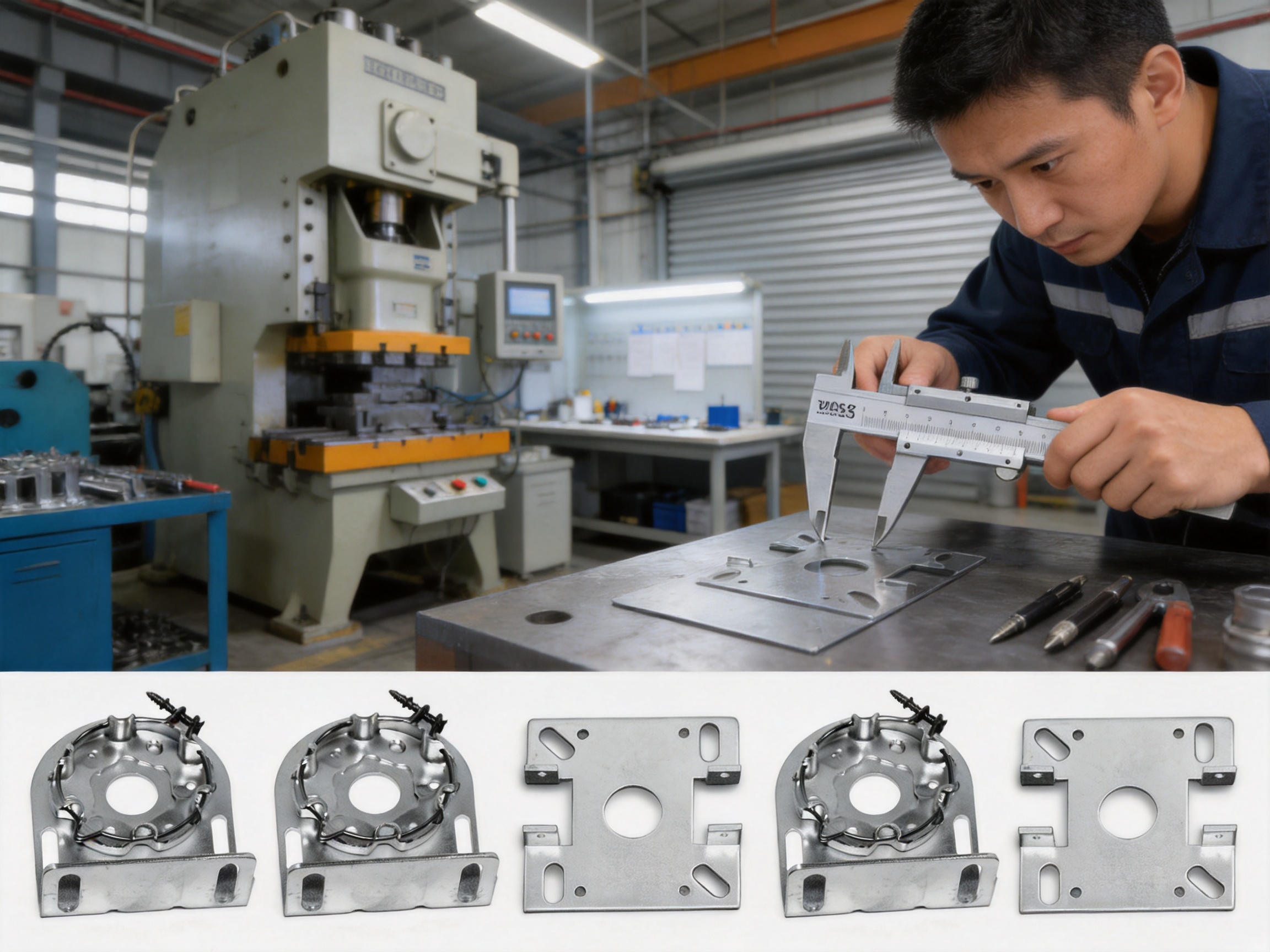
The performance of a steel motor bracket depends not only on the raw material but also on the manufacturing process. Stamping and metal forming allow manufacturers to produce repeatable shapes at production volumes suitable for construction hardware and industrial supply chains. When tooling, material control, forming parameters, and inspection procedures are properly managed, stamped parts can achieve dependable consistency.
Lizhan Hardware Co., Ltd. has more than 15 years of experience in metal fabrication. This background supports the production of hardware components that require practical knowledge of steel processing, dimensional control, surface finishing, packaging, and order fulfillment. Experience is especially valuable when a project includes several related parts or requires adaptation to a customer’s existing door system.
Material Preparation
Production begins with the selection and preparation of suitable steel sheet or plate. Material thickness and mechanical properties should correspond to the product’s intended load and design. Before forming, the material can be inspected for surface defects, excessive variation, contamination, or damage that could affect the finished part.
Controlled material preparation helps prevent issues such as cracking during bending, uneven forming, poor coating adhesion, or inconsistent hole dimensions. For larger orders, maintaining a stable material specification is important because it helps ensure that parts manufactured in different batches remain compatible.
Cutting and Blanking
Blanking separates the basic outline of the part from the steel sheet. The blank must be produced with suitable dimensional accuracy so that later forming and hole-making operations remain correctly positioned. A clean blank edge can also reduce the need for excessive secondary finishing.
Depending on the design and production quantity, cutting may be combined with punching or performed as a separate operation. The selected process should balance efficiency, accuracy, tooling cost, and the requirements of the final bracket. For repeat production, dedicated tooling can help maintain uniformity and shorten cycle times.
Punching and Hole Formation
Mounting holes are among the most important details of a motor bracket. Incorrect hole spacing can prevent installation or force the installer to modify the component on site. Precision punching helps maintain the required hole diameter, position, and pattern.
Hole edges should be checked for excessive burrs, deformation, or cracking. Burr control is important for worker safety, proper fastening, coating quality, and contact between the bracket and the mounting surface. Depending on the design, deburring or edge treatment may be included as part of the production process.
Bending and Forming
Many brackets include one or more bends, flanges, offsets, or formed sections that increase rigidity and create the necessary installation profile. Accurate bending is essential because even a small angular difference can affect alignment with the motor, shaft, side plate, or supporting frame.
Forming parameters should take account of material thickness, bend radius, grain direction, springback, and tooling condition. Consistent control of these factors helps reduce variation between parts. A well-formed bracket should sit securely against its intended mounting surface without excessive gaps, twisting, or forced adjustment.
Finishing and Surface Protection
After forming, the steel component can receive an appropriate finish. Brushed steel provides a clean, refined appearance for visible hardware. Powder coating can provide color flexibility and a protective surface. Galvanizing is useful where enhanced resistance to moisture and environmental exposure is required.
Surface preparation is important before coating. Oil, scale, dust, and processing residue should be removed so that the finish can adhere properly. Coating coverage should be reviewed around edges, holes, corners, and formed areas. Finished components should also be handled and packaged in a way that minimizes scratching and impact damage.
Inspection and Process Control
Quality control can include visual inspection, dimensional verification, hole-position checks, bend-angle checks, surface-finish review, and packaging inspection. The specific inspection plan should reflect the product design and customer requirements. For repeat orders, process records and sample comparisons can help maintain consistency.
Quality is not limited to identifying defective parts at the end of production. It also involves controlling the full process from material receipt through shipment. Stable tooling, trained production personnel, clear work instructions, and careful order review all contribute to reliable output.
Advantages Over Inconsistent Alternatives
Customers comparing motor brackets may encounter products with different material thicknesses, hole patterns, finishes, and levels of manufacturing control. The lowest purchase price does not always represent the lowest total cost. A bracket that bends easily, fits poorly, corrodes quickly, or requires additional modification can create installation delays and maintenance expense.
Consistent Dimensions
A professionally produced stamped bracket offers more consistent dimensions than an improvised or poorly controlled component. Consistency helps installers work faster and reduces the need to enlarge holes, grind edges, add washers, or create on-site modifications. It also supports repeatability for manufacturers assembling multiple doors with the same design.
Improved Structural Stability
A steel bracket with suitable thickness and formed geometry can provide stronger support than thin, weakly shaped, or inadequately reinforced alternatives. Stable mounting reduces the chance of movement that could affect the motor, shaft, curtain, or guide system. This can contribute to more predictable operation over the service life of the door.
Better Finish Options
Some competing products may be offered with only a basic untreated surface. The availability of brushed, powder-coated, and galvanized options makes it easier to match the bracket to the environment and visual requirements of the project. Finish selection can support both corrosion protection and architectural consistency.
Suitable for Professional Supply
The product can be supplied for individual replacement needs, complete hardware kits, project orders, and bulk distribution. This is an advantage for customers that need more than a one-time purchase. Contractors and wholesalers can discuss quantity, packaging, finishing, and customization requirements with a manufacturer that supports international orders.
Customization Capability
Roller shutter systems are not always identical. Different motors and door assemblies may require different hole arrangements, dimensions, bends, or mounting profiles. Custom metal fabrication allows the bracket concept to be adapted to a customer’s drawings, samples, or technical specifications.
Customization should be based on clear information, including the motor model, door dimensions, mounting orientation, material preference, thickness, hole pattern, finish, and expected operating conditions. A drawing review before production helps reduce misunderstandings and improves the likelihood that the finished part will fit the intended system.
Application Areas
The motor bracket steel plate is suitable for a broad range of roller shutter and architectural hardware applications. Its value is particularly clear in situations where the door must operate frequently, remain secure, and withstand exposure to practical building conditions.
Residential Garages and Private Buildings
Residential roller shutter doors are used for garages, storage areas, workshops, and entrances. Although the operating frequency may be lower than in commercial facilities, homeowners still expect smooth movement, low maintenance, and dependable security. A properly supported motor can help reduce vibration and operating irregularities.
Retail and Commercial Entrances
Retail stores, offices, and commercial buildings often use roller shutters for access control, security, and after-hours protection. These doors may be operated at the beginning and end of every business day or more frequently during deliveries and service activities. A durable mounting bracket supports the repeated operation demanded by these environments.
Warehouses and Industrial Facilities
Warehouses and industrial buildings may feature larger shutters, heavier curtains, and more demanding duty cycles. The bracket must be selected as part of a properly engineered system that accounts for motor capacity, door weight, shaft design, and mounting structure. The steel accessory can serve as a dependable connection component when matched correctly to the application.
Renovation and Replacement Projects
During renovation, a damaged or corroded bracket may need replacement even when the rest of the roller shutter remains serviceable. An individual replacement part can help reduce project cost compared with replacing the entire door assembly. Before ordering, installers should compare the old component with the proposed replacement and confirm all relevant measurements.
Security Upgrades
Roller shutters are commonly used as part of a property security strategy. A stable motor mounting arrangement supports reliable closing and opening, while compatible steel hardware contributes to the overall integrity of the installation. The bracket itself is not a complete security solution, but it is an important part of a correctly installed shutter system.
Technical Selection Considerations
| Selection Factor | Why It Matters | Information to Confirm |
|---|---|---|
| Material | Influences strength, forming behavior, and corrosion performance | Steel type, grade, and project requirements |
| Thickness | Supports rigidity and load resistance | Required thickness and applicable design specification |
| Dimensions | Determines compatibility with the motor and support structure | Overall length, width, bend profile, and mounting clearance |
| Hole Pattern | Allows accurate fastening without field modification | Hole diameter, spacing, quantity, and orientation |
| Surface Finish | Supports appearance and environmental resistance | Brushed, powder-coated, galvanized, or other required finish |
| Quantity | Affects tooling, packaging, pricing, and production planning | Sample quantity, trial order, or bulk volume |
| Packaging | Helps prevent scratches, deformation, and moisture damage during shipment | Individual protection, carton arrangement, and pallet needs |
| Compatibility | Ensures the part works with the complete door assembly | Motor model, shutter type, shaft system, and installation position |
Motor and Door Compatibility
The bracket should never be selected by appearance alone. Motors differ in dimensions, mounting points, torque output, electrical configuration, and operating duty. The roller shutter itself may also vary in width, weight, curtain profile, shaft diameter, and guide arrangement.
Before purchasing, the installer or engineering team should confirm whether the bracket is intended for the specific motor and door system. If the application is non-standard, providing a drawing or sample can help the manufacturer evaluate the required design. This is especially important for commercial or industrial projects where replacement access may be difficult after installation.
Environmental Conditions
Indoor dry environments generally place fewer demands on surface protection than coastal, humid, or exposed outdoor locations. Where the component may encounter rain, condensation, salt air, chemical vapors, or frequent washing, corrosion resistance should be considered at the design and finishing stages.
Customers should communicate the installation environment when requesting a quotation. This allows the supplier to recommend a suitable finish and packaging approach. A coating that is appropriate for an indoor warehouse may not be the best choice for an exposed coastal installation.
Load and Duty Cycle
The bracket must be considered in relation to the full operating load. Important factors include the weight of the shutter curtain, motor torque, starting force, stopping force, operating frequency, wind exposure, and the condition of the guide rails and shaft. A stronger bracket cannot correct a system that has been incorrectly sized or poorly aligned.
For demanding applications, the project designer should verify the complete mechanical arrangement. The mounting surface must also be strong enough to receive the fasteners. Concrete, steel frames, masonry, and other substrates may require different anchors or fastening methods.
Installation Guidance
Correct installation is essential to achieving the intended performance of a motor bracket. The following guidance is general and should be used together with the door manufacturer’s instructions, motor documentation, and applicable safety requirements.
Preparation
Before installation, inspect the bracket for shipping damage, coating defects, distortion, burrs, or incorrect dimensions. Confirm that the component matches the approved drawing or replacement part. Check the motor, shaft, bearings, side plates, fasteners, and mounting surface before assembling the system.
Power to the motor should be isolated before mechanical work begins. The shutter curtain should be secured against unexpected movement, and suitable lifting or support equipment should be used for heavy components. Installers should follow local workplace safety rules and use appropriate personal protective equipment.
Positioning
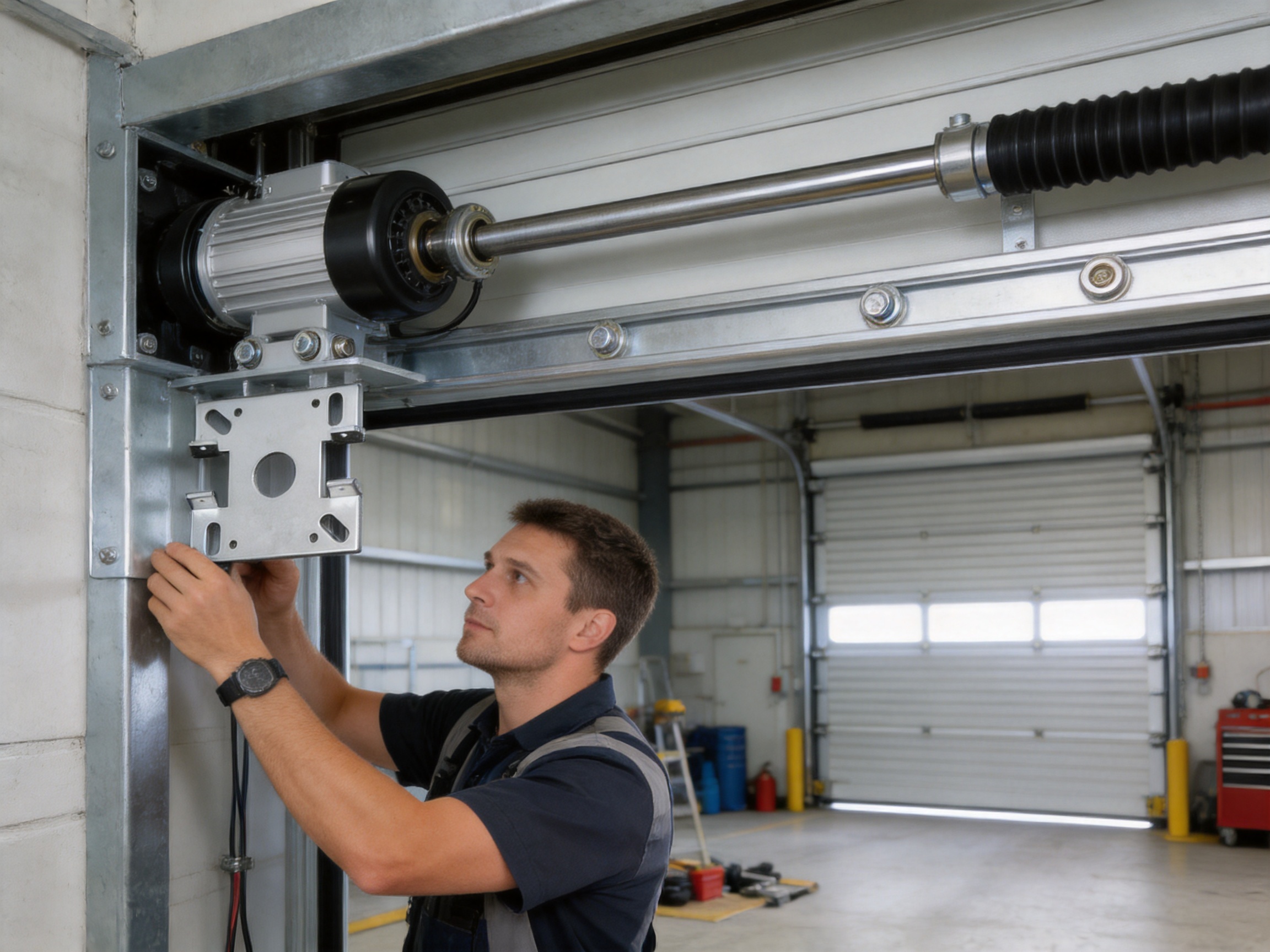
Place the bracket in the intended mounting location and confirm that the motor and shaft will remain correctly aligned. The bracket should sit firmly against the support surface. Avoid forcing a component into position, as this may introduce stress or twist that affects operation.
Mark or verify the mounting holes according to the approved layout. If drilling is required, use the correct drill size and ensure that the resulting holes do not weaken the supporting structure. Any exposed bare steel created during site modification should receive appropriate protection where necessary.
Fastening
Use fasteners suitable for the bracket material, motor load, mounting substrate, and environmental conditions. Tighten fasteners evenly and according to the applicable technical instructions. Over-tightening can deform the plate or damage the surrounding structure, while under-tightening can allow movement and vibration.
Where washers, locking devices, spacers, or thread-locking products are required, they should be selected according to the system design. Fasteners should be accessible for future inspection and maintenance whenever possible.
Alignment and Testing
After installation, check that the motor, shaft, and roller tube are aligned. Operate the door manually if the system design permits, then perform controlled powered tests. Observe the opening and closing movement, noise, vibration, stopping position, and interaction with the guide rails.
If the shutter moves unevenly or produces unusual noise, stop operation and investigate. Potential causes may include incorrect bracket positioning, a bent shaft, damaged bearings, excessive curtain friction, unsuitable motor settings, or obstruction in the guides. The bracket should not be modified repeatedly to compensate for a problem elsewhere in the system.
Maintenance and Service Life
A steel motor bracket generally requires limited maintenance when correctly installed, but periodic inspection is recommended. Maintenance personnel should check for loose fasteners, visible corrosion, cracks, deformation, coating damage, unusual vibration, and changes in door movement.
In high-use commercial or industrial settings, inspections may need to be scheduled more frequently. A small amount of movement at the bracket can become more serious if ignored, especially when the motor repeatedly applies torque to the mounting structure. Early detection allows the issue to be corrected before it damages the motor, shaft, bearings, or curtain.
Surface damage should be cleaned and treated according to the finish requirements. Galvanized surfaces, powder-coated surfaces, and brushed finishes may require different maintenance methods. Harsh abrasives or incompatible chemicals should be avoided unless approved for the specific coating.
Maintenance should also include the surrounding roller shutter components. Guide rails must remain clear, bearings should be maintained according to their specifications, and the curtain should not be allowed to scrape against the frame. A well-maintained system places less unnecessary stress on the motor bracket.
Manufacturing and Supply Strengths
Lizhan Hardware Co., Ltd. supplies metal hardware for construction, home improvement, fastener, packaging, stamping, and related applications. Its experience across these product categories supports a practical understanding of how individual components are used within larger assemblies.
The company’s China factory is located in Haiyan, Jiaxing City, Zhejiang, while its Thailand warehouse supports regional logistics and distribution. This combination can be useful for customers seeking international supply, regional stock coordination, or assistance with deliveries to different markets.
Experience in Metal Fabrication
More than 15 years of metal fabrication experience provides a foundation for handling product development, stamping production, finishing, packaging, and customer communication. Experienced manufacturers are better positioned to identify potential issues in drawings, forming profiles, hole locations, and material selection before production begins.
Custom Manufacturing Support
Custom solutions are available for customers whose requirements do not match a standard part. The customization process may involve reviewing a drawing, sample, photograph, or technical description. The manufacturer can then discuss material, thickness, forming, finish, tooling, packaging, and production quantity.
For a new design, customers should provide as much technical information as possible. Useful details include two-dimensional drawings, three-dimensional files, tolerances, intended load, motor information, installation photographs, annual demand, and required delivery schedule. Clear information helps reduce the risk of producing a part that looks correct but does not fit the actual installation.
Bulk Order Capability
Bulk order discounts and production support can benefit distributors, door manufacturers, construction contractors, and hardware wholesalers. Larger volumes allow production planning and packaging to be optimized. Customers should discuss forecast quantities and repeat-order expectations so that the supplier can plan material and tooling requirements effectively.
International Customer Service
Worldwide shipping support allows the product to serve customers beyond the domestic market. International orders require attention to export packaging, documentation, delivery terms, labeling, and destination requirements. A supplier with experience in international business can help coordinate these details more efficiently.
For quotations and technical discussions, customers can contact Lizhan Hardware Co., Ltd. through its sales team. Shawn and Sophia are listed as business contacts, and communication can be arranged through the company’s available sales channels. Customers should include product quantities, required finish, destination, drawings, and delivery expectations when requesting information.
Packaging and Logistics
Metal brackets can be damaged by impact, abrasion, moisture, and excessive movement during transportation. Packaging should therefore protect both the finished surface and the dimensional accuracy of the part. Individual wrapping, separated layers, protective cartons, or reinforced pallets may be appropriate depending on the order quantity and finish.
For powder-coated or brushed components, separators can reduce contact marks between parts. For galvanized components, moisture control during storage and transportation can help reduce the risk of staining or surface reaction. Cartons should be labeled clearly when several bracket sizes or finish options are included in one shipment.
Bulk packaging should balance protection with efficient handling. Excessive packaging increases cost and waste, while insufficient packaging can lead to damaged products and claims. The best packaging approach depends on part geometry, weight, stacking behavior, destination, and transportation method.
Quality and Purchasing Checklist
Before placing an order, customers should review the product requirements with the supplier. A clear purchasing checklist can help avoid delays and reduce the risk of incompatibility.
Confirm the exact product type and intended application. A motor bracket for one roller shutter system may not fit another system even if both products appear similar. Confirm whether the purchase is for a new installation, repair, replacement, or inventory program.
Confirm the material and thickness. If a project specification identifies a particular steel grade or minimum thickness, that information should be included in the purchase documentation.
Confirm all dimensions and hole locations. A drawing with tolerances is preferable to a general description. For replacement parts, provide photographs and measurements of the existing component when an original drawing is unavailable.
Confirm the finish. Specify whether the requirement is brushed steel, powder coating, galvanizing, or another treatment. If color matters, provide a recognized color reference or approved sample.
Confirm quantity and packaging. Explain whether the order requires individual packaging, bulk cartons, pallets, barcode labels, or mixed-size shipment control.
Confirm inspection expectations. Customers may request sample approval, dimensional reports, coating inspection, packaging photographs, or other documentation depending on the project.
Confirm delivery requirements. Provide the destination, expected schedule, shipping method, and any special import or labeling needs. Early communication is particularly important for custom products that require tooling or sample approval.
Q&A
What is a roller shutter motor bracket?
A roller shutter motor bracket is a steel support component used to secure or position the motor and related drive assembly within a roller shutter door system. It helps maintain alignment and provides structural support during repeated operation.
Why is steel suitable for this component?
Steel offers useful strength, rigidity, durability, and compatibility with stamping and forming processes. It can support motor loads and repeated movement while also accepting protective finishes such as powder coating or galvanizing.
Can the bracket be used for every roller shutter door?
No. Compatibility depends on the motor model, door dimensions, shaft arrangement, mounting position, hole pattern, and structural design. Customers should confirm technical details before ordering or request a customized version when necessary.
What finishes are available?
The product can be offered with finish options including brushed steel, powder-coated, and galvanized surfaces, subject to the specific project and production requirements. The finish should be selected according to both appearance and environmental exposure.
Is this product suitable for outdoor use?
It may be suitable for outdoor or semi-outdoor applications when the material and surface finish are selected appropriately. Galvanized or powder-coated protection may be preferable in environments exposed to moisture or weather. The complete system should also be designed for the local conditions.
Can customers order individual components?
Yes. The product may be supplied as an individual component or included in a complete hardware package. This makes it suitable for replacement work, maintenance inventories, small projects, and larger installations.
Can the design be customized?
Custom solutions are available. Customers should provide drawings, samples, dimensions, hole patterns, motor details, required material, finish, tolerances, and expected quantity. The manufacturer can review the information and discuss production feasibility.
What information is needed for a quotation?
A useful quotation request should include the part name, drawings or photographs, dimensions, material and thickness, surface finish, quantity, packaging requirements, delivery location, and desired schedule. Motor and door-system information is also valuable for compatibility review.
How does stamping improve production?
Stamping supports repeatable cutting, punching, and forming of steel parts. It can improve production efficiency and dimensional consistency, especially when the same design is required in medium or large quantities. Proper tooling and inspection remain essential.
How should the bracket be maintained?
Inspect the bracket and surrounding assembly periodically for loose fasteners, corrosion, deformation, coating damage, and unusual vibration. Keep the roller shutter guides clean and address operating problems promptly. Maintenance intervals should reflect the door’s usage and environment.
Does a strong bracket guarantee safe door operation?
No. The bracket is one component of a complete system. Safe and reliable operation also depends on the motor, shaft, bearings, curtain, guide rails, controls, fasteners, mounting structure, installation quality, and maintenance program.
Where is the product manufactured and distributed?
Lizhan Hardware Co., Ltd. operates a China factory in Zhejiang and has a Thailand warehouse for regional logistics support. The company serves international customers and can discuss shipping and supply arrangements according to project needs.
Why Choose a Professionally Manufactured Bracket?
A roller shutter door is only as reliable as the interaction between its individual parts. The motor bracket may be a relatively small component, but it influences the position and stability of a major drive element. Selecting a professionally manufactured steel bracket can help reduce installation uncertainty and support consistent performance.
The product combines steel construction, stamped-part manufacturing, precision forming, finish flexibility, and application-focused customization. These advantages are relevant to customers who need more than a generic metal plate. They need a component that can be integrated into a working door system, produced consistently, supplied in the required quantity, and supported by a manufacturer with practical fabrication experience.
Lizhan Hardware Co., Ltd. strengthens this offering through more than 15 years of metal fabrication experience, custom manufacturing capability, bulk-order support, international shipping, and warehouse resources in China and Thailand. For architects, builders, installers, distributors, and maintenance professionals, these capabilities can simplify sourcing and help create a more dependable supply chain.
Conclusion
The Door and Window Accessories Motor Bracket Steel Plate Roller Shutter Door Part is an important structural accessory for roller shutter systems. Its role is to support the motor, preserve alignment, resist vibration, and contribute to smooth and dependable operation. Steel construction provides the rigidity needed for repeated use, while stamping and forming processes support consistent production.
Compared with poorly controlled or unsuitable alternatives, a precision-manufactured bracket can offer better dimensional consistency, improved structural stability, more practical finish options, and greater compatibility with professional installation requirements. The product is suitable for residential, commercial, industrial, renovation, replacement, and security-related applications when correctly matched to the complete door system.
Customers should confirm dimensions, hole patterns, material, thickness, finish, motor compatibility, environmental conditions, and quantity before ordering. When a standard configuration is not suitable, custom manufacturing can provide a more effective solution. With metal fabrication experience, flexible production, bulk-order support, and international logistics, Lizhan Hardware Co., Ltd. is positioned to supply this type of roller shutter accessory for both individual projects and ongoing hardware programs.
References
1. General principles of steel sheet metal fabrication, stamping, punching, and bending.
2. Architectural hardware design practices for doors, windows, and roller shutter systems.
3. General guidance on corrosion protection for steel components in indoor and outdoor environments.
4. Mechanical installation and maintenance principles for motorized roller shutter doors.
5. Product information and manufacturing capabilities supplied for the Door and Window Accessories Motor Bracket Steel Plate Roller Shutter Door Part.