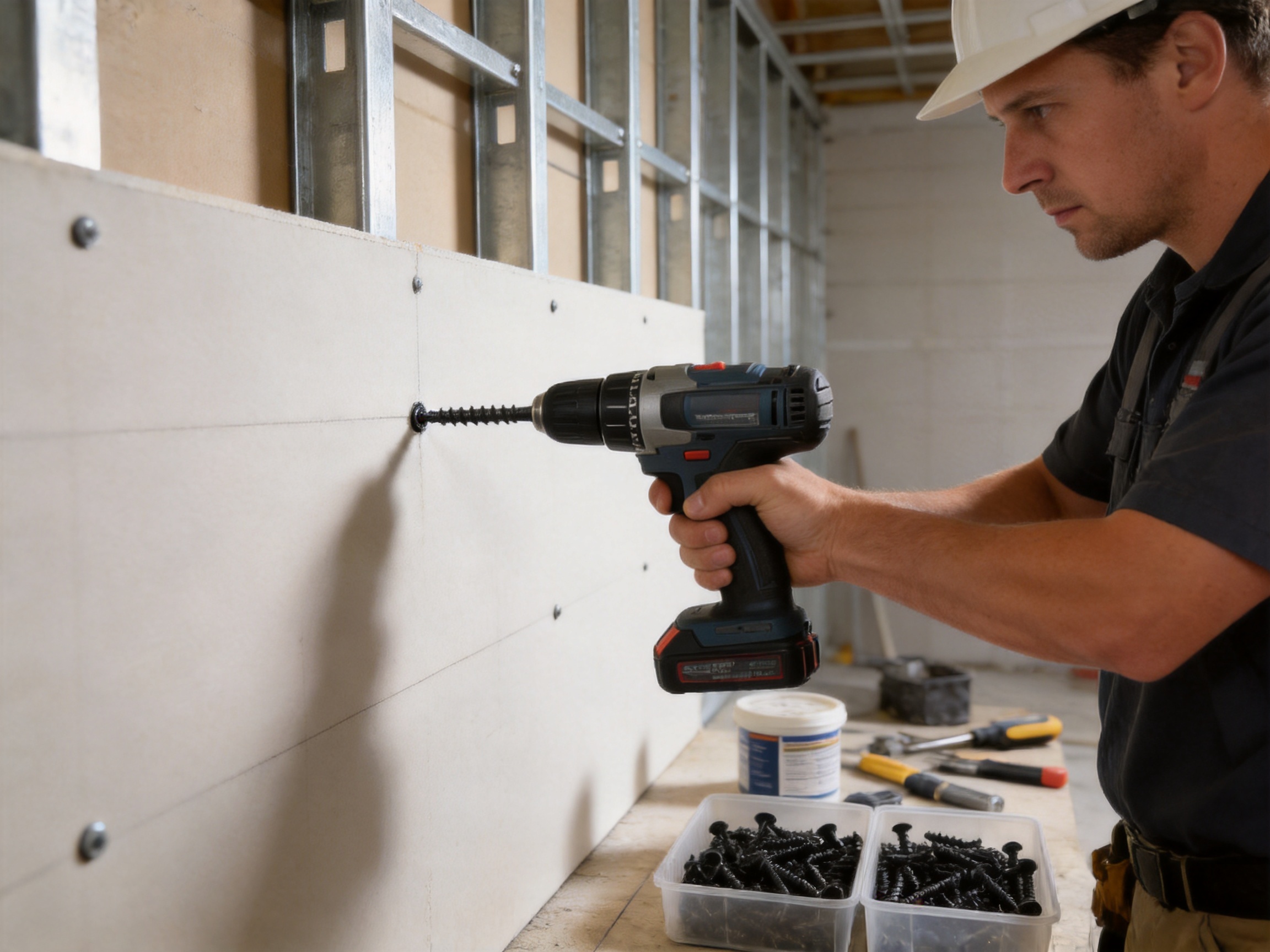
Drywall installation depends on thousands of small fastening points. Each screw must penetrate the board cleanly, engage the supporting material securely, seat at the correct depth, and remain stable during finishing, painting, and long-term service. A fastener that appears simple can therefore have a major influence on installation speed, surface quality, joint durability, and project cost.
The Phillips bugle head gypsum board screw with fine thread and black phosphate finish is designed specifically for applications involving gypsum board, drywall panels, plasterboard, and related interior construction systems. Its configuration combines a bugle head, a Phillips recess, a sharp point, a fine-thread profile, and a black phosphated surface. Together, these features provide a practical balance between driving performance, holding strength, board protection, corrosion resistance for interior environments, and compatibility with professional installation tools.
The product is manufactured by Lizhan Hardware Co., Ltd., a screw producer serving customers from a factory in Haiyan, Jiaxing City, Zhejiang, China, with warehouse support in Chonburi, Thailand. Its production range also includes alternative recesses, diameters, lengths, thread configurations, and surface treatments, allowing buyers to select a fastening solution that matches their installation method and project requirements.
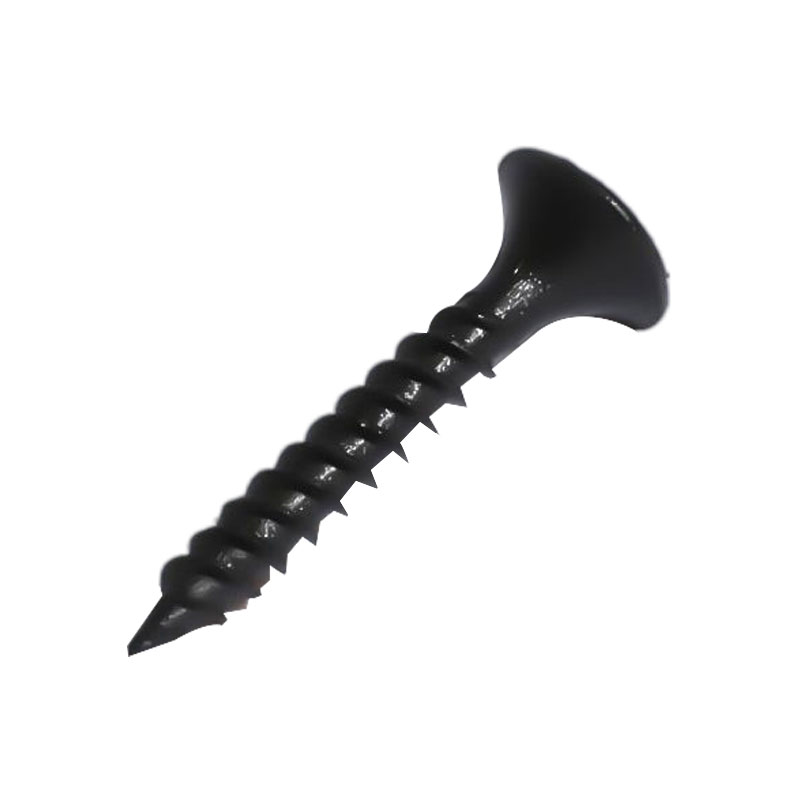
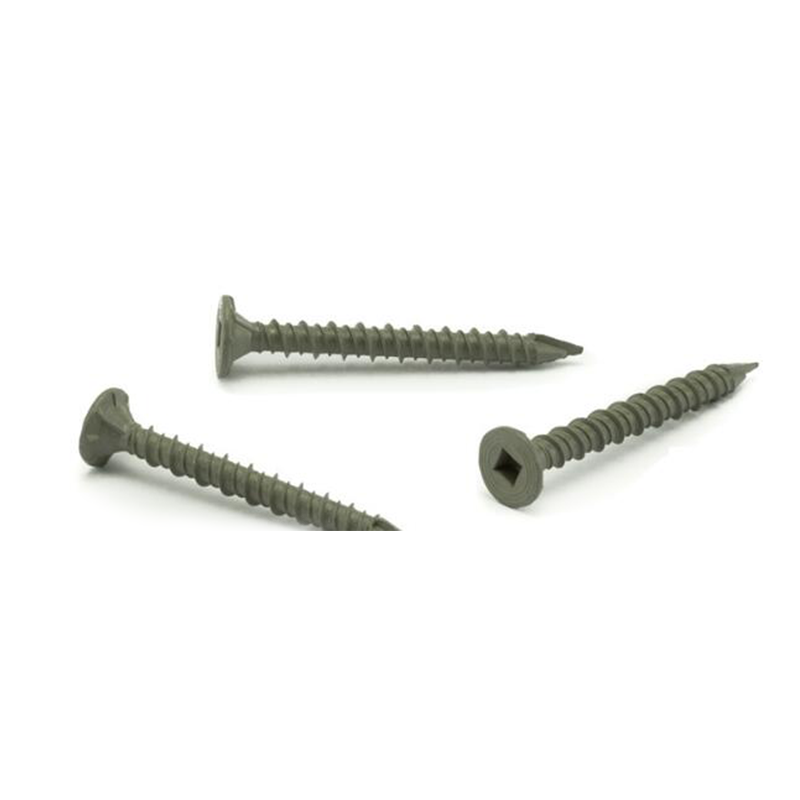
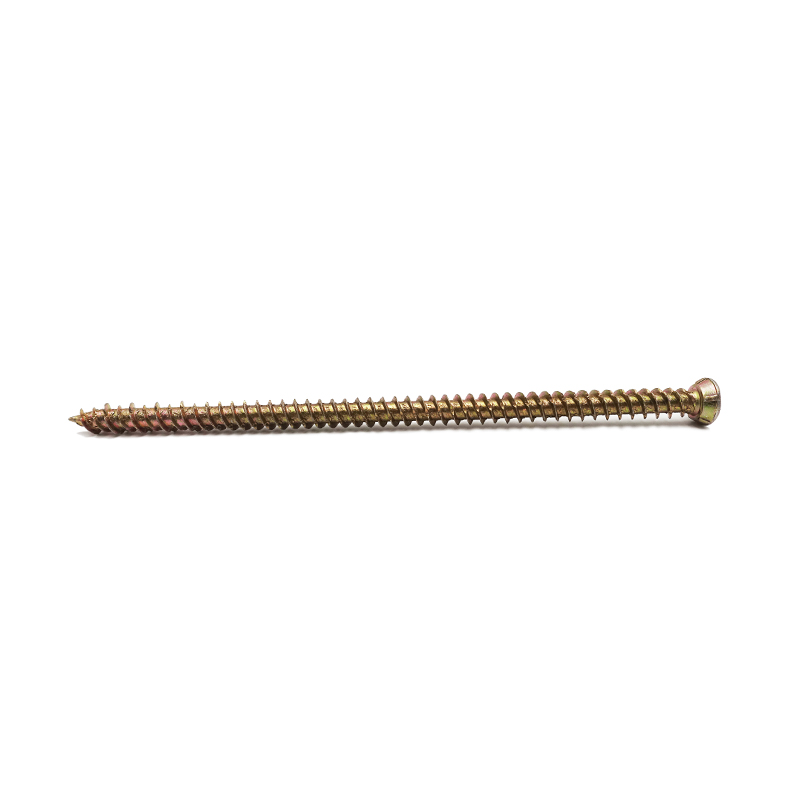
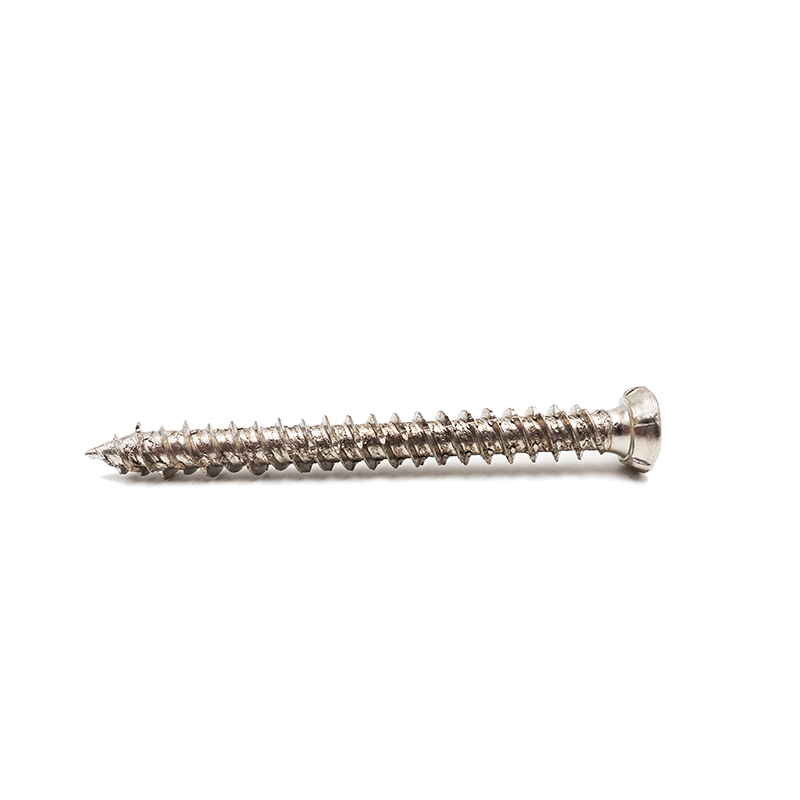
Phillips bugle head gypsum board screw fine thread black phosphated
Product Overview
Gypsum board screws are specialized fasteners rather than general-purpose wood or machine screws. Their geometry is developed around the characteristics of gypsum panels and the substrates commonly found behind them. The screw must pass through the board without causing excessive cracking, pull the panel firmly against the framing, and create a recessed seating point that can be covered with joint compound or finishing material.
This product uses a bugle head. The bugle shape distributes pressure over a wider area than a conventional flat or pan head and gradually transitions from the head into the shank. When correctly installed, the head can form a controlled countersunk depression in the gypsum surface without tearing through the paper face. This is particularly important because a damaged paper layer can weaken the board locally and make finishing more difficult.
The standard configuration is a Phillips recess, fine thread, black phosphate finish, and carbon steel construction based on C1022A material. The same production range can also be supplied with square or Torx recesses, coarse thread, and several alternative coatings, depending on the order specification.
The product range includes the following nominal diameter options:
| Nominal Size | Approximate Diameter | Typical Product Selection |
|---|---|---|
| #6 | Approximately 3.5 mm | Light drywall and board fastening applications |
| #8 | Approximately 4.2 mm | Common general-purpose drywall installation |
| #10 | Approximately 4.8 mm | Higher holding requirements and selected substrates |
| #12 | Approximately 5.5 mm | Heavier-duty board or framing combinations |
| #14 | Approximately 6.3 mm | Applications requiring a larger shank and greater engagement |
Available length ranges are associated with the selected diameter. The listed production range includes #6, #7, and #8 lengths from approximately 7.9 to 8.4; #10 lengths from approximately 8.6 to 9.2; and #12 and #14 lengths from approximately 11.8 to 12.4. Exact ordering should be confirmed through a dimensional drawing, sample, or purchase specification before production.
Why the Bugle Head Matters in Drywall Installation
The head is one of the most important features of a drywall screw. A head that is too aggressive may cut through the board face. A head that is too shallow may remain proud of the surface and interfere with taping or finishing. A head that distributes load poorly may create a visible depression or localized damage.
The bugle head is shaped to enter the gypsum board in a controlled manner. Its curved underside helps spread the clamping force, while the tapered transition allows the head to sit below the surface when the installer applies the correct driving depth. This makes the screw suitable for finishing systems in which the fastener heads are covered with joint compound, skim coat, or another surface treatment.
Compared with a conventional pan-head screw, the bugle head is generally better suited to board materials because it reduces the risk of a sharp head edge cutting the paper surface. Compared with a fully flat head, it can offer a more gradual entry profile. The result is a fastening point that is easier to conceal and less likely to create a raised spot beneath the finished wall.
Correct installation remains essential. Even a well-designed bugle head can damage gypsum board if the driver is set too deeply, if excessive pressure is applied, or if the screw is installed at an incorrect angle. The ideal result is a slightly recessed head with the board paper substantially intact around the fastening point.
Fine Thread Performance
Fine-thread drywall screws are commonly selected for metal framing and other applications where a finer thread can improve engagement with relatively thin material. The thread has a smaller pitch and more threads along a given length than a coarse-thread design. This allows the fastener to develop engagement over multiple thread turns when driven into suitable metal studs or light-gauge framing.
Fine threads can also provide a controlled driving feel in automated or professional installation. The driver engages progressively, and the screw can be positioned accurately before the head reaches the board surface. When the substrate is compatible, the thread form helps maintain contact and supports consistent clamping of the panel to the framing.
The correct choice between fine and coarse thread depends on the substrate. Fine thread is generally associated with metal framing, while coarse thread is often selected for wood studs and softer timber-based materials. The production range supports both options, but they should not be treated as interchangeable. Using the wrong thread profile may reduce holding power, increase installation effort, or cause unnecessary substrate damage.
Fine thread performance is influenced by diameter, length, point geometry, substrate thickness, and installation speed. For this reason, buyers should identify the framing material, board thickness, and required penetration before finalizing a screw specification.
Phillips Recess and Driving Compatibility
The Phillips recess remains one of the most widely recognized drive systems in drywall construction. Its broad availability makes it compatible with common screw guns, cordless drills, bit holders, and manual drivers. Contractors can usually obtain replacement bits quickly, and installers already familiar with Phillips fasteners can adopt the product without a major change in working method.
The recess is designed to receive the driver bit and transfer rotational force to the screw. A properly matched bit improves engagement, reduces cam-out, and helps the operator control seating depth. Worn or undersized bits should be replaced because they can damage the recess, increase slippage, and reduce productivity.
Although Phillips is the standard configuration described for this product, the production range also includes square and Torx recess options. These alternatives may be useful for customers prioritizing higher bit engagement, reduced cam-out, or compatibility with specific automated tools. The availability of several recess types is an advantage for distributors and project buyers who serve different contractor preferences.
The recess should be specified together with the screw size and intended driver bit. Packaging should identify the correct bit where appropriate, particularly when the fastener is supplied to professional users or included in a project kit.
Black Phosphate Surface Treatment
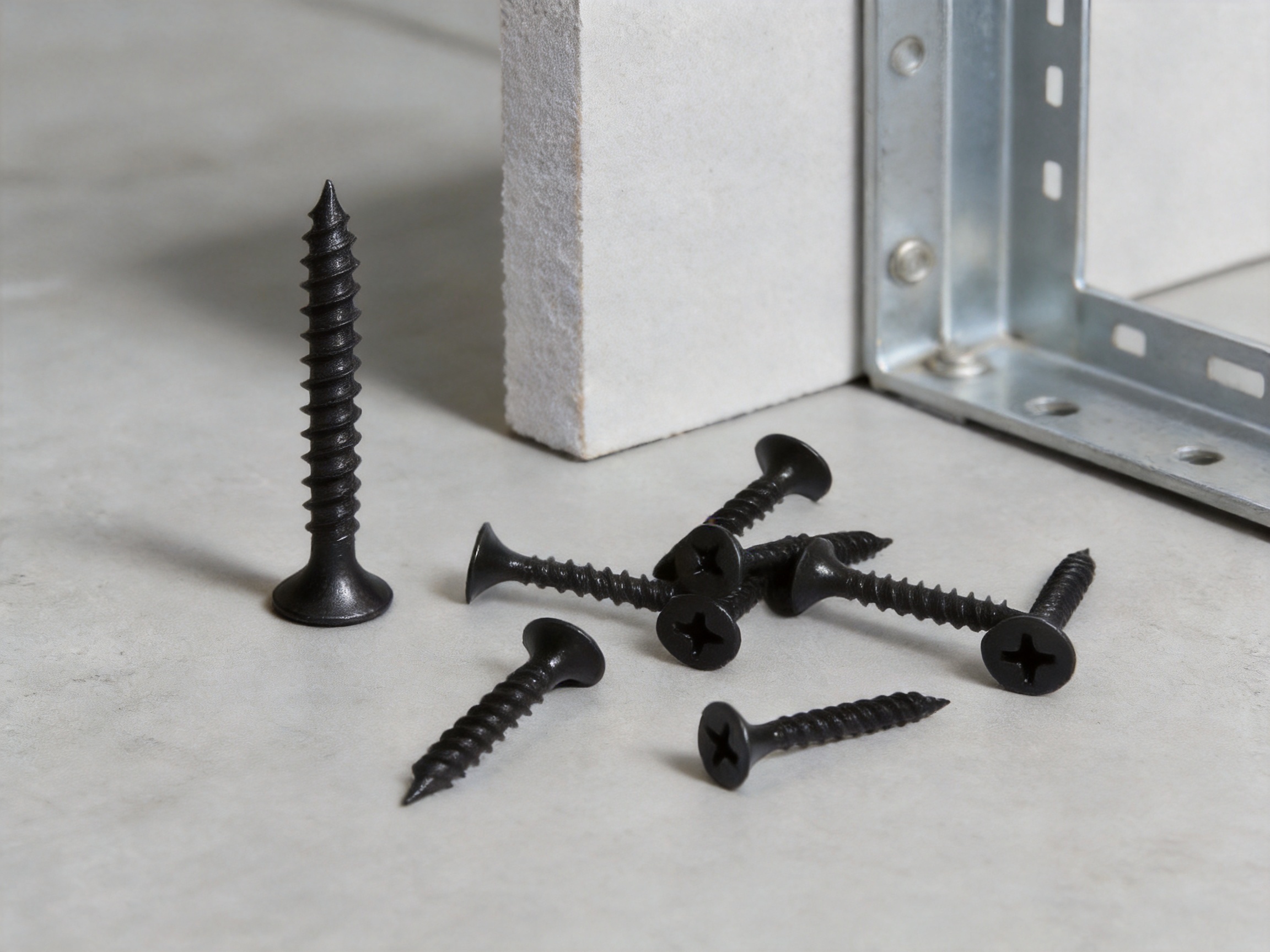
Black phosphate is a commonly used surface treatment for drywall screws. It creates a dark, non-metallic-looking finish that is visually compatible with many drywall installation environments and helps provide a degree of surface protection for interior applications. It also supports the handling characteristics expected of a professional construction screw.
The black appearance can be useful during installation because it contrasts with light-colored gypsum board, making screw locations easier to identify before joint treatment. After the board is finished, the screw head is normally concealed beneath compound or another coating, so the final visible color is not usually a design consideration.
Phosphate finishes are not equivalent to heavy-duty zinc plating or corrosion-resistant systems intended for outdoor exposure. Black phosphated drywall screws are primarily appropriate for dry interior conditions or applications where the surrounding system provides adequate protection. They should not automatically be specified for continuously damp areas, exterior cladding, marine environments, or chemically aggressive locations.
For more demanding conditions, the available surface range includes zinc plating, yellow zinc plating, Dacromet, Ruspert, and Magni-type options. These alternatives can be evaluated according to the required corrosion performance, appearance, cost, and applicable project standard. The final coating should always be selected based on the environment rather than appearance alone.
C1022A Carbon Steel Construction
The product is made from C1022A steel, a carbon steel grade widely used for screws and other cold-formed fasteners. This material provides a practical combination of formability, strength, thread-forming capability, and suitability for high-volume production.
Material selection affects every stage of screw performance. The wire must be suitable for forming the head and shank. The screw must support thread rolling or thread forming without unacceptable cracking. Heat treatment must develop the required hardness and strength while maintaining sufficient toughness for driving. Surface treatment must then be applied consistently to the finished fastener.
C1022A is suitable for the general performance expectations of drywall screws when the material preparation, forming, heat treatment, thread geometry, and inspection procedures are properly controlled. The steel grade is not a substitute for quality control, however. Finished screw performance depends on the complete manufacturing system and not only on the name of the raw material.
For technical or regulated projects, buyers may request material documentation, dimensional reports, hardness records, coating information, and sample testing. These documents help confirm that the supplied product matches the agreed purchase specification.
Manufacturing Process and Quality Control
The production of a reliable drywall screw begins with controlled raw material preparation. Steel wire is selected according to the required diameter, forming behavior, and mechanical performance. The wire may be cleaned, drawn, and prepared to achieve a consistent input condition before heading and thread production.
Cold Heading
Cold heading forms the screw head from prepared wire. The process uses dies and punches to create the bugle profile, shank transition, and drive recess. Accurate tooling is essential because small variations in the head can influence seating depth, board damage, driver engagement, and finished appearance.
The head-forming process must maintain consistent concentricity between the head and shank. A misaligned head can cause the driver to sit unevenly and may make the screw rotate with excessive vibration. Tool wear must therefore be monitored, and production settings should be adjusted before dimensional drift becomes significant.
Point and Thread Formation
After heading, the screw blank receives its point and thread. Thread rolling is commonly used because it forms the thread profile by displacing material rather than removing it. This can produce a strong, continuous thread form and support efficient high-volume manufacture.
Thread geometry must match the intended substrate. Fine-thread drywall screws require consistent pitch, crest, root, and flank dimensions. The point should initiate penetration cleanly without excessive wandering. Inconsistent points can increase installation time or cause the screw to slide across the board before engaging the framing.
Inspection may include checks of major diameter, minor diameter, pitch, thread length, point shape, and overall length. Functional testing with representative board and framing materials can provide additional confirmation that the screw performs as expected in actual installation conditions.
Heat Treatment
Heat treatment develops the mechanical properties required for driving and service. A drywall screw must be hard enough to penetrate the intended substrate and resist thread damage, yet sufficiently tough to avoid brittle failure during installation.
Uniform heating, controlled atmosphere, appropriate quenching, and tempering are important parts of the process. Over-hardening can increase the risk of breakage, while insufficient hardness may produce deformation or poor penetration. Production control should therefore consider hardness, torque performance, torsional strength, and visual evidence of cracking.
Phosphate Finishing
After heat treatment and cleaning, the screw can receive a black phosphate finish. Surface preparation is important because oil, scale, residue, or contamination may interfere with coating adhesion and uniformity. The finished screws should exhibit an even appearance with no unacceptable bare areas, heavy buildup, peeling, or contamination.
Coating consistency also matters for packaging and installation. Excessive residue may affect feeding through automatic screw guns, while inadequate treatment may reduce the expected surface protection. Production inspection should therefore include appearance checks and, when required, coating-related testing.
Sorting, Packing, and Shipment
Finished screws are sorted to remove mixed sizes, damaged pieces, malformed heads, incomplete threads, and other nonconforming items. Packaging can be arranged for retail bags, cartons, bulk boxes, or project-specific requirements. Clear labeling should identify diameter, length, thread type, recess, finish, quantity, and lot information.
Lizhan Hardware Co., Ltd. supports international supply through its China factory and Thailand warehouse arrangement. This structure can help serve customers in different markets, especially distributors and contractors that require coordinated manufacturing and regional stock handling. Availability, minimum order quantity, packaging, and lead time should be confirmed for each purchase.
Advantages Over General-Purpose and Lower-Specification Alternatives
The product offers several practical advantages when compared with generic screws that are not designed for drywall installation.
Purpose-Designed Head Geometry
A generic pan head or flat head may not create the controlled recess needed for board finishing. The bugle head is designed around the surface behavior of gypsum board and can produce a more suitable seating profile when installed correctly.
Application-Matched Thread
The fine-thread option is appropriate for many metal framing applications. A general-purpose screw may have a thread that is too coarse, too shallow, or otherwise unsuitable for the selected stud material. The correct fine-thread design can improve engagement consistency and reduce unnecessary installation resistance.
Professional Drive Options
The Phillips recess provides broad tool compatibility, while the availability of square and Torx alternatives gives buyers more flexibility. This is especially useful for wholesalers that need to serve different installation teams and regional preferences.
Consistent Surface Appearance
The black phosphate finish gives the screw a uniform appearance suitable for interior drywall work. It can also provide a predictable surface condition for handling and installation, provided the product is used in an environment appropriate for phosphate-treated fasteners.
Range Flexibility
The available diameter and length range allows customers to select a screw according to board thickness, framing type, and required penetration. Instead of relying on one universal size, installers can choose a configuration that reduces the risk of insufficient engagement or excessive penetration.
Manufacturing Support
A manufacturer with a broad screw product range can often coordinate related fasteners, alternative finishes, recess styles, and packaging formats. This can simplify procurement for distributors and reduce the number of suppliers required for a mixed construction-fastener program.

Installation Recommendations
Before installation, confirm the screw specification against the board system and framing material. The selected length should provide sufficient penetration into the framing without extending unnecessarily far beyond the substrate. The selected thread should match wood or metal framing as required.
Use a driver bit that matches the Phillips recess and is in good condition. A worn bit can slip out of the recess and damage both the bit and screw. For powered installation, use a screw gun or drill with adjustable clutch and depth control where possible.
Drive the screw perpendicular to the board surface. An angled screw may create an uneven head depression, reduce clamping efficiency, or cause the edge of the head to tear the paper face. Apply enough pressure to maintain bit engagement, but avoid forcing the screw deeper than necessary.
The head should normally sit slightly below the board surface while leaving the surrounding paper substantially intact. If the screw breaks through the paper, the fastening point may lose holding performance and become more difficult to finish. If the head remains proud, it may interfere with taping and create a visible imperfection after painting.
Keep the screw spacing and edge distances consistent with the board manufacturer’s instructions, applicable building code, and project specifications. Fastener spacing is a system requirement and should not be determined by screw type alone.
Store the screws in a clean, dry location. Protect open cartons from moisture, condensation, dust, and chemical contamination. Although black phosphate provides useful surface treatment for suitable interior applications, proper storage remains important for preserving appearance and installation performance.
Applications
These screws are suitable for many interior drywall and gypsum board applications, including the attachment of gypsum panels to metal framing. They may be used in residential construction, commercial interiors, office partitions, retail fit-outs, institutional buildings, renovation projects, and general remodeling work where the environmental conditions are appropriate.
They can also be considered for related board installation tasks when the screw geometry and substrate are compatible. However, the product should not be used automatically for structural connections, load-bearing joints, exterior exposure, fire-rated systems, or moisture-critical assemblies without confirming the full system requirements.
For fire-rated, acoustic, impact-resistant, or specialized board systems, the fastener may form only one part of a tested assembly. The board manufacturer’s instructions should be followed regarding screw type, spacing, penetration, and installation method.
| Application Factor | Recommended Consideration |
|---|---|
| Board material | Confirm gypsum board or compatible panel type |
| Framing material | Select fine thread for suitable metal framing or coarse thread for suitable wood substrates |
| Environment | Use black phosphate mainly for suitable dry interior conditions |
| Drive equipment | Use a matching Phillips, square, or Torx bit according to the ordered recess |
| Fastener length | Allow adequate substrate penetration without excessive projection |
| Finishing method | Seat the bugle head slightly below the board surface without damaging the face paper |
Purchasing and Customization Considerations
Professional buyers should provide a complete specification rather than ordering only by the general term “drywall screw.” The order should identify the nominal diameter, length, thread type, head style, recess, surface treatment, material requirement, packaging, and quantity.
If the screw is intended for automated installation, feeding equipment, or high-volume project work, the buyer should also communicate tool requirements. Drive recess dimensions, head consistency, thread cleanliness, and packaging format can affect machine performance.
For private-label or distribution programs, packaging can be developed around market requirements. Labels may include product name, size, finish, thread type, quantity, batch identification, and handling instructions. The exact packaging format should be agreed before production to prevent confusion between similar sizes.
Samples are recommended when the product will be used in a new board or framing system. A sample evaluation can verify driving torque, seating depth, board integrity, holding behavior, coating appearance, and compatibility with the installer’s tools.
Customers requiring a different corrosion-protection level can evaluate zinc plated, yellow zinc plated, Dacromet, Ruspert, or Magni-type finishes. Customers preferring a different drive system can request square or Torx recesses. These options demonstrate the flexibility of the product line while allowing the standard black phosphated Phillips version to remain a cost-effective choice for common interior work.
Supplier Strengths and International Service
Lizhan Hardware Co., Ltd. operates as a screw manufacturer and supplier with a product portfolio covering drywall screws, self-drilling screws, roofing screws, furniture screws, fasteners, and related hardware. This breadth can benefit buyers that prefer to consolidate several screw categories with one production partner.
The company’s factory address is in Haiyan, Jiaxing City, Zhejiang, China, an area associated with hardware and fastener production. The company also lists a warehouse location in Chonburi, Thailand. A factory-and-warehouse structure can support production coordination, stock handling, and customer service for international buyers, subject to product availability and commercial arrangements.
For overseas customers, communication is available through sales contacts, telephone, WhatsApp, and other business channels. Buyers should use formal quotations, technical drawings, approved samples, and written purchase specifications to ensure that all requirements are clearly documented.
The company’s manufacturing strength is most valuable when combined with a disciplined quality process. A broad product catalog alone does not guarantee suitability; the important factors are consistent raw materials, controlled forming, reliable heat treatment, uniform finishing, accurate sorting, suitable packaging, and responsive technical communication.
Customers can request information such as production range, available finishes, dimensional tolerances, packaging options, sample procedures, and shipping arrangements. For larger or recurring programs, a quality agreement can define inspection methods, acceptable tolerances, lot identification, and handling of nonconforming product.
Quality Assurance for Large Projects
Large drywall projects benefit from a repeatable fastener supply. Variations in diameter, length, head profile, or thread geometry can affect driver settings and installation results. Consistency is therefore important not only for individual screw strength but also for the overall productivity of the installation crew.
Incoming inspection may verify packaging condition, product identity, quantity, surface appearance, and visible defects. Dimensional inspection can check overall length, head diameter, head height, shank diameter, thread length, and recess condition. Functional tests may examine driving performance in representative board and framing materials.
Mechanical checks can include hardness, torsional performance, and resistance to deformation. The exact test method should correspond to the purchaser’s standard or applicable fastener specification. Where corrosion performance is important, coating and environmental testing should be defined before ordering.
Lot traceability helps connect finished goods with raw materials, production dates, process records, inspection results, and shipment information. This is particularly useful for major projects, repeat orders, and distributor inventory management.
Quality control should also extend to logistics. Mixed cartons, incorrect labels, damaged packaging, or moisture exposure can create problems even when the screws themselves meet the technical specification. Proper carton identification and dry transport conditions help preserve product integrity through delivery.
Environmental and Service Limitations
Black phosphated drywall screws should be selected for the environment in which they will operate. Interior rooms with controlled humidity are generally more suitable than exposed exterior locations or areas subject to persistent condensation.
Where moisture, salt, chemical vapors, or outdoor exposure is expected, a more suitable coating or stainless-steel solution may be required. The appropriate choice depends on the complete construction system, expected service life, local regulations, and corrosion classification.
Phosphate finish should also not be confused with a decorative coating. Its primary purpose is functional surface treatment for an appropriate fastener application. If the screw will remain visible, a different appearance or coating requirement may be more appropriate.
Environmental claims should be based on documented test results and project requirements. Buyers should request coating information and test evidence when the application involves unusual exposure or a formal durability specification.
Why Product Specification Matters
A drywall screw is a small component, but an incorrect specification can produce widespread installation problems. A screw that is too short may fail to engage the framing adequately. A screw that is too long may interfere with concealed services or project farther than intended. A coarse thread used in thin metal framing may not deliver the desired holding behavior, while a fine thread used in wood may not provide the most efficient installation.
Head style also affects finishing quality. A screw that does not seat properly can create bumps, tears, or weak points in the board face. Recess selection affects driver compatibility and productivity. Coating selection affects service suitability. Each feature should therefore be considered as part of a complete fastener system.
The product range described here allows buyers to combine several choices: Phillips, square, or Torx recess; fine or coarse thread; diameters from #6 through #14; multiple length groups; and black phosphate, zinc, yellow zinc, Dacromet, Ruspert, or Magni-type surface treatments.
This breadth creates a practical advantage over suppliers that offer only one fixed configuration. Distributors can stock a core black phosphate Phillips item for everyday interior drywall work while sourcing alternative configurations for customers with specialized tool, substrate, or environmental requirements.
Q&A
What is the main use of this product?
It is designed for fastening gypsum board or drywall panels, especially where a bugle head and fine thread are appropriate for the selected framing system. The standard version is intended mainly for suitable interior construction conditions.
What does the bugle head do?
The bugle head distributes pressure over a broader area and is shaped to seat into gypsum board with a controlled recess. When installed correctly, it helps create a fastening point that can be covered during finishing without leaving a raised head.
Why choose a fine-thread version?
Fine thread is commonly selected for suitable metal framing and light-gauge substrates. It provides more thread engagement over a given length than a coarse thread. The correct choice still depends on the actual framing material and project instructions.
Is the screw suitable for wood studs?
The listed product is a fine-thread configuration, while the production range also includes coarse thread. Coarse thread is often preferred for wood framing. Buyers should specify the substrate before ordering and select the thread profile recommended for that material.
What does the black phosphate finish provide?
It provides a dark, uniform surface treatment suitable for many dry interior applications and offers limited surface protection. It is not a replacement for a high-performance exterior or marine corrosion-resistant coating.
Can other finishes be supplied?
Yes. The stated production range includes zinc plated, yellow zinc plated, Dacromet, Ruspert, and Magni-type surface options. Availability and technical suitability should be confirmed for each size and order.
Are other recess types available?
Yes. In addition to Phillips, the range includes square and Torx recesses. The recess should be matched to the customer’s driver equipment and installation preferences.
What steel is used?
The listed material is C1022A carbon steel. Its performance depends on the complete manufacturing process, including wire preparation, cold heading, thread formation, heat treatment, finishing, inspection, and sorting.
What diameters are available?
The production range includes #6, #8, #10, #12, and #14, corresponding approximately to 3.5, 4.2, 4.8, 5.5, and 6.3 millimeters respectively.
How should the screw be installed?
Use a matching driver bit, keep the screw perpendicular to the board, and control the driving depth so the bugle head sits slightly below the surface without breaking through the board paper. Follow the board manufacturer’s spacing and installation instructions.
Can the screw be used in exterior construction?
The black phosphated version should not be assumed suitable for exterior exposure. For damp, outdoor, coastal, or chemically aggressive conditions, a more appropriate coating or material should be evaluated.
Can samples be requested?
Sample approval is recommended for new applications, large projects, private-label programs, or orders involving a new recess, coating, diameter, or length. Testing samples in the actual board and framing system can confirm practical compatibility.
What information should be included in an inquiry?
Include the required diameter, length, thread type, head style, recess, surface treatment, material, quantity, packaging, delivery destination, and intended substrate. Installation-tool requirements and any inspection standard should also be communicated.
Conclusion
The Phillips bugle head gypsum board screw with fine thread and black phosphate finish is a focused fastening solution for drywall and gypsum board installation. Its bugle head supports controlled recessed seating, its fine thread is suited to many metal-framing applications, its Phillips recess offers broad tool compatibility, and its C1022A steel construction supports the strength and formability needed for professional screw production.
Its main advantages over generic fasteners come from application-specific design, available size flexibility, multiple recess and coating options, and manufacturing support. The black phosphated configuration is particularly practical for dry interior work where economical, consistent, and easy-to-source fastening is required.
Lizhan Hardware Co., Ltd. complements this product with a broad fastener range, manufacturing facilities in China, warehouse support in Thailand, and international customer-service channels. Through controlled forming, thread production, heat treatment, finishing, inspection, sorting, and packaging, the company can support both standard orders and customized procurement programs.
For the best result, buyers should select the fastener according to the board, framing, environment, tool, and finishing system. When these factors are correctly matched, the product can help improve installation efficiency, protect board surfaces, simplify finishing, and provide dependable fastening performance across a wide range of interior construction projects.
References
1. General principles of gypsum board installation and concealed fastener placement, construction finishing practice manuals.
2. Carbon steel fastener manufacturing practices, including cold heading, thread rolling, heat treatment, and inspection procedures.
3. Technical guidance for selecting fastener thread profiles for wood framing and light-gauge metal framing.
4. Surface treatment and corrosion-protection principles for phosphate-coated and plated carbon-steel fasteners.
5. Manufacturer product information for Phillips bugle head gypsum board screws, including diameter, length, recess, thread, material, and finish options.
6. Drywall board manufacturer recommendations for screw spacing, seating depth, substrate penetration, and finishing preparation.