Introduction
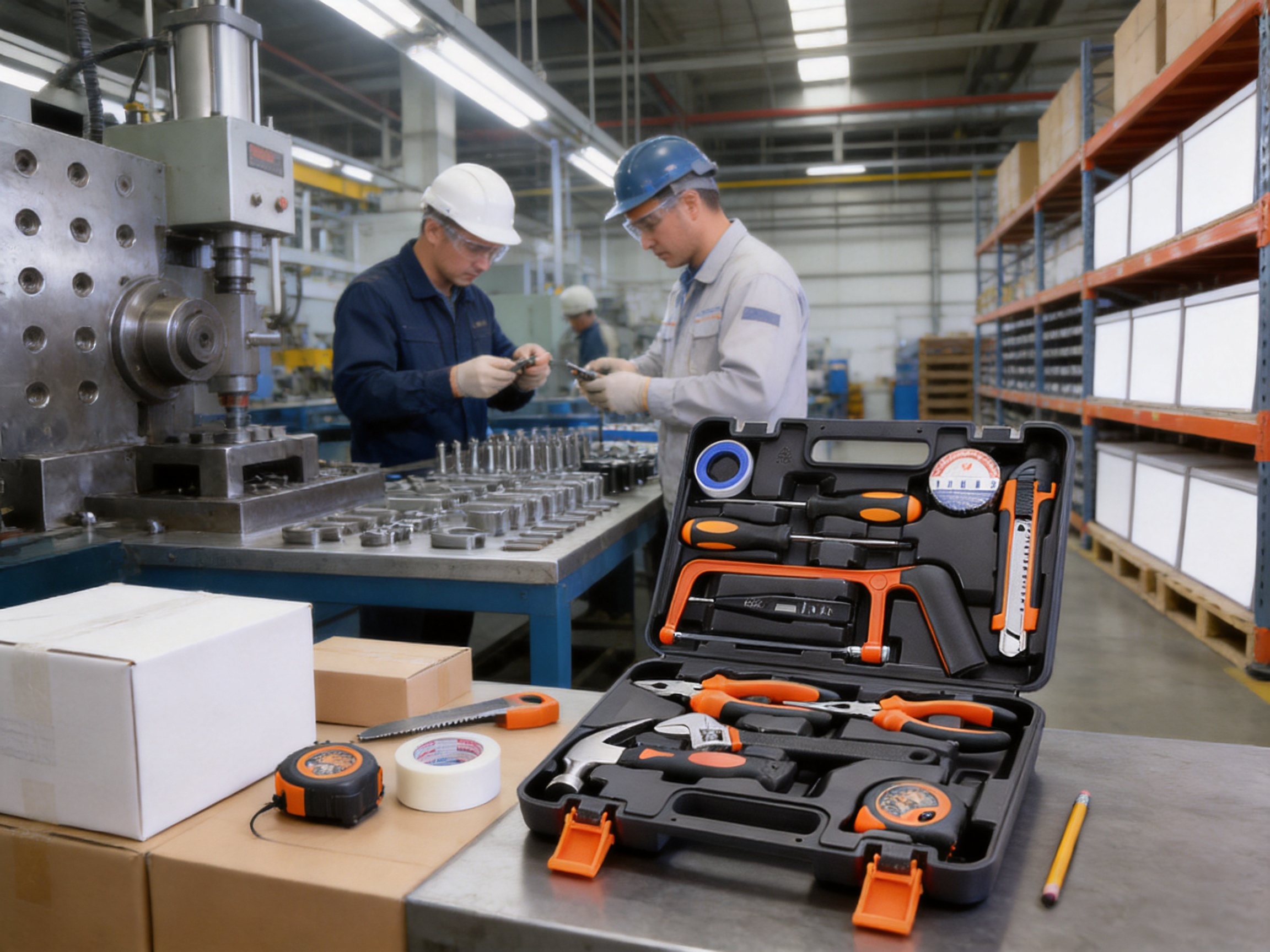
Home maintenance rarely requires a large professional workshop, but it does require the right tools at the right moment. A loose screws, leaking threaded connection, damaged cable covering, uneven picture frame, loose cabinet fitting, or small household repair can quickly become inconvenient when the necessary tools are scattered across different drawers. A compact, organized repair kit addresses this problem by bringing essential hand tools and maintenance accessories together in one portable package.
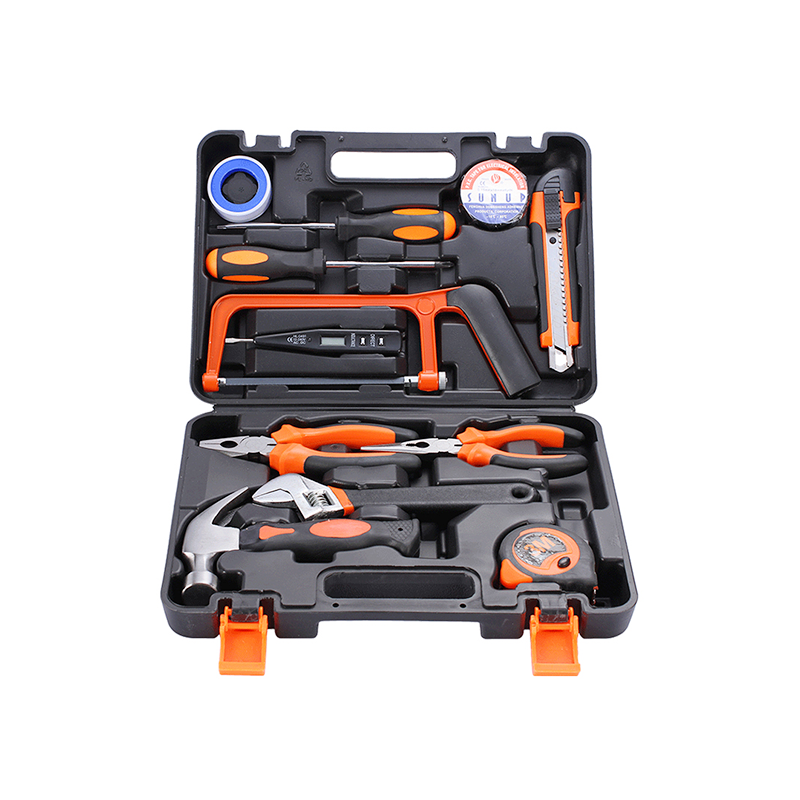
The Multi-Function Home Repair Tool LZ000XM000013 is designed as an all-purpose household repair solution. It combines basic screwsdrivers, pliers, a wrench, a hammer, a measuring tape, a utility knife, a mini saw, electrical tape, PTFE tape, a test pencil, and a compact vice in one toolbox. This combination is intended for routine home repairs, furniture assembly, light workshop tasks, temporary maintenance, and general do-it-yourself applications.
What makes this type of tool set valuable is not simply the number of items included. Its practical advantage comes from the relationship between tool selection, portability, organization, accessibility, and suitability for common repair situations. Instead of purchasing individual tools one at a time, users can obtain a coordinated set that covers a broad range of basic tasks from one package.
Manufactured and supplied by Lizhan Hardware Co., Ltd., the set reflects the company’s involvement in hardware products, fasteners, stamping parts, packaging, and household tools. These product categories are closely connected. Hardware manufacturing requires control over metals, dimensions, forming, surface treatment, assembly, inspection, and packaging. A company experienced in these areas can apply the same production discipline to the components and presentation of a household repair kit.
This article examines the product’s contents, applications, design value, manufacturing considerations, quality expectations, packaging advantages, and comparison with less coordinated alternatives. It also explains how the set can serve households, renters, property managers, maintenance teams, retailers, and promotional product buyers.
Multi-function home repair tool
Product Overview
The Multi-Function Home Repair Tool Set is identified by product code LZ000XM000013 and is categorized as an XM set of sets. It is supplied in a toolbox-style outer package designed to keep the included items together. The package contains a selection of tools and consumables for common household maintenance tasks.
The listed contents are:
| Included item | Quantity | Typical application |
|---|---|---|
| PTFE tape | 1 piece | Sealing threaded plumbing connections |
| Cross screwsdriver | 1 piece | Driving cross-head screws |
| Test pencil | 1 piece | Basic electrical presence testing where appropriate |
| Vice | 1 piece | Holding small workpieces during repair |
| Mini hammer | 1 piece | Light fastening, adjustment, and assembly work |
| Electrical tape | 1 piece | Insulating and bundling electrical wires and cables |
| Utility knife | 1 piece | Cutting packaging, tape, cardboard, and suitable materials |
| Slot screwsdriver | 1 piece | Driving flat-head screws |
| Mini saw | 1 piece | Small cutting tasks involving suitable lightweight materials |
| Long nose plier | 1 piece | Gripping, positioning, and reaching into narrow spaces |
| Monkey wrench | 1 piece | Adjusting nuts, bolts, and fittings of various sizes |
| 3M measuring tape | 1 piece | Measuring furniture, spaces, materials, and installation points |
| Toolbox outer box | 1 piece | Storage, organization, transport, and retail presentation |
The combination includes both reusable tools and consumable materials. The screwsdrivers, pliers, wrench, hammer, saw, vice, and measuring tape can support repeated use. PTFE tape and electrical tape are consumable accessories that may need replacement after use. This balance gives the kit flexibility: the user receives durable working tools as well as materials needed for immediate repair.
Why a Coordinated Tool Set Is Useful
Many household repairs fail to begin because the user does not have a suitable tool nearby. A coordinated set solves the availability problem. When the tools are stored together, the user can identify the required item quickly instead of searching through several boxes or purchasing a new tool for every minor task.
The set also supports task continuity. Measuring tape can be used before installation, the appropriate screwsdriver can be selected during assembly, pliers or a wrench can be used for adjustment, and the hammer or mini saw can support finishing work. This sequence is especially useful during furniture assembly, wall-mounted fixture installation, minor plumbing preparation, packaging work, and general household upkeep.
Another benefit is reduced duplication. A household may not need several specialized versions of every hand tool. A practical starter kit can cover the most frequent basic requirements while occupying less storage space than a collection of separate packages. For renters, students, new homeowners, dormitory residents, and small offices, a compact set can provide an economical maintenance foundation.
Organization is also important for safety and tool life. Loose tools may be exposed to moisture, dust, impact, or misplacement. A dedicated outer box helps reduce unnecessary movement and makes it easier to return every item after use. When a tool has a designated storage location, missing items are noticed sooner and damage can be identified before the next repair.
Compared with buying unrelated low-cost tools individually, a coordinated set offers a more consistent purchasing experience. The buyer receives one product specification, one package format, and one product code. For retailers and distributors, this can simplify listing, inventory control, merchandising, and replenishment.
Key Functions of the Included Tools
Cross and Slot Screwdrivers
Cross-head and flat-head screws remain common in furniture, household appliances, electrical covers, cabinets, brackets, toys, and general fixtures. Including both a cross screwsdriver and a slot screwsdriver allows the user to address two of the most frequently encountered screws profiles.
A dedicated screwsdriver is generally more convenient than improvising with a knife or another unsuitable object. The correct tip can improve contact with the screws head, reduce slipping, and help protect the surrounding surface. During assembly, a screwsdriver can be used to tighten hardware gradually and accurately. During maintenance, it can assist with removing covers, replacing fittings, and adjusting components.
For best performance, the user should select a tip that matches the screws head and apply controlled downward pressure. The screwsdriver should not be used as a chisel, pry bar, or substitute for a high-torque professional driver. Proper use helps extend the life of both the tool and the fastener.
Long Nose Pliers
Long nose pliers are especially useful where access is restricted. Their narrow jaws can reach into small gaps, align wires, hold pins, grip small components, and position hardware that is difficult to handle with fingers. They are useful in household electrical preparation, craft work, furniture assembly, and light mechanical tasks.
Their elongated shape provides reach, while the gripping jaws provide control. They can also help hold a small part while another tool is used. However, they should be used within their intended range. They are not a replacement for heavy-duty cutting pliers, locking pliers, or insulated electrical tools certified for live work.
Monkey Wrench
The adjustable monkey wrench is a flexible addition to the set because its jaw opening can be changed for different nut and fitting sizes. It can be used for light plumbing adjustments, furniture hardware, mechanical fasteners, and household fixtures. One adjustable wrench can reduce the need to carry several fixed-size wrenches for basic tasks.
For effective use, the movable jaw should be adjusted closely around the fastener. Excessive clearance can damage corners, while excessive force may exceed the tool’s intended capacity. Users should also avoid using an adjustable wrench as a hammer or extension tool.
Mini Hammer
A mini hammer is suitable for light assembly and adjustment operations. It can help tap small nails, position components, close fittings, adjust wooden pieces, and perform minor installation work where a full-size hammer would be unnecessarily large.
The compact size supports control in confined spaces. It is also easier to store in a small toolbox and may be more convenient for occasional users. As with any hammer, the user should check that the striking surface and handle are secure before use and should wear appropriate eye protection when working with materials that may chip or fragment.
Three-Meter Measuring Tape
Measurement is a basic part of successful repair. A three-meter tape can assist with checking furniture dimensions, locating installation points, estimating material length, confirming clearance, and aligning household objects. It can prevent avoidable mistakes such as drilling at the wrong height, cutting a piece too short, or purchasing a fixture that does not fit.
Including a measuring tape in the same kit reinforces the idea that repair is not only about fastening or cutting. Preparation and verification are equally important. Measuring before acting can reduce waste, limit rework, and improve the final appearance of an installation.
Utility Knife and Mini Saw
The utility knife is useful for opening cartons, cutting tape, trimming packaging, removing labels, and handling suitable thin materials. The mini saw provides a separate cutting option for lightweight material where a blade designed for sawing is more appropriate.
These tools expand the range of tasks covered by the kit. They also make the set useful during moving, furniture assembly, home organization, and package handling. Because cutting tools can cause injury, they should be operated with controlled motion, kept away from the body, and stored securely after use.
PTFE Tape and Electrical Tape
PTFE tape is commonly used to help seal compatible threaded plumbing connections. It can support routine maintenance when correctly applied to clean, undamaged threads and when used with fittings designed for such a sealing method. The user should follow the requirements of the specific plumbing system and should not treat PTFE tape as a substitute for a damaged fitting or professional repair.
Electrical tape can be used for insulation support, bundling, labeling, and securing suitable cable coverings. It is important to understand that ordinary electrical tape is not a universal replacement for proper wire connectors, heat-shrink materials, circuit protection, or certified electrical repair. Any work involving energized circuits should be performed only by a qualified person using tools and procedures appropriate for the electrical system.
Test Pencil
The test pencil is intended for basic electrical checking in appropriate circumstances. It can help a user identify whether a basic test condition is present, depending on the specific design and operating method of the product. Electrical testing should never be performed casually or without understanding the limits of the tester.
Users should inspect the test pencil before use, follow the relevant safety instructions, and confirm its operation using a known reference where appropriate. It should not be considered a substitute for a properly rated multimeter or professional electrical testing equipment.
Compact Vice
The compact vice can hold a small workpiece during cutting, filing, adjustment, or assembly. A stable workpiece is easier and safer to handle than an item held loosely in one hand. This can be particularly helpful for hobby work, model repair, light woodworking, and small hardware tasks.
The vice should be mounted or positioned securely according to its design. The user should avoid excessive force and should confirm that the workpiece will not be damaged by the clamping pressure. Its inclusion gives the kit a useful workshop function that is not always found in basic household tool packages.
Advantages Over Less Complete Alternatives
Broader Coverage in One Purchase
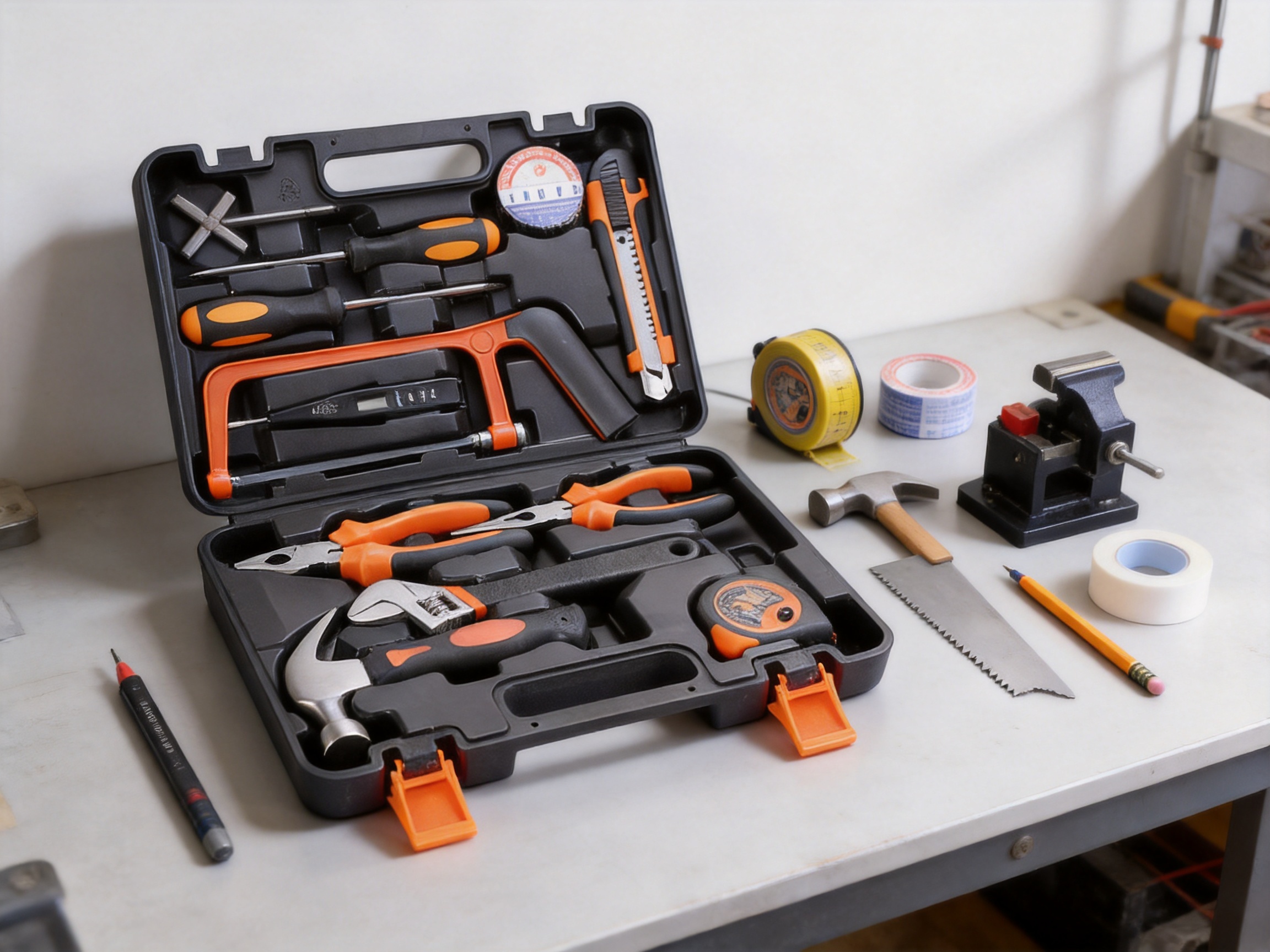
A basic screwsdriver-only package may address fastening but offer little support for measuring, gripping, cutting, sealing, or holding workpieces. A single adjustable wrench may assist with nuts but cannot replace a hammer, pliers, or tape. The Multi-Function Home Repair Tool Set provides a broader range of functions in one coordinated purchase.
This does not mean that one compact set replaces every professional tool. Instead, it provides a practical starting point for routine tasks. Its strength is breadth and convenience rather than specialization. For ordinary household maintenance, breadth is often more valuable than having one highly specialized tool that is rarely used.
Better Portability and Storage
Individual tools purchased separately may arrive in different packages and be stored in different locations. The toolbox format offers a central storage point. Users can carry the set from a storage room to a kitchen, garage, office, workshop, or construction preparation area without collecting each item separately.
Portability is valuable for property managers, rental maintenance staff, installation teams, retail service departments, and mobile repair workers. The kit can also serve as an emergency household set kept in a vehicle, utility room, or storage cabinet.
Balanced Combination of Tools and Consumables
Many tool packages focus only on reusable tools and overlook accessories that are often required during actual work. This set includes PTFE tape and electrical tape, allowing the user to begin certain maintenance tasks without immediately purchasing additional basic materials.
The inclusion of both measuring and working tools is another practical advantage. A repair is more likely to be completed correctly when the user can measure, prepare, fasten, grip, adjust, and secure materials using items from one package.
Suitable for Multiple User Groups
The set can appeal to a wide range of users. New homeowners may use it for routine setup and furniture assembly. Renters may need it for minor adjustments and household organization. Students and dormitory residents can benefit from a compact repair option. Offices can keep it available for furniture, packaging, and light facility maintenance.
Retailers may position the product as a practical household gift, a starter maintenance kit, a moving-in accessory, or a seasonal promotion. Distributors serving hardware stores, home improvement outlets, online marketplaces, and general merchandise channels can use its broad application range to reach different customer segments.
Manufacturing Strengths and Process Considerations
The supplied company information identifies Lizhan Hardware Co., Ltd. as a hardware manufacturer and supplier associated with new products, home tools, fasteners, packaging, and stamping parts. These categories indicate a manufacturing environment familiar with metal components, hardware specifications, product assembly, and packaged goods.
The exact production process for every item in this set is not provided in the product record. However, a reliable multi-component tool kit generally depends on several controlled manufacturing stages. Understanding these stages helps explain why a capable hardware supplier can offer advantages over an uncoordinated collection of unrelated products.
Product Planning and Component Coordination
A multi-function tool set begins with product planning. The supplier must determine which tools provide the most useful coverage while maintaining a manageable package size and cost. The selected items must fit together commercially and physically. Their quantities, dimensions, protective requirements, and packaging positions need to be considered before production begins.
Component coordination is particularly important when the kit combines metal tools, plastic elements, tapes, blades, and a toolbox. Each category may require different purchasing, inspection, storage, and handling procedures. A supplier with experience across hardware and packaging can coordinate these requirements more efficiently than a business focused on only one component.
Metal Forming and Stamping Expertise
Stamping is widely used to produce metal parts with repeatable shapes and dimensions. Depending on the component, stamping operations may include blanking, punching, bending, forming, and progressive processing. These methods can support the production of brackets, clips, plates, hardware fittings, and other metal elements associated with tools and packaging.
Experience with stamping parts is relevant because hand tools depend on properly formed metal components. Jaw profiles, brackets, reinforcing pieces, handles, retaining elements, and internal supports must be produced with consistency. Controlled tooling and die maintenance help reduce variation between batches.
For a manufacturer serving the fastener and hardware sector, knowledge of material thickness, forming behavior, burr control, dimensional tolerance, and surface condition is valuable. These factors influence fit, handling, durability, and appearance. Although the product record does not specify individual steel grades or tolerance values, a professional production approach should define those requirements for each component.
Machining, Assembly, and Fit Control
Some tool components require operations beyond stamping. Machining, cutting, grinding, threading, drilling, or surface finishing may be used depending on the design. Adjustable wrench components, plier jaws, screwsdriver tips, hammer parts, and vice mechanisms each require appropriate dimensional relationships.
Assembly control is equally important. A tool may contain several parts that must move, grip, rotate, or remain fixed. Pliers need aligned jaws and a functional pivot. An adjustable wrench needs a jaw mechanism that moves smoothly while holding its position. A vice needs an operating mechanism that can apply controlled pressure. A hammer needs a secure relationship between head and handle.
Production personnel can use assembly fixtures, work instructions, sample approval, and functional checks to maintain consistency. These methods are particularly helpful when a product includes several tools that must be packed in a specific arrangement.
Surface Treatment and Corrosion Awareness
Metal tools may require surface protection to improve appearance and help resist ordinary environmental exposure. Depending on the component, possible approaches include polishing, coating, plating, oiling, or other suitable treatments. The correct choice depends on the base material, intended use, cost target, and customer requirements.
Surface condition affects more than appearance. Rough edges, excessive burrs, coating defects, and exposed corrosion-prone areas can affect user comfort and product life. Inspection should therefore consider both visual quality and functional performance.
Toolbox and Packaging Development
The outer toolbox is not merely a shipping container. It contributes to product organization, retail presentation, portability, and user convenience. Packaging development must consider the dimensions and shape of every included item. Tools should remain reasonably secure during transport without being difficult to remove.
Packaging also protects the product from dust, moisture, abrasion, and impact during storage and distribution. A well-planned package can reduce component loss and make inventory handling easier. For retailers, a clear and orderly package can improve shelf presentation. For end users, it makes the product feel complete and easier to manage.
Because Lizhan Hardware Co., Ltd. lists packaging among its product-related capabilities, the company can approach the kit as an integrated packaged product rather than simply a group of loose tools. This integrated approach can improve consistency between the product contents, outer box, labeling, and shipment preparation.
Inspection and Quality Assurance
Quality assurance for a multi-function kit should occur at several levels. Incoming materials can be checked for identity, quantity, and visible condition. During production, operators can verify dimensions, assembly, movement, finish, and safety-related details. Before packing, the complete set can be checked against the product list.
Typical inspection points may include screwsdriver tip formation, plier alignment, wrench jaw movement, hammer handle security, tape condition, blade protection, measuring tape operation, vice function, and toolbox closure. Packaging inspection can confirm that all listed pieces are present and correctly positioned.
Batch records, sample retention, production instructions, and corrective-action procedures can further support repeatability. The precise testing program should be determined by product specifications, customer requirements, applicable regulations, and intended markets. Buyers requiring formal certifications or specific standards should confirm those details directly with the supplier before purchase.
Supply Chain and Production Flexibility
A hardware supplier with experience in multiple product categories can often coordinate different production requirements within one commercial relationship. This may simplify sourcing for buyers that need household tools alongside fasteners, stamping parts, or packaging-related products.
Lizhan Hardware Co., Ltd. identifies a factory location in Haiyan, Jiaxing City, Zhejiang, China, and a warehouse location in Chonburi, Thailand. A factory and warehouse structure can support production coordination and regional distribution, subject to the specific order arrangement. For international buyers, warehouse availability may help with logistics planning, stock positioning, and delivery discussions.
Production flexibility is especially valuable for importers and private-label customers. They may require different packaging formats, language versions, carton quantities, labeling systems, or product combinations. Such requirements should be reviewed during quotation and sample approval rather than assumed automatically.
Applications in the Home
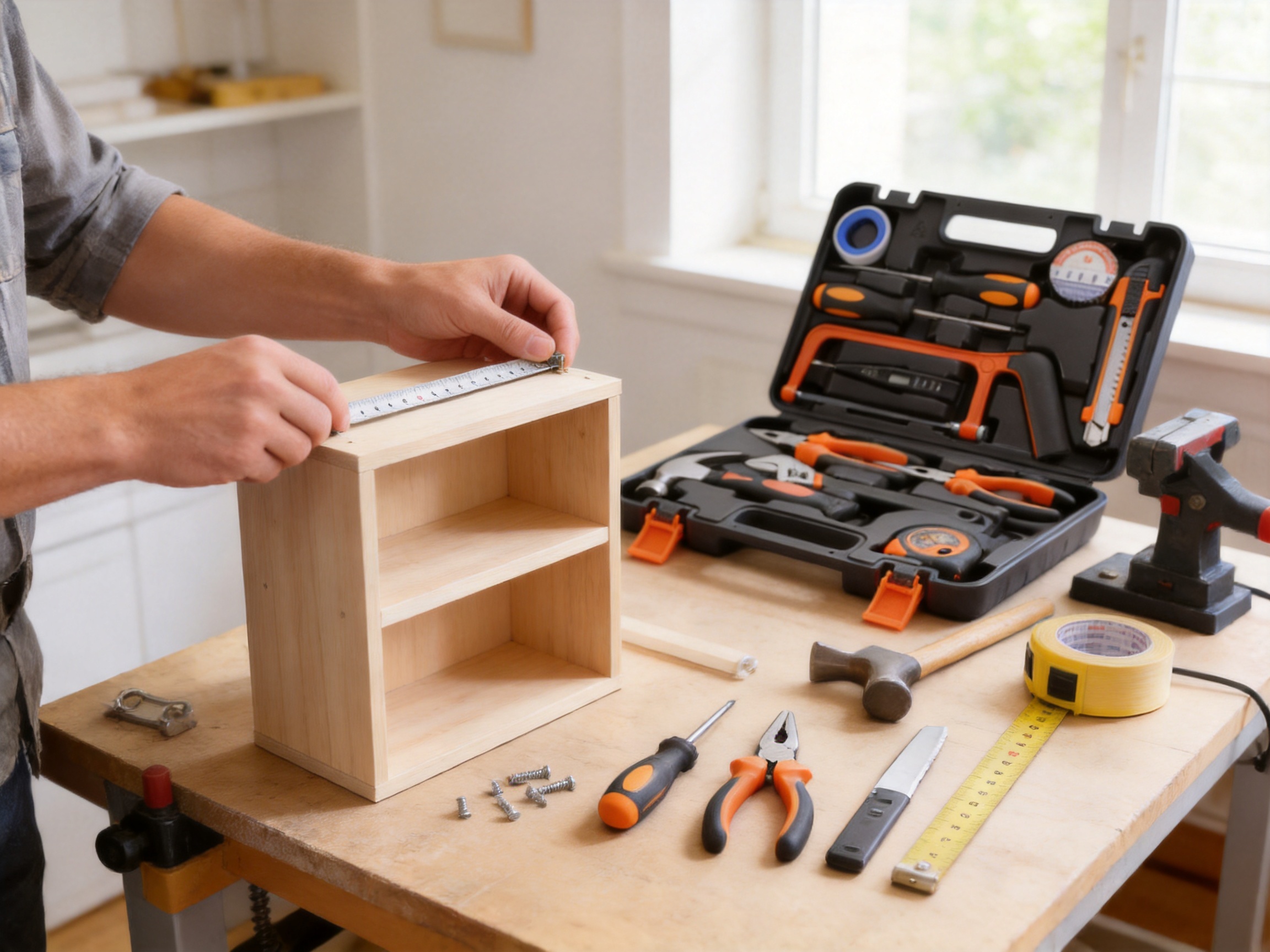
The tool set can support many common household situations. During furniture assembly, the measuring tape can help verify dimensions, the screwsdrivers can install fasteners, the wrench can adjust hardware, and the hammer can assist with light fitting work. The utility knife can open packaging, while the toolbox keeps the tools organized throughout the project.
For household organization, the set can help install hooks, adjust cabinet fittings, measure shelves, secure loose handles, and prepare small storage projects. The long nose pliers can position small hardware in restricted spaces, while the mini saw can be used for suitable lightweight cutting jobs.
For basic plumbing-related maintenance, the monkey wrench and PTFE tape may be useful for compatible threaded connections. Users should shut off water where necessary, confirm the condition of the fitting, and seek professional assistance when a repair involves concealed pipes, significant leakage, gas systems, pressure equipment, or structural damage.
For light electrical preparation, electrical tape and the test pencil may support limited tasks when used correctly. However, household electrical work can present serious hazards. The user must follow local regulations and should use a qualified electrician for work beyond simple, low-risk maintenance.
Applications Outside the Home
The set can also be useful in small offices. Office staff or facility personnel may use it for furniture adjustments, packaging, cable organization, signage preparation, and minor fixture maintenance. Keeping one kit in a central utility area may reduce delays caused by searching for individual tools.
In rental properties, a property manager may use the kit for inspection visits and minor non-specialist tasks. It can help with measuring rooms, adjusting furniture, opening cartons, replacing simple hardware, or preparing a space for a new tenant. More complex repairs should still be assigned to qualified professionals.
For retailers, contractors, and distributors, the kit can be offered as a practical gift or customer add-on. It may be suitable for housewarming promotions, moving campaigns, seasonal home improvement programs, and introductory do-it-yourself product ranges.
In workshops and hobby environments, the compact vice, mini saw, pliers, measuring tape, and screwsdrivers can support small projects. The kit is best viewed as a convenient general-purpose set rather than as a substitute for specialized workshop equipment designed for heavy or continuous use.
Use, Care, and Safety Guidance
Before using the set, the user should inspect the tools for visible damage, loose components, sharp edges, corrosion, or packaging defects. Damaged tools should not be used. The work area should be well lit, stable, and clear of unnecessary objects.
Each tool should be used only for its intended function. Screwdrivers should drive screws, not serve as pry bars. Pliers should grip suitable components, not replace a wrench for every application. The adjustable wrench should be fitted closely to the fastener. The hammer should be used for light work within its intended capacity.
Cutting tools require special care. The utility knife should be retracted or protected when not in use. The mini saw should be moved in a controlled direction, with the material secured whenever possible. Eye protection is recommended when cutting, striking, or working with materials that may produce fragments.
Electrical accessories require additional caution. The test pencil should be used according to its instructions and limitations. Electrical tape should not be used to conceal unsafe wiring, repair damaged conductors without proper preparation, or replace a certified connection method. Power should be disconnected before electrical maintenance whenever possible.
After use, tools should be cleaned and returned to the toolbox. Metal parts should be kept dry. Tapes should be stored away from excessive heat and contamination. Blades should be protected. The toolbox should be closed securely and kept away from children unless the tools are being used under responsible adult supervision.
Value for Retailers and Professional Buyers
For retailers, a multi-function tool kit offers straightforward product positioning. It can be described as a household starter kit, a compact maintenance set, a moving-in essential, or a practical gift. Its broad function range may allow it to serve several customer needs without requiring a highly technical sales explanation.
The product also has merchandising value because the outer toolbox presents the contents as a complete solution. Buyers can understand the purpose of the product by seeing the collection as a whole. Clear packaging, accurate component lists, and consistent product coding can support retail operations.
For wholesalers and importers, the product combines several high-frequency hardware functions in one stock-keeping unit. This may simplify purchasing and reduce the need to manage a large number of individual low-volume items. The final commercial benefit depends on pricing, order quantity, packaging specifications, freight conditions, and local market demand.
Private-label buyers may also consider this type of set when developing a household maintenance range. Important discussion points include logo placement, packaging artwork, language requirements, carton dimensions, inner packing, sampling, inspection standards, replacement policy, and regulatory requirements for the destination market.
How the Set Compares with Professional Tool Systems
Professional technicians often require larger tool assortments, higher torque capacity, specialized sizes, certified electrical instruments, precision measuring equipment, and task-specific accessories. A compact household kit is not intended to replace those systems.
Its advantage is different. It provides an accessible, portable, and organized collection for routine work. The set is more appropriate for occasional users and general maintenance than for intensive industrial service. This distinction helps buyers select the right product for the right application instead of judging a household kit by standards intended for specialized equipment.
Compared with a premium professional case, the Multi-Function Home Repair Tool Set may contain fewer size options and fewer specialized tools. Compared with a basic low-cost set, however, its combination of measuring, gripping, cutting, sealing, holding, and fastening functions offers broader practical coverage. Its value lies in balance, convenience, and readiness.
Purchasing and Specification Considerations
Buyers should confirm the complete component list before placing an order. The listed product contains one piece of each specified item, including the toolbox outer box. If a project requires multiple screwsdriver sizes, specialized bits, insulated tools, or additional wrench capacity, those requirements should be reviewed separately.
Buyers should also confirm packaging details, product dimensions, gross and net weight, carton quantity, sample availability, labeling, and delivery terms. If the product will be sold in a regulated market, the importer should assess applicable requirements for blades, electrical accessories, materials, packaging, and consumer product safety.
For larger orders, a pre-production sample or approved reference sample can help establish expectations for appearance, component arrangement, printing, and workmanship. Written specifications reduce misunderstandings between buyer and supplier and provide a useful reference for inspection.
Q&A
What is included in the Multi-Function Home Repair Tool Set?
The set includes PTFE tape, a cross screwsdriver, a test pencil, a compact vice, a mini hammer, electrical tape, a utility knife, a slot screwsdriver, a mini saw, long nose pliers, a monkey wrench, a three-meter measuring tape, and a toolbox outer box.
Is the set intended for professional industrial work?
It is primarily suited to household maintenance, light workshop work, furniture assembly, office upkeep, property maintenance, and general do-it-yourself tasks. Professional users may require additional specialized tools, higher-capacity equipment, or certified instruments for demanding applications.
What is the main advantage over buying individual tools?
The main advantage is convenience. The user receives a balanced selection of fastening, measuring, gripping, cutting, sealing, holding, and adjustment tools in one organized package. This can reduce searching, simplify storage, and provide a more practical starter assortment.
Can the PTFE tape be used for every plumbing repair?
No. PTFE tape is intended for compatible threaded connections and must be applied according to the fitting and system requirements. It cannot correct damaged threads, defective components, unsuitable joint designs, or serious plumbing problems.
Can the electrical tape replace professional electrical repair materials?
No. Electrical tape can support suitable insulation and bundling tasks, but it is not a universal substitute for certified connectors, heat-shrink materials, circuit protection, or professional electrical repair. Work on energized or complex systems should be handled by a qualified person.
What is the purpose of the compact vice?
The vice holds small workpieces during suitable cutting, adjustment, assembly, or hobby tasks. It helps stabilize a component so that the user can work with better control. It should be secured properly and should not be overloaded.
Is the three-meter measuring tape useful for home projects?
Yes. A three-meter tape can support furniture assembly, room measurements, shelf installation, fixture positioning, material estimation, and general household layout work. Accurate measurement can reduce cutting mistakes and installation rework.
How should the toolbox be maintained?
Users should keep the toolbox dry, clean, and closed when not in use. Tools should be returned to their designated positions, cutting edges should be protected, and damaged components should be removed from service. Proper storage helps preserve organization and tool condition.
What manufacturing strengths are relevant to this product?
The supplier’s stated product categories include home tools, fasteners, packaging, and stamping parts. These areas are relevant to tool-set production because they involve metal forming, hardware coordination, product assembly, packaging development, and quality inspection. Buyers should confirm detailed processes, materials, and standards for specific orders.
Can the product be used for private-label projects?
It may be considered for private-label or customized purchasing, depending on order requirements and supplier agreement. Buyers should discuss artwork, labeling, packaging, quantities, samples, inspection criteria, and destination-market requirements before confirming production.
Conclusion
The Multi-Function Home Repair Tool Set LZ000XM000013 is designed around a clear practical idea: common maintenance becomes easier when essential tools are collected, organized, and ready for use. Its combination of screwsdrivers, pliers, an adjustable wrench, a mini hammer, measuring tape, cutting tools, sealing materials, a test pencil, and a compact vice gives it broad coverage for everyday household and light workshop tasks.
Its key advantages over less complete alternatives include portability, centralized storage, balanced function coverage, inclusion of both tools and consumables, and suitability for several user groups. It is not intended to replace every professional tool, but it can serve as a capable foundation for routine repairs, furniture assembly, minor adjustments, general maintenance, and do-it-yourself projects.
The product also benefits from the manufacturing context of Lizhan Hardware Co., Ltd., whose stated areas include hardware, fasteners, stamping parts, packaging, and home tools. These capabilities are relevant to the production of coordinated tool kits because dependable results require more than simply collecting components. They require product planning, metal forming, assembly control, surface awareness, packaging development, inspection, and supply coordination.
For households, offices, retailers, property managers, distributors, and private-label buyers, the set offers a practical combination of accessibility and functionality. With correct use, sensible safety practices, appropriate storage, and clear purchasing specifications, it can become a useful everyday maintenance resource.
References
Product information sheet for Multi-Function Home Repair Tool LZ000XM000013, supplied by the manufacturer.
General principles of household hand-tool selection, storage, and maintenance.
General guidance on threaded sealing materials and PTFE tape applications.
General guidance on electrical work safety, insulation materials, and basic testing limitations.
General manufacturing principles for metal stamping, hardware assembly, quality inspection, and packaged consumer products.