Stainless steel riveting parts play a critical role in modern industrial assembly, especially where strength, corrosion resistance, dimensional stability, and permanent fastening performance are required. Custom hardware stamping stainless steel riveting parts are engineered to provide dependable joints for applications ranging from automotive structures and aerospace components to marine equipment, architectural metalwork, food machinery, and chemical processing systems. Unlike ordinary fastening components that may loosen, corrode, deform, or fail under demanding conditions, precision-stamped stainless steel riveting parts are designed to deliver long-term reliability in environments where safety and durability cannot be compromised.
This article introduces the performance advantages, material features, manufacturing processes, customization options, quality control methods, and application value of stainless steel riveting parts manufactured by Lizhan Hardware Co., Ltd. The focus is on how advanced stamping technology, strict material selection, experienced engineering, and professional production management help create fastening solutions that stand apart from common market alternatives.
Custom Hardware Stamping Stainless Steel Riveting Parts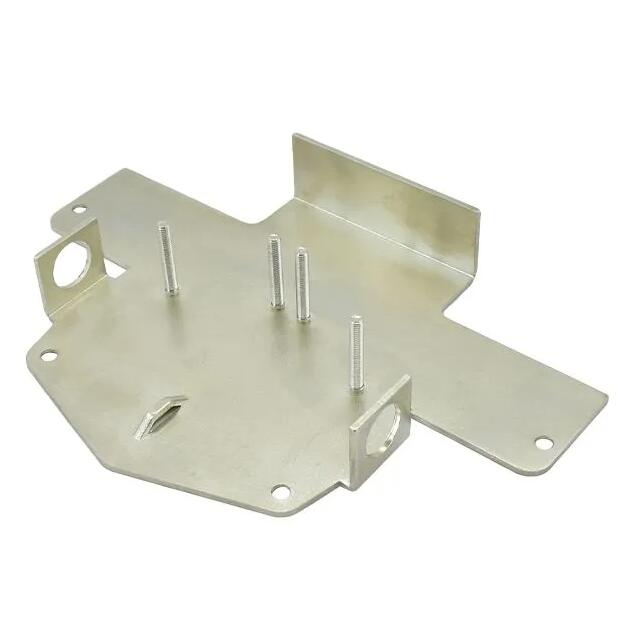
Understanding Stainless Steel Riveting Parts
Riveting parts are fastening components used to create strong, permanent mechanical joints between two or more workpieces. Unlike screws or bolts, which are often removable, rivets are typically designed for permanent or semi-permanent installation. This makes them ideal for assemblies where vibration resistance, compact design, and long-term stability are important.
Stainless steel riveting parts are especially valuable because stainless steel offers excellent resistance to rust, oxidation, chemicals, humidity, temperature fluctuation, and mechanical wear. In many industries, fasteners are exposed to water, salt spray, cleaning chemicals, fuels, oils, acidic environments, or repeated thermal cycling. Under these conditions, carbon steel fasteners may require heavy coatings, and aluminum fasteners may not provide sufficient strength. Stainless steel provides a balanced solution, combining mechanical strength with environmental resistance.
The product discussed here is a custom hardware stamping stainless steel riveting part manufactured from high-quality 304 or 316 stainless steel. It can be produced in multiple sizes, commonly ranging from M3 to M12, and may be supplied in different head styles, body structures, and dimensional specifications according to customer requirements. The product is suitable for OEM projects, industrial equipment manufacturing, structural metalwork, and precision assemblies.
Core Product Advantages
The main advantage of custom stainless steel riveting parts is the combination of secure fastening, stable material performance, and production flexibility. When designed and manufactured correctly, these components help improve the safety, appearance, service life, and assembly efficiency of finished products.
Excellent Corrosion Resistance
One of the most important benefits of 304 and 316 stainless steel riveting parts is corrosion resistance. Grade 304 stainless steel performs well in many general industrial, architectural, and food-related environments. Grade 316 stainless steel contains molybdenum, which gives it enhanced resistance against chlorides and marine corrosion. This makes 316 stainless steel a strong option for coastal structures, marine equipment, chemical processing machinery, and outdoor installations exposed to harsh weather.
Compared with ordinary zinc-plated steel rivets, stainless steel riveting parts are less dependent on surface coating for corrosion protection. If a plated carbon steel fastener is scratched, the exposed base metal may rust quickly. Stainless steel, by contrast, has a natural passive oxide layer that helps protect the material. This makes stainless steel particularly valuable in applications where appearance, hygiene, and long service life are important.
High Mechanical Strength
Stainless steel riveting parts can provide high tensile strength, with performance levels reaching up to approximately 700 MPa depending on material grade, cold working condition, dimensions, and design. Strong riveting parts help resist shear, pull-out, vibration, and impact loads. This is essential in automotive assemblies, metal enclosures, frames, brackets, machinery housings, and equipment that must withstand repeated operation.
While some low-cost rivets may be acceptable for light-duty applications, demanding industrial assemblies require fastening parts with stable mechanical properties. Lizhan Hardware Co., Ltd. uses controlled material sourcing and precision production processes to support consistent strength from batch to batch. This helps customers reduce the risk of fastening failure and improves the reliability of the final assembly.
Wide Temperature Resistance
Stainless steel performs well across a broad temperature range. The product specifications indicate temperature resistance from approximately -200°C to 800°C, depending on the operating environment and specific material condition. This makes stainless steel riveting parts suitable for cryogenic equipment, high-temperature machinery zones, exhaust-related structures, thermal processing systems, industrial ovens, and outdoor environments with extreme temperature variation.
Temperature resistance is not only about avoiding melting or severe deformation. It also involves maintaining mechanical integrity, resisting oxidation, and reducing the risk of brittleness or cracking. Stainless steel is widely used because it offers a dependable balance of these properties.
Smooth Finish and Reduced Material Damage
A well-finished riveting part helps protect the materials being joined. Burrs, sharp edges, uneven heads, or rough surfaces can scratch panels, damage coatings, create stress concentrations, or interfere with assembly tools. Precision-stamped stainless steel riveting parts can be deburred, polished, cleaned, and passivated to provide a smooth surface suitable for visible and functional applications.
The smooth finish is especially useful in food processing machinery, medical-related equipment housings, architectural metalwork, consumer hardware, furniture structures, and industrial devices where surface quality affects both performance and appearance.
Customization for OEM Requirements
Not every assembly can use a standard rivet. Many customers require special head shapes, flange dimensions, shank lengths, material thickness compatibility, hole-fit tolerances, surface finishes, or packaging methods. Custom hardware stamping enables flexible design adjustment. Lizhan Hardware Co., Ltd. supports OEM customization, helping customers match riveting parts to their exact product structure and production workflow.
Customization can include material selection, thickness, diameter, head style, length, forming geometry, tolerance class, surface treatment, packing method, inspection standard, and drawing-based production. This is a major advantage over suppliers that only offer catalog components.
Material Selection: 304 and 316 Stainless Steel
Material quality is the foundation of reliable fastening performance. Stainless steel riveting parts commonly use 304 and 316 grades because both provide excellent mechanical properties and corrosion resistance.
304 Stainless Steel
304 stainless steel is one of the most widely used austenitic stainless steels. It offers good corrosion resistance, excellent formability, strong toughness, and attractive surface quality. It is commonly used in kitchen equipment, food machinery, architectural components, machinery covers, automotive hardware, and general industrial assemblies.
For many applications, 304 stainless steel offers an ideal balance between cost and performance. It is easier to source than more specialized grades and provides reliable resistance against many atmospheric and industrial environments.
316 Stainless Steel
316 stainless steel offers stronger resistance to chloride corrosion because of its molybdenum content. This makes it suitable for marine environments, coastal construction, chemical equipment, pharmaceutical machinery, and other applications where aggressive corrosion conditions exist.
Although 316 stainless steel is typically more expensive than 304, it can reduce lifecycle cost in harsh environments by extending service life and reducing maintenance needs. For critical installations, the additional material cost is often small compared with the cost of downtime, replacement, or equipment failure.
Why Stainless Steel Outperforms Many Alternatives
Compared with carbon steel, stainless steel offers superior corrosion resistance without requiring heavy protective coatings. Compared with aluminum, stainless steel generally provides higher strength and better heat resistance. Compared with brass or copper alloy fasteners, stainless steel often provides better mechanical strength and broader industrial compatibility. These advantages make stainless steel riveting parts a preferred solution for demanding assemblies.
The right material choice depends on environment, mechanical load, weight requirements, cost target, and regulatory expectations. Lizhan Hardware Co., Ltd. can help customers evaluate these factors and select the appropriate stainless steel grade for each application.
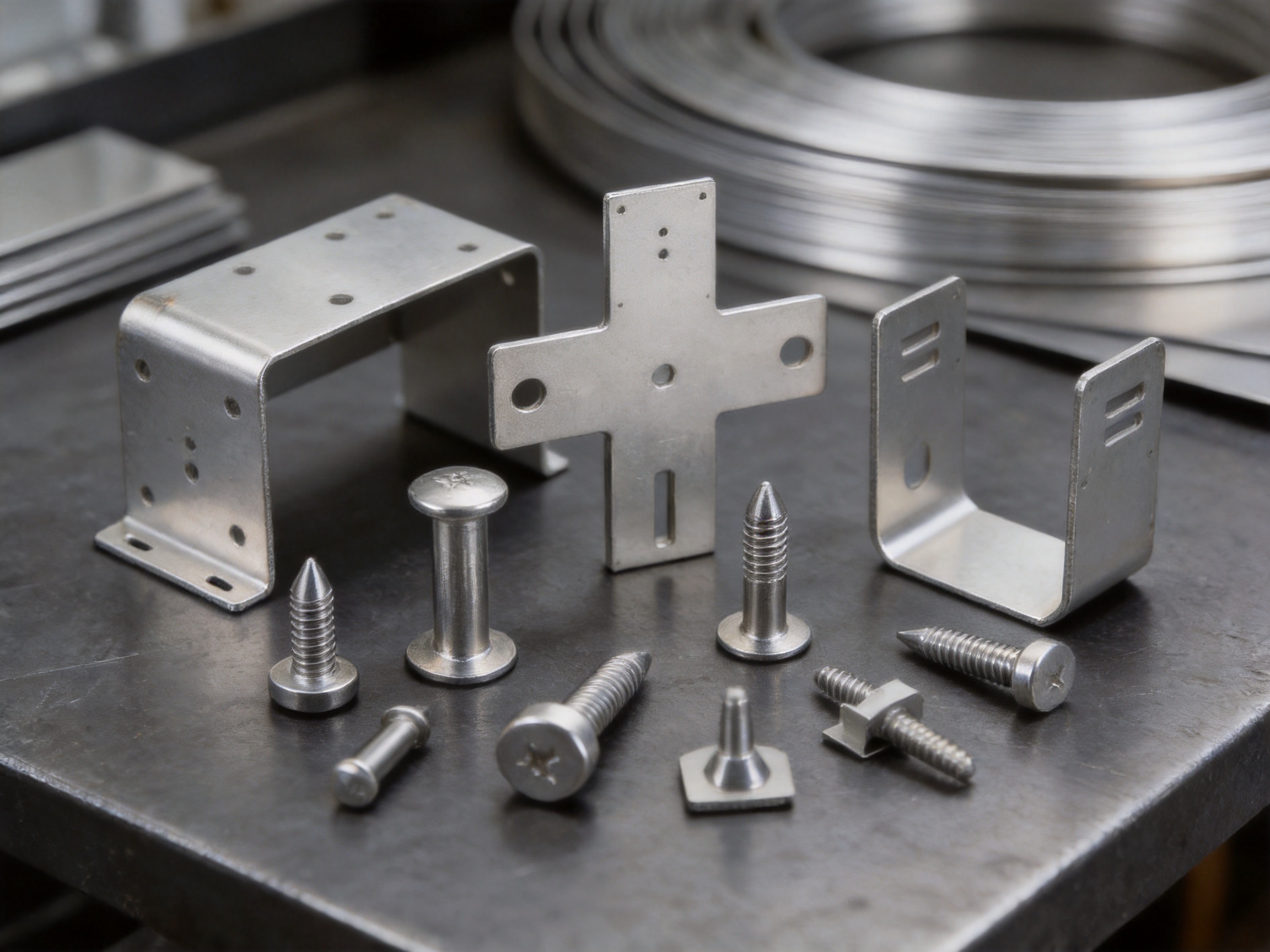
Advanced Manufacturing Process
The performance of a riveting part depends not only on its material but also on how it is manufactured. Precision hardware stamping requires tooling expertise, controlled forming, accurate inspection, and stable production management. Lizhan Hardware Co., Ltd. combines years of specialty metal fabrication experience with ISO 9001:2015 certified production practices to deliver consistent quality.
Engineering Review and Design Optimization
Production begins with a technical review of the customer’s drawing, sample, or application requirement. Engineers analyze material thickness, forming direction, head shape, shank geometry, installation method, load condition, tolerance requirements, and surface finish expectations. This review helps identify potential risks before tooling begins.
Design optimization can reduce cracking, improve forming stability, enhance fastening strength, simplify assembly, and reduce material waste. For OEM customers, this early engineering support is valuable because small design changes can significantly improve manufacturability and long-term performance.
Material Procurement and Verification
High-quality stainless steel coils, sheets, or wire materials are selected according to product requirements. Material certificates may be reviewed to verify chemical composition and mechanical properties. Proper material verification helps ensure that the final riveting parts meet expected strength, corrosion resistance, and forming behavior.
Stable raw material sourcing is an important advantage over low-cost competitors that may rely on inconsistent material batches. Variations in stainless steel composition, hardness, or thickness can cause forming defects, dimensional instability, and inconsistent riveting performance. Professional manufacturers control these risks through supplier management and incoming inspection.
Tooling and Die Development
Stamping tooling is central to product accuracy. Depending on production volume and part complexity, progressive dies, compound dies, or customized forming tools may be developed. The die must control blanking, piercing, bending, forming, trimming, and shaping operations with high repeatability.
Precision die manufacturing helps achieve stable dimensions, clean edges, accurate holes, and consistent head geometry. It also improves production efficiency and reduces part-to-part variation. For high-volume projects, a well-designed progressive die can produce parts quickly while maintaining tight tolerances.
Stamping and Forming
During stamping, stainless steel material is fed into the press, where the die shapes the part through controlled mechanical force. Stainless steel requires careful forming because it has higher strength and work-hardening behavior compared with many mild steels. Proper die clearance, lubrication, press speed, and forming sequence are essential to prevent cracking, tearing, excessive springback, or tool wear.
Professional stamping experience allows the manufacturer to maintain dimensional consistency while protecting surface quality. This is especially important for riveting parts that must fit into precise holes or work with automated assembly equipment.
Secondary Operations
After stamping, secondary processes may be required depending on the part design. These can include tapping, threading, chamfering, deburring, polishing, cleaning, passivation, heat treatment, inspection sorting, or assembly with other components. For riveting parts, deburring and edge control are particularly important because burrs can interfere with installation or damage mating materials.
Passivation may be used to enhance the natural corrosion resistance of stainless steel by removing free iron contamination and supporting formation of a clean passive surface layer. Proper cleaning is also important for applications in food processing, chemical equipment, and visible hardware.
Surface Finish Control
Different applications require different surface finishes. Industrial hidden fasteners may only require clean functional finishing, while architectural or equipment-facing parts may require a smoother and more attractive surface. Surface treatment options can include mechanical polishing, tumbling, cleaning, passivation, and customized finishes based on customer needs.
A controlled finish improves not only appearance but also assembly behavior. Smooth surfaces reduce friction, improve seating, and lower the risk of scratching or coating damage.
Quality Assurance and Testing
Quality control is essential for stainless steel riveting parts because small dimensional or material defects can affect joint integrity. Lizhan Hardware Co., Ltd. applies systematic inspection practices to support reliable production and customer confidence.
Dimensional Inspection
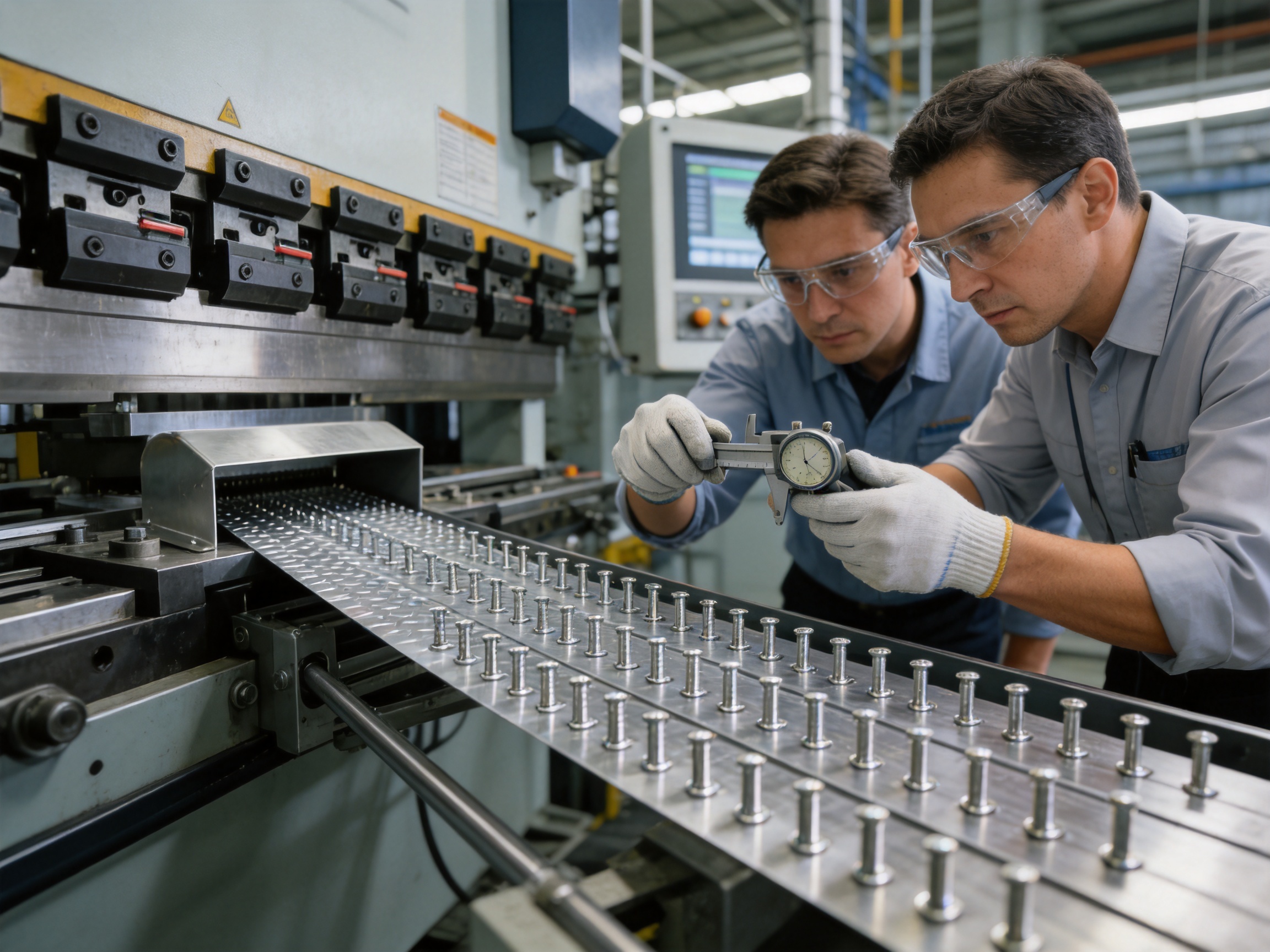
Critical dimensions such as diameter, head height, shank length, flange width, hole size, thickness, and concentricity can be inspected using calipers, gauges, micrometers, optical measuring equipment, or customized fixtures. Dimensional control ensures that the riveting parts fit properly into the customer’s assembly.
Consistent dimensions are especially important for automated assembly lines. If a rivet is too large, it may jam equipment. If it is too small, the joint may be loose or weak. Reliable dimensional inspection helps prevent these problems before parts reach the customer.
Mechanical Performance Testing
Mechanical properties may be verified through tensile testing, hardness testing, shear testing, pull-out testing, or application-specific installation testing. These tests confirm whether the riveting parts can withstand expected forces during installation and service.
Competitor products may sometimes pass visual inspection but fail under load due to inconsistent material or improper forming. Mechanical verification provides stronger assurance that the parts can perform in real applications.
Corrosion Resistance Evaluation
For corrosion-sensitive applications, salt spray testing or other corrosion evaluation methods may be used. This is particularly important for marine, outdoor, chemical, and food machinery environments. Stainless steel grade selection and surface cleanliness both influence corrosion resistance, so quality control must cover both material and processing.
Visual and Surface Inspection
Surface defects such as cracks, burrs, scratches, stains, deformation, or incomplete forming can affect both function and appearance. Visual inspection and sorting help ensure that shipped products meet customer expectations. For visible hardware and architectural applications, surface quality is especially important.
Traceability and Production Management
Traceability supports consistent quality and helps resolve any technical issue quickly. Batch records may include material source, production date, machine settings, inspection results, and packaging details. ISO 9001:2015 certified production practices help formalize these processes and support continuous improvement.
Comparison with Common Competitor Solutions
Many fastening suppliers offer standard rivets, but not all products provide the same level of material reliability, dimensional accuracy, customization, and technical support. The following table summarizes key differences between precision custom stainless steel riveting parts and common low-cost alternatives.
| Evaluation Item | Precision Custom Stainless Steel Riveting Parts | Common Low-Cost Alternatives |
|---|---|---|
| Material | 304 or 316 stainless steel with verified performance | May use inconsistent carbon steel, low-grade stainless steel, or unclear material sources |
| Corrosion Resistance | Strong resistance to rust, humidity, chemicals, and marine exposure depending on grade | Often depends on plating, which may fail when scratched or worn |
| Dimensional Accuracy | Controlled through precision stamping tooling and inspection | May have larger tolerance variation and inconsistent fit |
| Customization | Supports OEM drawings, special sizes, head styles, and finishes | Usually limited to standard catalog items |
| Surface Quality | Smooth finish available to reduce material damage and improve appearance | May have burrs, rough edges, or inconsistent finish |
| Quality System | ISO-based production management and systematic testing | Quality controls may vary by batch or supplier |
| Engineering Support | Technical team assists with design optimization and application matching | Limited support beyond basic sales service |
| Lifecycle Value | Higher reliability and longer service life in demanding environments | Lower purchase price may lead to higher maintenance or replacement cost |
This comparison highlights an important principle: the lowest unit price is not always the lowest total cost. In critical assemblies, a failed fastener can cause equipment downtime, warranty claims, safety concerns, or expensive repair work. Choosing a reliable stainless steel riveting part can reduce these risks and support long-term value.
Industrial Applications
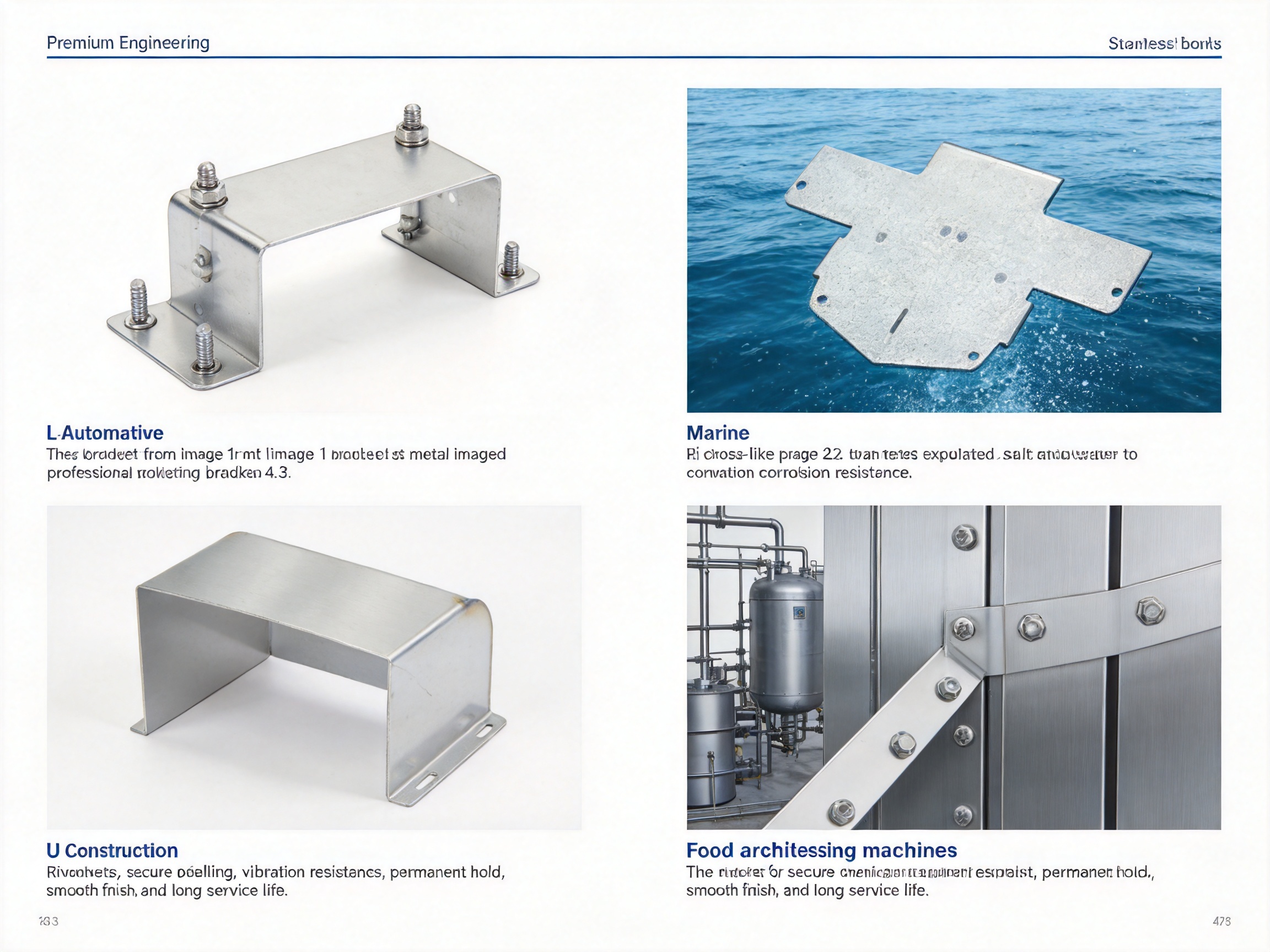
Custom hardware stamping stainless steel riveting parts are suitable for a wide range of industries. Their combination of strength, corrosion resistance, and design flexibility makes them useful wherever permanent fastening is required.
Automotive Assemblies
Automotive components must resist vibration, temperature changes, moisture, road salt, and repeated mechanical stress. Stainless steel riveting parts can be used in brackets, panels, interior structures, heat shields, trim systems, battery housings, and metal subassemblies. Their corrosion resistance is especially useful for parts exposed to weather, road spray, or underbody conditions.
Aerospace Components
Aerospace applications demand lightweight structures, dependable joints, and controlled quality. While each aerospace project requires strict specification review, stainless steel riveting parts can be relevant for support components, interior assemblies, equipment housings, and non-critical structural hardware where corrosion resistance and strength are needed.
Marine Equipment
Marine environments are among the most challenging for fasteners. Salt water, humidity, and chloride exposure can quickly degrade ordinary steel. 316 stainless steel riveting parts are particularly suitable for boat hardware, dock systems, marine brackets, railings, covers, and equipment installed near coastal areas.
Architectural Metalwork
Architectural hardware requires both function and appearance. Stainless steel riveting parts can be used in facade systems, metal panels, decorative structures, railings, public facilities, and outdoor installations. Their smooth finish and corrosion resistance help maintain appearance over time.
Food Processing Machinery
Food processing environments require hygienic materials, easy cleaning, and resistance to water, detergents, and sanitizing chemicals. Stainless steel riveting parts are suitable for equipment covers, conveyors, frames, guards, and machine housings. Smooth surfaces help reduce contamination risk and support cleaning procedures.
Chemical Processing Plants
Chemical facilities often expose fasteners to aggressive media, vapors, washdowns, and temperature variation. Properly selected stainless steel riveting parts can provide durable fastening for equipment covers, instrumentation panels, support structures, and process-adjacent hardware. Grade selection should be reviewed based on the chemicals involved.
Design Considerations for Custom Riveting Parts
Successful riveting performance depends on correct design. Customers should consider several factors before placing an order for custom stainless steel riveting parts.
Material Thickness of Joined Parts
The rivet must match the total grip range of the materials being joined. If the rivet is too short, it may not form a secure joint. If it is too long, it may deform improperly or create an unattractive installation. Accurate measurement of joined material thickness is essential.
Hole Diameter and Fit
Hole size affects installation force and joint strength. A hole that is too small can damage the rivet or the workpiece. A hole that is too large may reduce joint tightness and shear resistance. Precision-stamped riveting parts should be matched with appropriate hole tolerances.
Head Style
Different head styles serve different functions. A flat head may provide a larger bearing surface, while a countersunk head may create a flush surface. A rounded head may improve appearance or reduce snagging. Custom stamping allows head geometry to be adapted to the application.
Environmental Conditions
Temperature, humidity, salt exposure, chemicals, vibration, and cleaning procedures should be considered. For general environments, 304 stainless steel may be sufficient. For marine or chloride-rich environments, 316 stainless steel may be a better choice.
Assembly Method
The product should be designed for the customer’s installation method, whether manual, pneumatic, hydraulic, or automated. Consistent dimensions and smooth surfaces help improve feeding and installation reliability in automated systems.
Manufacturing Strengths of the Supplier
Lizhan Hardware Co., Ltd. brings more than 15 years of specialty metal fabrication experience to the production of stainless steel riveting parts and other hardware components. The company’s strengths include stamping expertise, customized manufacturing, quality system management, engineering support, and flexible delivery coordination.
Specialty Metal Fabrication Experience
Experience matters in stainless steel stamping because the material can be challenging to form. Stainless steel work-hardens, requires careful tooling design, and can cause accelerated die wear if not processed correctly. A manufacturer with long-term fabrication experience is better able to manage these technical challenges and produce consistent components.
ISO 9001:2015 Certified Production
ISO 9001:2015 certification reflects a structured approach to quality management. It supports process control, documentation, inspection planning, corrective action, and continuous improvement. For customers, this means greater confidence that production is managed systematically rather than informally.
Engineering Support
The company’s technical team can support customers during product development, drawing review, sample confirmation, and production optimization. This helps reduce trial-and-error costs and improves the chance that the final part will perform correctly in the customer’s application.
Custom OEM Production
OEM customers often require parts that cannot be purchased from standard fastener catalogs. Custom production capability allows the manufacturer to create unique riveting parts based on drawings, samples, or functional requirements. This flexibility helps customers develop differentiated products and solve assembly challenges.
Just-in-Time Delivery Capability
Modern manufacturers need stable supply chains and efficient inventory management. Just-in-time delivery support can help customers reduce stock pressure, maintain production schedules, and respond to changing demand. Reliable delivery is especially important for automotive, machinery, and equipment manufacturers.
Why Precision Stamping Matters
Precision stamping is more than a production method; it is a way to achieve repeatability, efficiency, and design flexibility. For stainless steel riveting parts, stamping can create complex shapes at high speed while maintaining consistent dimensions. When tooling is properly designed, stamping can reduce waste and produce large quantities with stable quality.
Compared with machining every part individually, stamping is often more cost-effective for medium and high-volume production. Machining may still be useful for prototypes or very complex components, but stamping offers strong advantages in production speed and cost control once the die is developed.
Precision stamping also allows functional features to be integrated into the part, such as flanges, grooves, shoulders, tabs, formed heads, or locating shapes. These features can improve installation, increase joint area, or support automated assembly.
Surface Integrity and Passivation
Stainless steel corrosion resistance depends partly on its passive oxide layer. During manufacturing, contact with tooling, cutting edges, or workshop contaminants may introduce surface impurities. Cleaning and passivation can improve surface integrity by removing free iron and supporting the formation of a clean passive layer.
For ordinary dry indoor environments, basic cleaning may be enough. For marine, chemical, food, or high-humidity applications, additional surface treatment may be recommended. Customers should communicate their operating environment clearly so that the appropriate finishing process can be selected.
Packaging and Logistics
Packaging is often overlooked, but it is important for precision hardware. Stainless steel riveting parts should be protected from scratches, contamination, deformation, and mixed-size confusion during transport and storage. Proper packaging may include bulk bags, cartons, labeled boxes, separated compartments, moisture protection, or customized packing according to assembly-line needs.
Clear labeling and batch identification help customers manage inventory and traceability. For OEM projects, packaging can be designed to match the customer’s production workflow, reducing handling time and improving efficiency.
Choosing the Right Stainless Steel Riveting Parts
Selecting the correct riveting part requires cooperation between the customer and manufacturer. The following information is useful when requesting a quotation or technical review: product drawing, material grade preference, application environment, required size, quantity, head style, thickness of joined materials, installation method, surface finish requirement, inspection standard, packaging requirement, and expected delivery schedule.
If a drawing is not available, samples or application photos may help the engineering team understand the requirement. For new projects, prototype sampling can help verify fit and installation performance before mass production.
Long-Term Value for Industrial Buyers
Industrial buyers often compare fasteners based on price, but high-quality riveting parts should be evaluated based on total value. A reliable stainless steel riveting part can reduce warranty claims, improve assembly efficiency, extend product service life, and support brand reputation. Poor-quality fasteners may create hidden costs through installation failures, corrosion complaints, production stoppages, or field repairs.
Custom hardware stamping stainless steel riveting parts provide value by combining material durability, stable manufacturing, customization, and quality control. For companies building equipment, vehicles, structures, or machinery, dependable fastening is a small component cost that protects a much larger product investment.
Q&A Section
Q1: What materials are used for these stainless steel riveting parts?
They are typically manufactured from 304 or 316 stainless steel. Grade 304 is suitable for many general industrial and architectural applications, while grade 316 is recommended for marine, chemical, and chloride-rich environments.
Q2: What sizes are available?
Common sizes range from M3 to M12, but custom dimensions can be produced according to customer drawings, samples, or OEM requirements.
Q3: Are these riveting parts suitable for outdoor use?
Yes. Stainless steel provides strong resistance to weather and humidity. For coastal or salt-exposed outdoor environments, 316 stainless steel is usually the better choice.
Q4: Can the product be customized?
Yes. Customization can include material grade, diameter, length, head style, flange geometry, surface finish, tolerance requirements, packaging, and special inspection standards.
Q5: Why choose stainless steel instead of zinc-plated carbon steel?
Stainless steel provides corrosion resistance through its material structure rather than relying only on surface plating. If plating on carbon steel is scratched, rust may begin quickly. Stainless steel usually offers longer service life in corrosive or humid environments.
Q6: What industries commonly use these riveting parts?
They are used in automotive assemblies, aerospace components, marine equipment, architectural metalwork, food processing machinery, chemical processing plants, industrial equipment, and custom metal structures.
Q7: How does precision stamping improve product quality?
Precision stamping uses engineered dies and controlled forming processes to produce consistent dimensions, accurate shapes, smooth edges, and high production efficiency. This improves fit, installation reliability, and batch consistency.
Q8: What quality certifications support production?
Production is supported by ISO 9001:2015 quality management practices. The products can also meet CE and RoHS-related compliance requirements depending on the customer’s project needs.
Q9: Can the manufacturer support technical design review?
Yes. Engineering support is available to help customers optimize drawings, select materials, confirm tolerances, and improve manufacturability.
Q10: What information should be provided for a quotation?
Customers should provide drawings or samples, material requirements, size, quantity, application environment, surface finish, tolerance requirements, packaging preference, and delivery expectations.
Conclusion
Custom hardware stamping stainless steel riveting parts are essential fastening solutions for industrial applications where strength, corrosion resistance, dimensional accuracy, and long service life are required. Manufactured from 304 or 316 stainless steel, these parts offer reliable performance in demanding environments such as automotive production, marine equipment, aerospace assemblies, architectural metalwork, food machinery, and chemical processing systems.
The key advantages of these riveting parts include strong corrosion resistance, high tensile strength, broad temperature tolerance, smooth surface finish, multiple size options, and OEM customization. Compared with common low-cost alternatives, precision stainless steel riveting parts provide better lifecycle value, more stable quality, and stronger application reliability.
Lizhan Hardware Co., Ltd. supports this product with more than 15 years of specialty metal fabrication experience, ISO 9001:2015 certified production, advanced stamping processes, engineering support, rigorous inspection, and just-in-time delivery capability. For customers seeking dependable stainless steel fastening components, custom stamped riveting parts provide a practical and high-performance solution for modern industrial assembly.
References
1. Davis, J. R. Stainless Steels. ASM International.
2. American Iron and Steel Institute. Design Guidelines for the Selection and Use of Stainless Steel.
3. International Organization for Standardization. ISO 9001:2015 Quality Management Systems Requirements.
4. ASM International. Metals Handbook: Forming and Forging.
5. Smith, W. F., and Hashemi, J. Foundations of Materials Science and Engineering.
6. Oberg, E., Jones, F. D., Horton, H. L., and Ryffel, H. H. Machinery’s Handbook.