Maintaining a vehicle does not always require a professional workshop or a large collection of specialized equipment. Many routine tasks, including tightening fasteners, removing panels, replacing spark plugs, adjusting brackets, and servicing household fixtures, can be completed efficiently with a well-organized hand-tool set. The 82-piece Automobile Service Home Tool Set is designed for this purpose. It combines sockets, wrenches, extension bars, universal joints, screwdriver bits, adapters, sliding handles, and rotating handles in one coordinated package.
The main value of a complete tool set is not simply the number printed on the package. Its real value comes from the relationship between coverage, compatibility, usability, storage, and manufacturing consistency. A set containing many unrelated pieces may create confusion, while a carefully planned set can reduce the need to purchase additional tools for common repair jobs. This 82-piece configuration is intended to support automobile servicing and general home maintenance while offering both 1/2-inch and 1/4-inch drive solutions.
For vehicle owners, maintenance technicians, workshops, property managers, and distributors, the product offers a practical balance between versatility and portability. It includes metric sockets ranging from small sizes used on compact hardware to larger sizes used on automotive assemblies. It also includes screwdriver-style bits in Phillips, slotted, Torx-style, and hex formats. This combination enables one case to address a broad range of fastening applications.
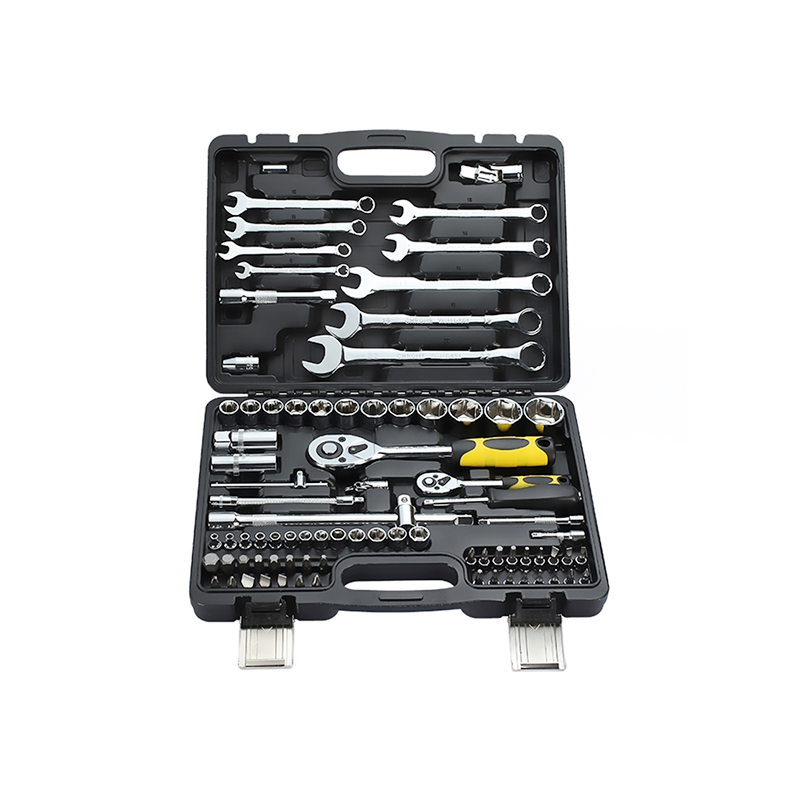
82pc Automobile service home tools
Product Overview and Intended Applications
The 82-piece set is identified as LZ000XM000082 and belongs to an automobile service tool category. Its contents are arranged around common repair requirements rather than a single narrow operation. The configuration includes drive accessories, combination wrenches, metric sockets, spark-plug-related sockets, screwdriver bits, quick-release wrenches, and rotating handles.
The set is suitable for several user groups. Home users can use it for vehicle maintenance, furniture assembly, bicycle adjustment, appliance repair, and general fastening work. Automotive hobbyists can use it for routine servicing and restoration projects. Professional technicians may use it as a mobile supplementary kit, especially when working away from a fully equipped workshop. Retailers can position it as a practical gift and entry-level service package for vehicle owners.
Its broad application range results from the inclusion of both socket-drive components and direct-handling tools. Sockets are useful where fasteners are recessed or require controlled torque. Dual-purpose wrenches are useful when access is limited or when a fastener must be held from the side. Screwdriver bits extend the set beyond conventional hexagonal fasteners and make it useful for interior trim, brackets, housings, cabinets, and household hardware.
Detailed Configuration
The product content includes a projectile sleeve, universal joints for the 1/2-inch and 1/4-inch series, dual-purpose wrenches, connecting rods, a slide head, a sliding rod, an elastic rod, a conversion joint, 1/2-inch series sockets, spark-plug sockets, 1/4-inch series sockets, screwdriver bits, quick-release wrenches, and a revolving handle. Tool terminology can differ among markets, so distributors may choose to confirm the final English names printed on packaging before publication or customs documentation.
Drive Accessories and Extension Components
The universal joints allow a socket to work at an angle instead of remaining perfectly aligned with the drive handle. This is particularly useful around engine compartments, brackets, suspension components, and other locations where surrounding parts limit straight access. A conversion joint helps connect components from different drive series, increasing the practical compatibility of the kit.
The set also includes connecting rods in several lengths, listed as 10 inches, 6 inches, 5 inches, and 3 inches. Different extension lengths help the user reach fasteners located behind covers, inside recesses, or below assemblies. A longer extension can improve access without requiring the user to remove additional components, while a shorter extension provides better control in confined spaces.
The slide head, sliding rod, and elastic rod provide additional handling choices. A sliding handle can be positioned for leverage or repositioned for faster rotation. An elastic or flexible component can help reach fasteners that are not directly accessible. These accessories give the user more options than a basic ratchet-and-socket package.
1/2-Inch Drive Metric Sockets
The 1/2-inch socket series includes 14, 15, 16, 17, 18, 19, 20, 21, 22, 24, 27, 30, and 32 millimeter sizes. This range covers many medium and large fasteners found in vehicles, machinery, frames, brackets, wheels, and structural household equipment.
The presence of 27, 30, and 32 millimeter sockets is particularly useful for larger automotive and mechanical fasteners. Smaller sets often stop at 19 or 24 millimeters, forcing users to purchase additional tools for larger nuts. By extending to 32 millimeters, this kit provides broader service coverage from the beginning.
A 1/2-inch drive is generally associated with higher-load applications than a 1/4-inch drive. It is therefore a suitable format for larger fasteners, provided the user applies force within the tool’s intended limits. The socket should always be fully seated on the fastener, and excessive leverage should be avoided unless the tool is specifically designed for high-torque use.
1/4-Inch Drive Metric Sockets
The 1/4-inch socket series includes 4, 4.5, 5, 5.5, 6, 7, 8, 9, 10, 11, 12, 13, and 14 millimeter sizes. These smaller sizes are useful for interior fittings, electrical brackets, clamps, instrument panels, motorcycle components, small machinery, and household assemblies.
The inclusion of 4.5 and 5.5 millimeter sockets improves coverage for small metric fasteners that are sometimes omitted from general-purpose kits. A set that includes only whole-number sizes may leave gaps during repair work. The additional half-millimeter sizes make this configuration more practical for detailed service tasks.
The 1/4-inch system is also easier to use in narrow spaces. It produces a compact working profile and is generally more comfortable for small fasteners, where a larger drive tool may be unnecessarily bulky. By supplying both drive systems, the set avoids forcing one tool format to handle every application.
Spark-Plug-Related Sockets
The listed 16 and 21 millimeter “Martian sleeves” are understood in the product context as spark-plug sockets or spark-plug-related sockets. These sizes are commonly associated with spark-plug service, although actual compatibility depends on vehicle design and spark-plug dimensions. Retailers should verify the final technical terminology and socket specifications with the supplier before preparing detailed catalog copy.
Spark-plug sockets are normally designed with a retention feature such as a rubber insert or magnet, depending on the actual construction. Their purpose is to help remove and install a spark plug without dropping it into the engine bay. Correct alignment is important because spark-plug threads can be damaged if the tool is tilted or excessive force is applied.
Dual-Purpose Wrenches
The dual-purpose wrench sizes are listed as 8, 10, 11, 12, 13, 14, 17, 19, and 22 millimeters. These sizes address many common nuts and bolts used in automotive assemblies, brackets, furniture, machinery, and household installations.
A dual-purpose wrench generally combines an open-end profile with a closed or ring-style profile. The open end is useful when a tool must be placed around a fastener from the side, while the ring end can provide more complete engagement. This two-ended design reduces the number of separate tools needed for routine work.
Metric sizes from 8 through 14 millimeters are especially common in compact vehicle components and interior assemblies. The 17, 19, and 22 millimeter sizes extend the kit into larger mechanical applications. Together, they create a useful bridge between the small 1/4-inch sockets and the larger 1/2-inch sockets.
Screwdriver Bits
The screwdriver-bit selection is broad. It includes Phillips bits in sizes PZ3 and PZ4, cross-head bits in numbers 1, 2, and 3, slotted bits from 4 to 12 millimeters, Torx-style bits from T8 through T55, and hexagonal bits from 3 through 14 millimeters.
This variety is important because modern vehicles and household products use several fastening standards. Cross-head fasteners may be found in trim, brackets, and general fixtures. Slotted fasteners remain common in older equipment and household hardware. Torx-style fasteners are widely used in automotive interiors, appliances, machinery, and precision assemblies. Hexagonal socket-head fasteners are common in furniture, equipment frames, and mechanical components.
The bit range also supports work on both small and large fasteners. T8, T10, T15, and T20 are appropriate for smaller components, while T40 through T55 may be required for larger structural or automotive fasteners. Similarly, the hex-bit range from 3 to 14 millimeters offers more coverage than a small furniture-oriented bit kit.
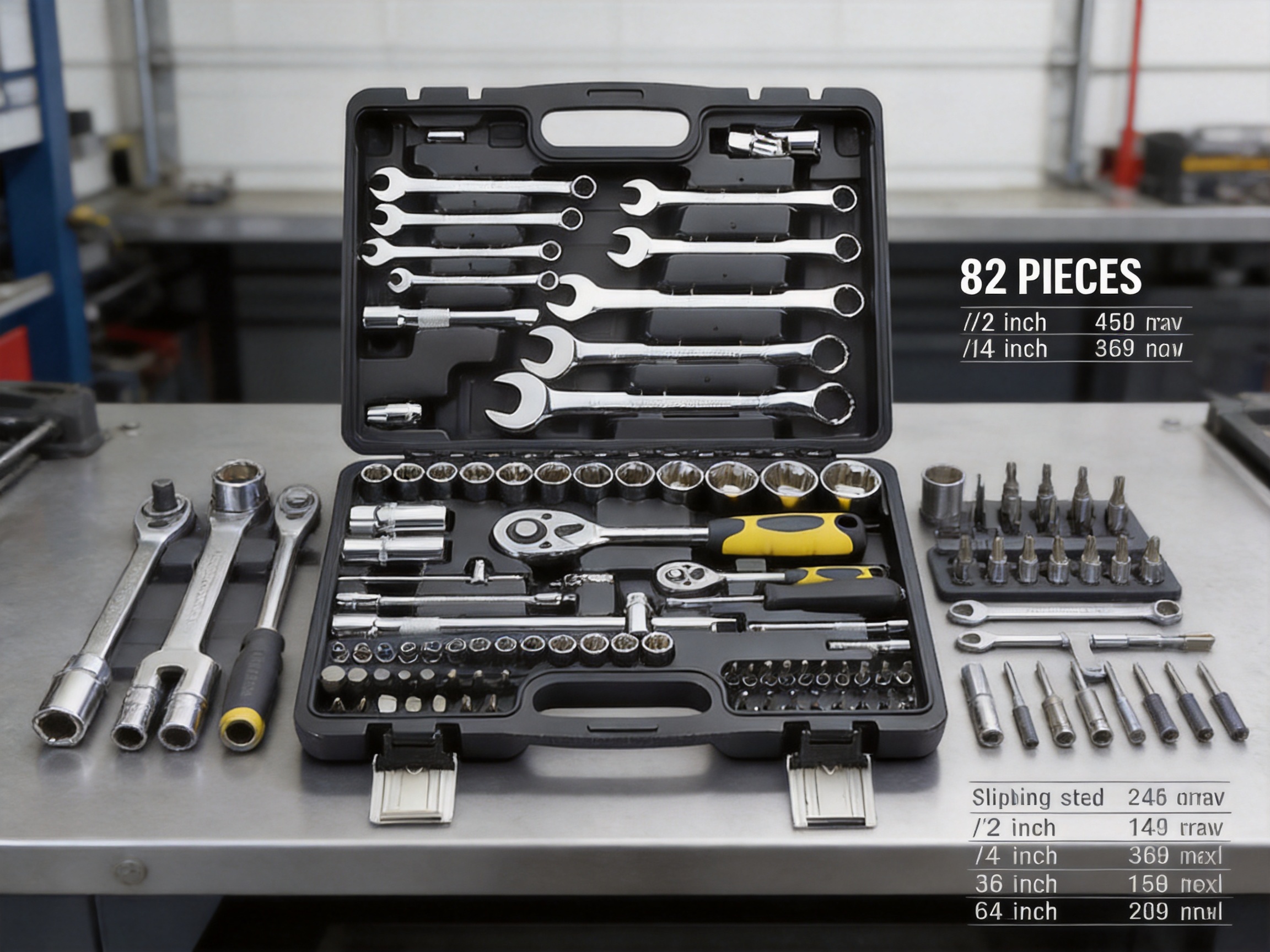
Advantages Compared with Narrower Tool Sets
Broader Coverage in One Package
One of the clearest advantages is the combination of 82 pieces in a single service-oriented package. A basic socket set may provide only a limited number of metric sockets. A screwdriver kit may lack wrenches and extension accessories. A wrench set may not reach recessed fasteners. This product brings these functions together, reducing the need to buy several separate kits.
The combination is especially useful for users who do not yet know which tools will be needed for a repair. A vehicle owner may begin with a simple maintenance task and discover that the fastener is recessed, located at an angle, or uses a Torx-style head. With universal joints, extension bars, multiple drive sizes, and several bit families available, the user has a better chance of completing the job without interrupting the work to purchase another tool.
Two Drive Systems for Different Loads and Spaces
Using both 1/2-inch and 1/4-inch systems is a practical design advantage. Small-drive tools are compact and convenient for detailed work. Large-drive tools are better suited to larger sockets and heavier-duty fasteners. A competitor’s low-cost set may include only one drive size, which can limit its range or encourage users to apply excessive force to tools not intended for that purpose.
The two-drive arrangement also improves control. A 1/4-inch tool is easier to position around small fasteners in confined areas. A 1/2-inch tool provides a more substantial grip for larger sockets. The user can select the appropriate system rather than adapting a single handle to every repair.
Useful Intermediate Sizes
The socket lists include several intermediate sizes and half-millimeter sizes. These details matter in practical service work. Fasteners are not always limited to the most common whole-number dimensions, and a missing 4.5, 5.5, or 16 millimeter socket can stop a repair even when the remainder of a kit is adequate.
The 1/2-inch range also includes 27, 30, and 32 millimeters. These larger sizes are not always included in compact home sets, yet they can be useful for wheel-related work, machinery, suspension parts, and structural fasteners. The broader range gives the product a stronger position than a small household-only kit.
Better Access Through Extensions and Universal Joints
Socket size alone does not determine whether a tool set is useful. Accessory geometry is equally important. Extension bars allow the user to reach fasteners positioned below or behind an obstruction. Universal joints allow angled access. Conversion joints create additional combinations between handles, extensions, and sockets.
These components can reduce the need to dismantle surrounding parts. They also allow the user to choose between speed and leverage. A short extension may provide precise control, while a longer extension can reach deeper locations. This flexibility is a meaningful advantage over a competitor’s set that contains many sockets but few accessories.
Vehicle and Household Versatility
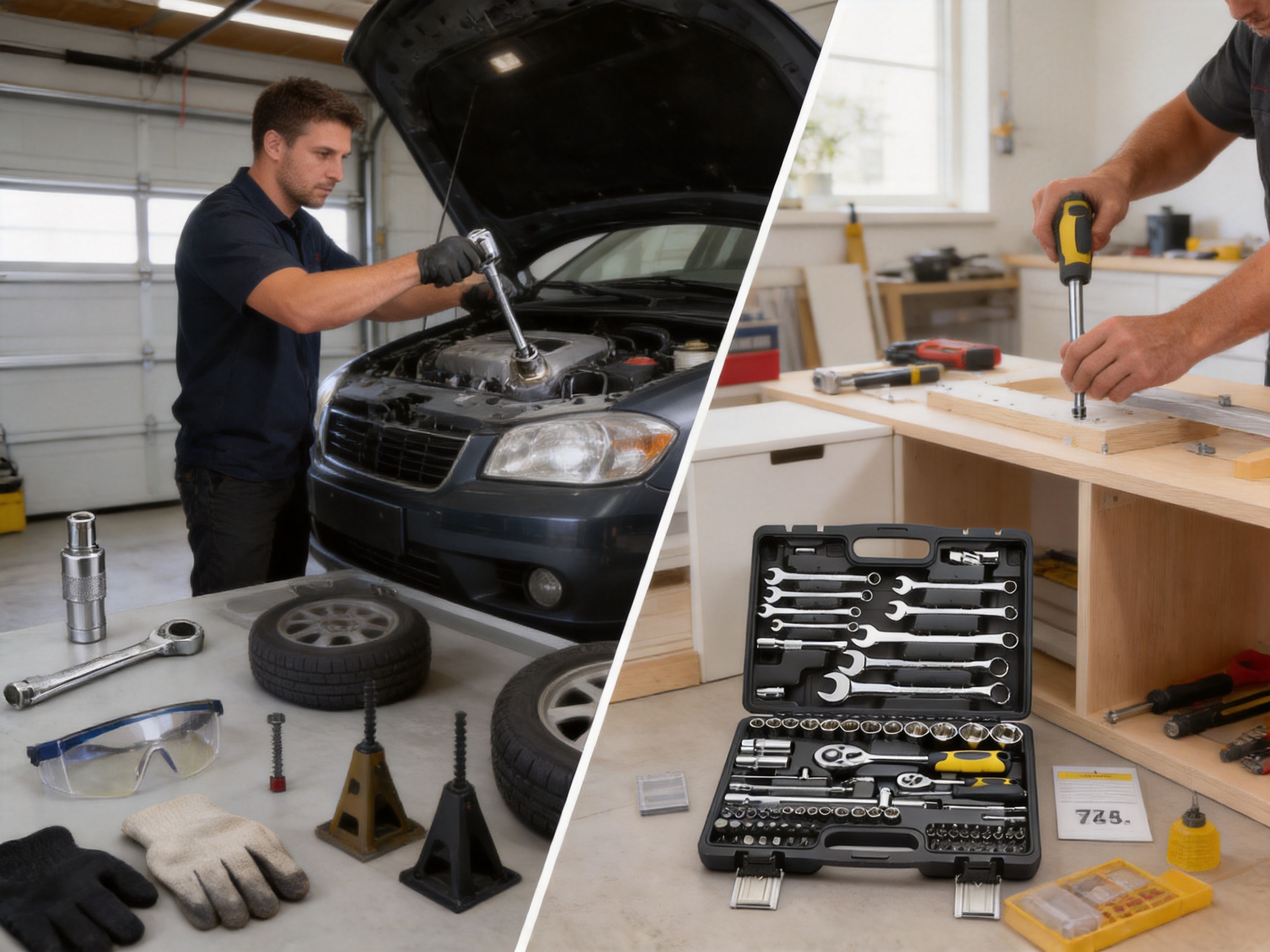
Although the product is categorized for automobile service, its contents are not limited to vehicles. The metric wrenches and sockets can be used on furniture, workshop equipment, garden machinery, bicycles, shelving, appliances, and general household hardware. The screwdriver bits further expand the application range.
This versatility increases the product’s value for consumers. A vehicle-specific specialty tool may be used only occasionally, while a mixed service set can remain useful throughout the year. For retailers, the product can therefore be marketed to a wider audience without losing its automotive identity.
Manufacturing Considerations for Professional Tool Quality
A hand-tool set performs well only when its components are manufactured with consistent dimensions, appropriate material properties, and reliable surface finishing. The company behind this product operates in the hardware sector and lists new products, home tools, fasteners, packages, and stamping parts among its product categories. That combination is relevant because tool production depends on many of the same capabilities used in hardware manufacturing: forming, stamping, machining, finishing, inspection, packaging, and supply coordination.
The exact material grades, hardness values, coatings, tolerances, and production certifications for this particular set should be confirmed in the technical file. However, buyers evaluating a professional tool supplier should examine the following manufacturing stages and quality indicators.
Material Selection
Sockets and wrenches must resist deformation under normal working loads. Tool manufacturers commonly select alloy steel grades suitable for forging, machining, and heat treatment. The appropriate steel depends on the intended application, drive size, geometry, and required strength. A responsible supplier should be able to identify the material family used for the sockets, wrenches, extensions, and bits.
Material consistency is important because a tool set contains many different components. If the socket wall is too soft, the opening may deform. If the material is overly brittle or improperly treated, it may crack under impact or sudden loading. Consistent incoming-material inspection and traceable production batches help reduce these risks.
Precision Forming and Forging
Many high-quality hand tools begin as formed or forged blanks. Forging can improve the continuity of the metal structure and produce strong shapes around drive ends, corners, and load-bearing sections. The forming process must be controlled so that the tool receives adequate material in critical areas without creating excessive variation between pieces.
For sockets, the drive opening and working profile require particular attention. For wrenches, the jaw geometry and ring profile must be shaped accurately. For extension bars and universal joints, the connection points must align correctly with the corresponding drive components. Proper forming reduces the amount of material removed during later machining and supports repeatable dimensions.
Stamping and Component Production
Stamping is widely used in hardware manufacturing for producing brackets, clips, retainers, packaging components, and certain tool-related parts. A supplier with experience in stamping parts can apply knowledge of die design, sheet-metal control, progressive operations, and dimensional inspection to accessory components and packaging systems.
Although not every part of a socket set is stamped, an integrated hardware background can support efficient production of supporting components. It may also improve the supplier’s ability to develop customized trays, storage inserts, product labels, protective covers, or private-label packaging for distributors.
CNC Machining and Profile Accuracy
Machining is necessary when a formed blank must receive precise drive openings, socket profiles, grooves, chamfers, or connection features. Computer-controlled machining can provide repeatability when programs, tooling, and inspection procedures are properly maintained.
Profile accuracy affects how a socket engages with a fastener. A socket that is too loose can round the corners of a nut. A socket that is too tight may not fit or may become difficult to remove. Chamfers can help guide the socket onto the fastener, while a properly formed internal profile can distribute contact across the fastener faces.
For screwdriver bits, the tip geometry is equally important. Phillips, Pozidriv-style, slotted, Torx-style, and hexagonal profiles must be shaped to the relevant dimensional standard. Incorrect geometry can cause slipping, premature wear, or damage to the fastener head. A capable manufacturer should use gauges or inspection fixtures for these profiles rather than relying only on visual checks.
Heat Treatment
Heat treatment can balance hardness, strength, wear resistance, and toughness. The correct process depends on the component and its intended use. Sockets, wrenches, bits, extensions, and joint components may require different treatment parameters because they experience different types of stress.
Hardness that is too low may result in rapid wear or deformation. Hardness that is too high without adequate toughness may increase the risk of cracking. Controlled heating, quenching, tempering, and batch monitoring are therefore central to reliable tool production. Buyers may request hardness reports or process records when purchasing at commercial scale.
Surface Treatment and Corrosion Protection
Automotive and household tools are exposed to moisture, oil, dust, fingerprints, and changing temperatures. Surface treatment helps protect the steel and improves cleanability. Depending on the product design, finishes may include polishing, plating, black treatment, satin treatment, or other corrosion-resistant coatings.
A consistent finish is also important for product presentation. Uneven coating, sharp unfinished edges, stains, or inconsistent color can reduce customer confidence even when the tool performs correctly. A professional inspection process should check both functional surfaces and visible surfaces before packing.
Dimensional and Functional Inspection
Inspection should cover more than appearance. Socket openings, wrench jaws, bit tips, drive connections, extension lengths, and joint movement all require functional verification. Gauges can confirm whether a socket fits within the intended dimensional range. Torque or load testing can help evaluate whether components withstand specified working conditions.
Assembly checks are also valuable. Each handle should connect securely to the relevant drive components. Universal joints should articulate without excessive looseness. Conversion joints should maintain a reliable connection. Sliding mechanisms should move smoothly and remain stable during use.
A supplier serving international distributors should be able to provide a packing list, product dimensions, net and gross weight, carton details, and inspection information. These documents help buyers organize warehouse operations, shipping, product registration, and after-sales support.
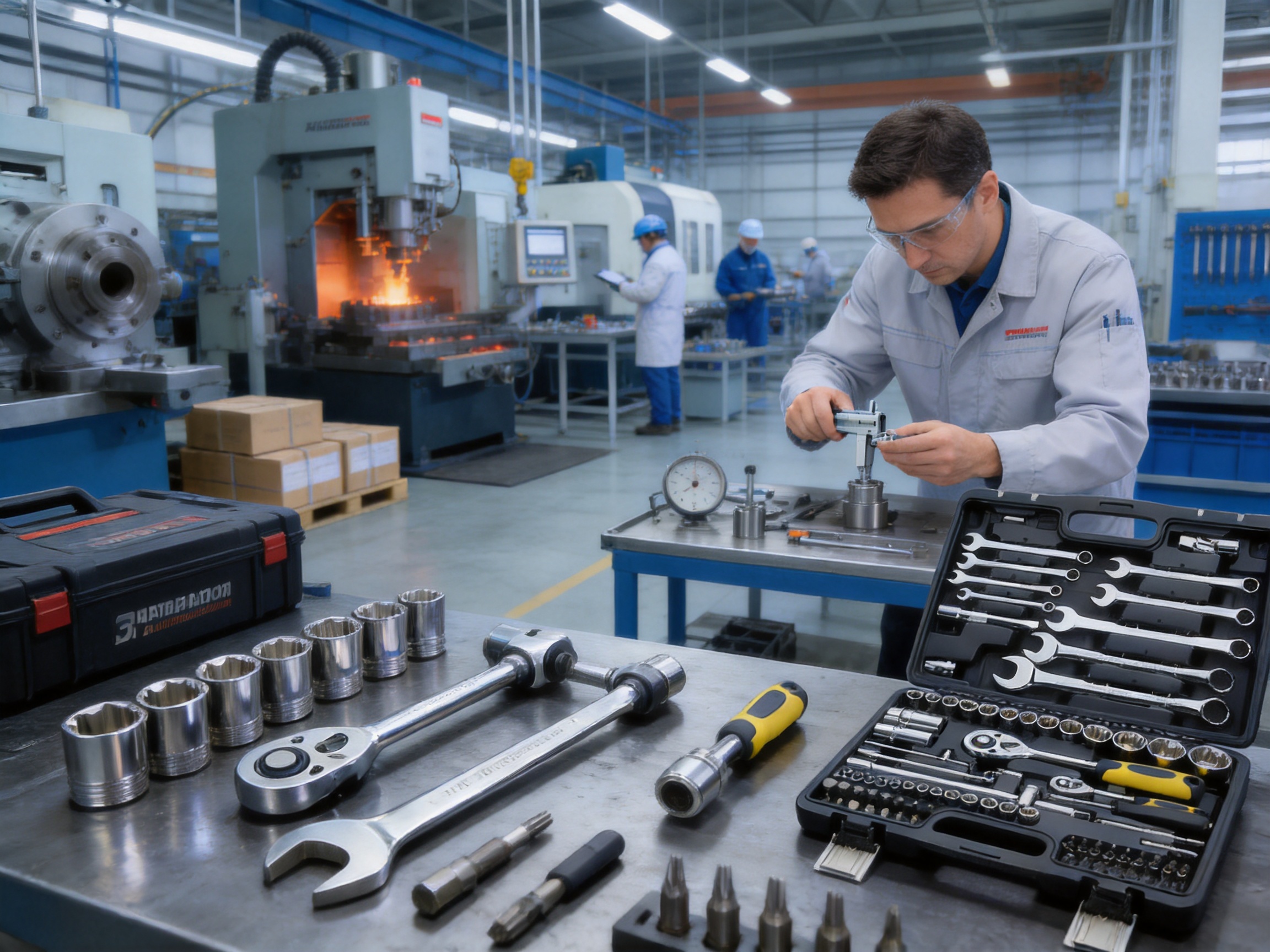
Company Manufacturing and Supply Strengths
The supplier, Lizhan Hardware Co., Ltd., is presented as a hardware manufacturer and supplier with a China factory location in Haiyan, Jiaxing, Zhejiang, and a Thailand warehouse in Chonburi. This China-and-Thailand structure can offer practical advantages for international customers, subject to confirmation of individual order terms and inventory conditions.
China Factory Capability
A factory base in Zhejiang places the company in a region known for hardware production, component supply, tooling resources, metalworking, and export-oriented manufacturing. This industrial environment can support product development from initial drawing and tooling through production, finishing, packing, and shipment.
For a mixed tool set, access to hardware manufacturing resources is valuable. The product contains many individual pieces that must be produced, inspected, counted, matched, and packed together. A supplier experienced in fasteners, stamping parts, home tools, and packaged hardware may be able to coordinate these operations more effectively than a trading source that handles only finished goods.
Thailand Warehouse Support
The listed Thailand warehouse provides a regional logistics option for customers in Thailand and nearby markets. Local or regional warehouse availability can shorten replenishment cycles, reduce certain domestic delivery steps, and support faster response for distributors that maintain local stock.
Warehouse support is especially relevant for tool sets because the product is packaged, relatively compact, and suitable for retail inventory. Distributors may be able to combine warehouse fulfillment with factory-direct purchasing, depending on stock levels and commercial arrangements. Buyers should confirm whether the warehouse holds finished goods, sample quantities, spare packaging, or only selected product lines.
Product Development and Category Breadth
The company’s listed categories include fasteners, home tools, packaging, and stamping parts. Category breadth can support product development because the supplier is familiar with different hardware applications and buyer requirements. A customer seeking a private-label service kit may also require screws, brackets, stamped parts, or related accessories. A broad manufacturing portfolio can simplify communication and reduce the number of separate vendors.
For distributors, this breadth may also create opportunities to build a larger hardware assortment around the 82-piece set. Related products could include smaller socket sets, screwdriver kits, fastener assortments, automotive clips, repair accessories, storage boxes, or customized tool combinations. Any proposed product extension should be confirmed through samples and technical review.
Communication and Commercial Accessibility
The supplier provides sales contact information and identifies dedicated contacts for communication. Direct communication is important when tool terminology varies between countries. For example, “projectile sleeve,” “Martian sleeve,” “sliding rod,” and “revolving handle” may be translated differently by different markets. Before finalizing a catalog, the buyer should request a confirmed component list with photographs, dimensions, drive specifications, and standard English names.
Clear communication also supports customization. Buyers may request logo placement, color changes, molded case revisions, instruction manuals, barcode labels, carton marks, or different socket combinations. These requirements should be agreed in writing, with approval samples retained for future production comparison.
Recommended Manufacturing and Quality Workflow
For commercial buyers evaluating this product, the following workflow provides a practical basis for supplier assessment.
Stage One: Technical Confirmation
The first stage is confirmation of the product specification. The supplier and buyer should agree on the exact number of pieces, the definition of each piece, socket sizes, wrench sizes, bit profiles, drive sizes, extension lengths, and packaging format. A numbered component diagram is particularly useful because the product contains multiple similar-looking accessories.
Technical confirmation should also identify whether the listed 16 and 21 millimeter sockets are standard spark-plug sockets, deep sockets, or another format. The same applies to the “projectile sleeve” and “revolving handle.” Clear naming prevents misunderstandings in online listings and printed catalogs.
Stage Two: Prototype and Sample Approval
Samples allow buyers to evaluate fit, finish, ergonomics, socket engagement, ratchet or handle operation, and case organization. The buyer should test several socket sizes rather than only one. Small sockets, large sockets, screwdriver bits, extensions, and universal joints may perform differently because their geometries and production steps vary.
Sample approval should include a written record. The approved sample can serve as a reference for mass production, packaging inspection, and future quality claims. If the product is sold under a distributor’s label, the approved sample should include the final logo, color, label, and instruction materials whenever possible.
Stage Three: In-Process Inspection
In-process inspection can identify problems before all pieces are completed. Typical checks include blank dimensions, socket profile accuracy, heat-treatment condition, surface finish, drive fit, bit tip geometry, and extension alignment. Sampling frequency should be determined by production volume and buyer requirements.
For sets containing 82 pieces, counting control is essential. A set may contain high-quality individual tools but still fail customer expectations if a socket, bit, adapter, or extension is missing. Counting systems, packing checklists, barcode scans, or dual-person verification can reduce incomplete-set complaints.
Stage Four: Final Assembly and Packaging
The packaging must protect the tools from movement, impact, moisture, and surface scratching during transportation. An internal tray or case should hold each piece securely while still allowing removal by hand. Large sockets should not be allowed to shift against small bits, and sharp edges should not contact labels or plastic hinges.
Packaging should display the size range and the principal applications clearly. A buyer should be able to identify the drive systems, metric coverage, and major accessories without opening the package. If the set is sold through retail channels, concise instructions and safety guidance can improve customer satisfaction.
Stage Five: Pre-Shipment Verification
Before shipment, the supplier and buyer should verify the final quantity, carton markings, product labels, case color, accessory count, and shipping documents. Random cartons can be opened to confirm set completeness. Product photographs from the final production batch may be retained as part of the inspection record.
For larger orders, buyers may also request checks for rust, damaged cases, loose hinges, missing labels, incorrect socket sizes, and mixed packaging versions. These checks are relatively simple but can prevent costly returns after distribution.
Practical Benefits for Different Users
Home Vehicle Owners
For home vehicle owners, the set provides a starting point for routine tasks such as replacing accessible components, tightening brackets, removing battery terminals, servicing interior fittings, and working on general fasteners. It can be stored in a garage, utility room, trunk, or workshop cabinet.
Users should consult the vehicle manufacturer’s service information for recommended procedures and torque values. The tool set provides the mechanical means to turn fasteners, but it does not replace a torque wrench, diagnostic scanner, jack stands, wheel chocks, or other safety equipment where those items are required.
Automotive Hobbyists
Hobbyists often work on different vehicles and projects over time. The combination of large and small metric sizes, extensions, universal joints, and screwdriver bits makes the set suitable for varied work. It can serve as a primary compact kit or as a mobile secondary kit alongside specialized tools.
Restoration projects may involve older fasteners, unusual access angles, and a mixture of interior and exterior hardware. The broad bit selection is useful when restoring trim, dashboard components, brackets, covers, and equipment mounted inside a vehicle.
Maintenance Staff and Property Managers
Property managers and maintenance staff frequently handle tasks that cross between automotive, building, furniture, and equipment repair. A versatile hand-tool package reduces the need to maintain separate small kits for every type of job. The metric sockets and wrenches can support common repairs, while the screwdriver bits cover many household and equipment fasteners.
Retailers and Distributors
Retailers can present the product as a complete solution rather than a collection of isolated tools. Its 82-piece count creates an immediate value proposition, while the dual-drive design and wide metric range provide concrete selling points. The product can be positioned for gift sales, automotive accessory departments, hardware stores, e-commerce channels, and workshop suppliers.
Distributors should avoid making unsupported claims about impact use, torque ratings, professional certification, or lifetime warranty unless these features are documented by the manufacturer. Accurate product communication builds customer trust and reduces returns.
Safe and Effective Use
Select the socket or bit that fits the fastener correctly. Do not use a nearly fitting size simply because it is convenient. A poor fit can damage the fastener and the tool. Clean dirt and corrosion from the fastener when possible, and keep the socket aligned with the fastener axis.
Use the appropriate drive system. The 1/4-inch series is generally better suited to smaller fasteners and confined areas, while the 1/2-inch series is more suitable for larger fasteners. Do not use extension pipes or improvised leverage unless the component is specifically rated for that application.
Do not use standard hand tools as substitutes for impact-rated accessories. If an impact wrench is required, use sockets and adapters expressly designed for impact service. Avoid striking ordinary handles or sockets with a hammer unless the manufacturer clearly identifies them as suitable for such use.
Wear eye protection during repair work. Support vehicles with approved stands rather than relying only on a jack. Keep hands clear of pinch points, and allow hot engine or exhaust components to cool before beginning service. The tool set supports repair work, but safe working procedures remain the responsibility of the user.
Comparison Table
| Evaluation Area | 82-Piece Automobile Service Home Tool Set | Narrow Basic Socket Set | Separate Single-Purpose Kits |
|---|---|---|---|
| Drive coverage | Includes 1/2-inch and 1/4-inch systems | Often limited to one drive size | Depends on each individual kit |
| Metric socket range | Includes small 1/4-inch sizes and larger 1/2-inch sizes up to 32 millimeters | Usually provides a smaller range | May provide excellent coverage in only one category |
| Wrench availability | Includes dual-purpose metric wrenches | May not include wrenches | Available only if purchased separately |
| Angled access | Universal joints and extension components are included | May include few or no access accessories | Varies by kit |
| Screwdriver-bit coverage | Phillips, cross-head, slotted, Torx-style, and hexagonal profiles | Often limited or absent | Strong coverage, but requires another purchase |
| Automotive suitability | Designed around general automobile service and home repair | Suitable for simple fastening tasks | May be highly specialized |
| Storage efficiency | One coordinated package for multiple functions | Compact but less comprehensive | Several cases or loose tools may be required |
| Distributor appeal | Clear multi-use value proposition | Lower entry price but fewer features | Requires multiple product listings |
Purchasing and Customization Guidance
Before placing a wholesale order, buyers should request a complete technical specification. The specification should state the number of pieces, material information, surface treatment, socket profile, drive dimensions, case material, packaging dimensions, and gross shipping weight.
Buyers should also ask for a high-resolution component chart. Product photographs can make a tool set appear complete, but only a component chart confirms whether an extension, adapter, handle, or bit is included. The chart should use consistent names and numbering so that warehouse staff and end customers can identify replacements or missing parts.
For private-label orders, artwork should be approved before mass production. Important details include the logo position, printed socket-size chart, warning language, barcode, country-of-origin marking, carton information, and instruction manual. If the tool case has a molded logo area, the buyer should confirm whether a new mold, insert, label, or standard blank case will be used.
Color customization can help a distributor create a recognizable product family. However, color should not replace functional labeling. Socket sizes should remain readable, and small bits should be organized in a way that allows rapid identification. Good visual organization improves the user experience and reduces the chance of selecting the wrong tool.
Order planning should consider the China factory and Thailand warehouse separately. Factory orders may provide broader customization and production planning, while warehouse stock may offer faster regional delivery. Buyers should confirm lead times, minimum order quantities, replenishment schedules, and the location from which each order will ship.
Why the Product Is Competitive
The competitive strength of this product is its practical completeness. It does not rely on a single unusual feature. Instead, it combines the tools that users commonly need when a repair becomes more complicated than expected. The 82-piece count is supported by meaningful variety: two drive systems, multiple extension options, universal joints, metric wrenches, large sockets, small sockets, spark-plug-related sockets, and a diverse bit selection.
Compared with a low-cost basic kit, it provides greater application coverage. Compared with several separate specialty kits, it reduces duplication and storage requirements. Compared with a vehicle-only set, the screwdriver bits and smaller metric tools make it more useful around the home and workshop.
Its manufacturer also presents a hardware-focused operating structure rather than a single-product identity. Experience across home tools, fasteners, stamping parts, packaging, and related hardware can support product adaptation, private labeling, accessory development, and coordinated purchasing. The China factory and Thailand warehouse provide a supply structure that may be valuable to customers serving both international and Southeast Asian markets.
The strongest sales message should therefore focus on coverage, access, organization, and supply support. Buyers should combine these advantages with verified technical data rather than relying solely on the piece count.
Frequently Asked Questions
What is included in the 82-piece set?
The set includes metric sockets in 1/2-inch and 1/4-inch drive series, dual-purpose metric wrenches, extension or connecting rods, universal joints, a conversion joint, sliding and flexible components, spark-plug-related sockets, screwdriver bits, quick-release wrenches, and a revolving handle. The exact final piece count and naming should be confirmed against the supplier’s approved packing list.
Is the set suitable for home use?
Yes. The product is designed for automobile service and home tool applications. It can support vehicle maintenance, furniture assembly, household repairs, workshop projects, and general fastening tasks. It should not be considered a complete replacement for specialized equipment such as a torque wrench, diagnostic device, or vehicle lifting system.
Does it include both small and large metric sockets?
Yes. The 1/4-inch series covers sizes from 4 to 14 millimeters, including 4.5 and 5.5 millimeters. The 1/2-inch series covers sizes from 14 to 32 millimeters, including 27, 30, and 32 millimeters.
Why are two drive sizes useful?
The 1/4-inch drive is compact and suitable for smaller fasteners and restricted spaces. The 1/2-inch drive is more suitable for larger sockets and heavier service applications. Having both systems allows the user to select a tool that better matches the fastener size and working environment.
What types of screwdriver bits are included?
The listed bit selection includes PZ3 and PZ4, cross-head numbers 1, 2, and 3, slotted bits from 4 to 12 millimeters, Torx-style sizes from T8 to T55, and hexagonal sizes from 3 to 14 millimeters.
Are the 16 and 21 millimeter sockets for spark plugs?
They are listed as “Martian sleeves” in the supplied product information and appear to refer to spark-plug-related sockets. The exact construction and retention feature should be confirmed with the supplier. Vehicle compatibility depends on the spark-plug size and engine design.
Can the product be customized?
Potential customization may include packaging, labels, colors, logos, printed size charts, case design, and possibly the tool combination. Customization depends on order quantity, tooling requirements, and production arrangements. Buyers should request written confirmation before approving a purchase order.
Where is the product manufactured and stored?
The supplier lists a China factory in Haiyan, Jiaxing, Zhejiang, and a Thailand warehouse in Chonburi. The available stock, production location, shipping origin, and delivery terms should be confirmed for each order.
What quality documents should a buyer request?
A buyer may request the component list, material information, dimensional inspection records, hardness information where applicable, surface-treatment details, packing checklist, carton specifications, and sample approval record. Any certification or performance claim should be supported by current documentation.
Can the tools be used with an impact wrench?
Only if the relevant components are specifically identified and rated for impact use. Ordinary hand-tool sockets and adapters should not automatically be used with impact equipment. Buyers should confirm impact compatibility with the supplier before making such a claim.
How should the set be stored?
Keep the tools dry, clean, and properly seated in the case. Wipe away oil and moisture after use. If the tools will be stored for a long period in a humid environment, a suitable light protective coating may help reduce corrosion. The case should be closed securely during transport.
Who is the best target customer?
The most suitable customers include home vehicle owners, automotive hobbyists, mobile maintenance workers, repair shops seeking a supplementary kit, hardware retailers, automotive accessory distributors, and e-commerce sellers. Its broad coverage also makes it appropriate for practical gift and starter-tool markets.
Conclusion
The 82-piece Automobile Service Home Tool Set is a versatile solution for users who want more than a basic socket collection but do not need a full industrial workshop inventory. Its principal advantages are the combination of 1/4-inch and 1/2-inch drive systems, broad metric coverage, multiple access accessories, dual-purpose wrenches, spark-plug-related sockets, and extensive screwdriver-bit selection.
The set is competitive because its pieces work together as a service system. Sockets handle recessed fasteners, wrenches provide side access, extensions improve reach, universal joints address angled locations, and screwdriver bits cover common non-hexagonal fasteners. This makes the package useful for both automotive and household applications.
From a supply perspective, Lizhan Hardware Co., Ltd. presents a China factory and Thailand warehouse structure, together with experience in home tools, fasteners, packaging, and stamping parts. These capabilities can support product development, coordinated hardware sourcing, packaging customization, and regional distribution. Commercial buyers should confirm exact manufacturing details, quality documents, technical terminology, and logistics terms before final purchase.
When supported by accurate specifications, reliable inspection, protective packaging, and clear safety guidance, this tool set can serve as a practical addition to retail shelves, online catalogs, service vehicles, home garages, and maintenance departments.
References
1. Supplier-provided product specification for the 82-piece Automobile Repair Service Set, product identification LZ000XM000082.
2. Supplier-provided component list covering metric sockets, drive accessories, wrenches, screwdriver bits, and handles.
3. General principles of hand-tool material selection, forging, machining, heat treatment, surface finishing, and dimensional inspection.
4. General workshop guidance for socket selection, fastener engagement, vehicle maintenance safety, and tool storage.
5. Supplier-provided company information concerning hardware product categories, factory location, warehouse location, and sales contact structure.