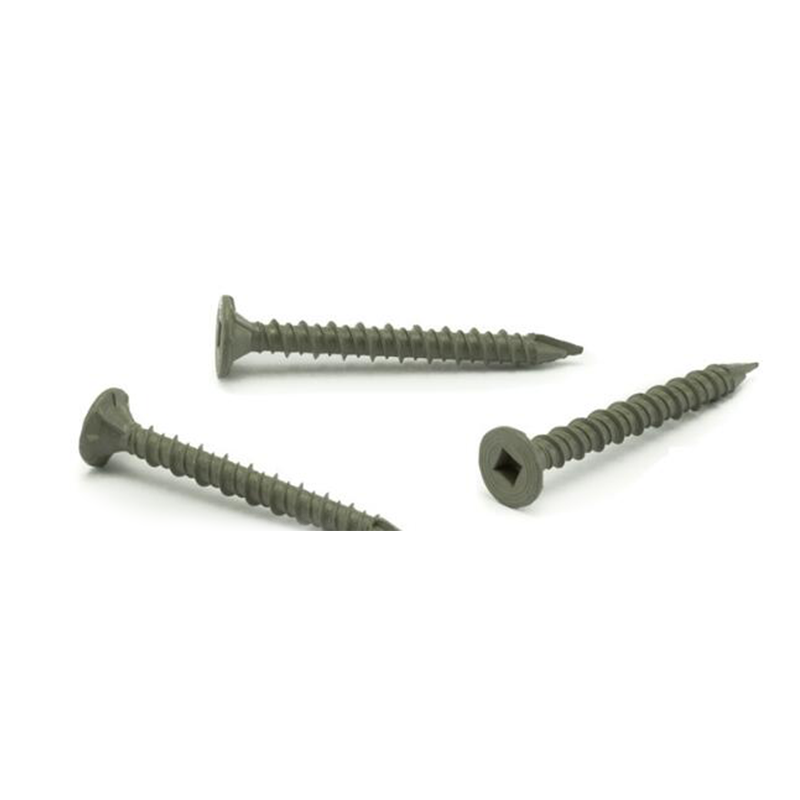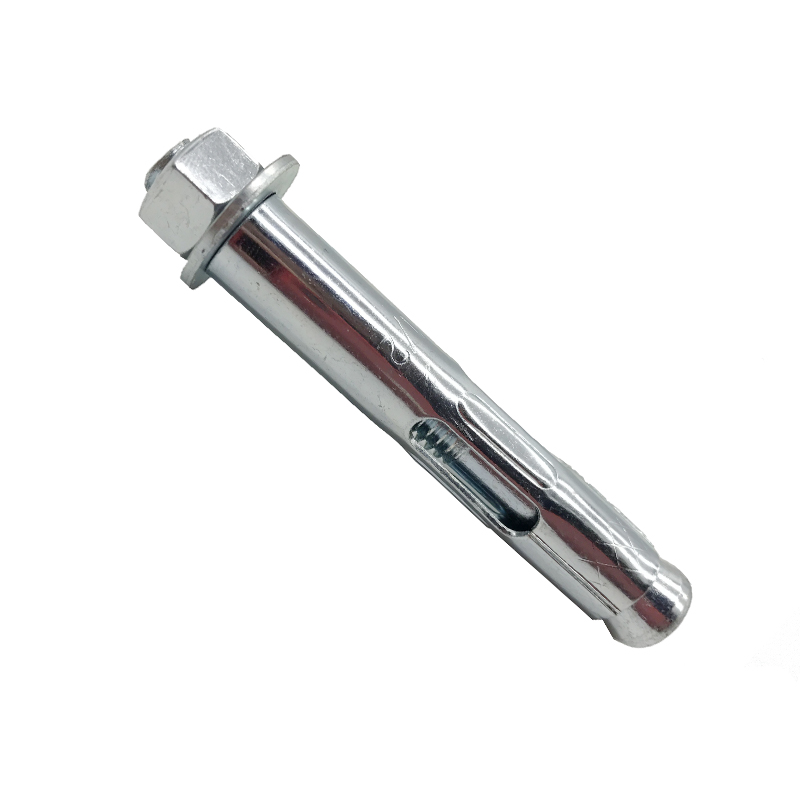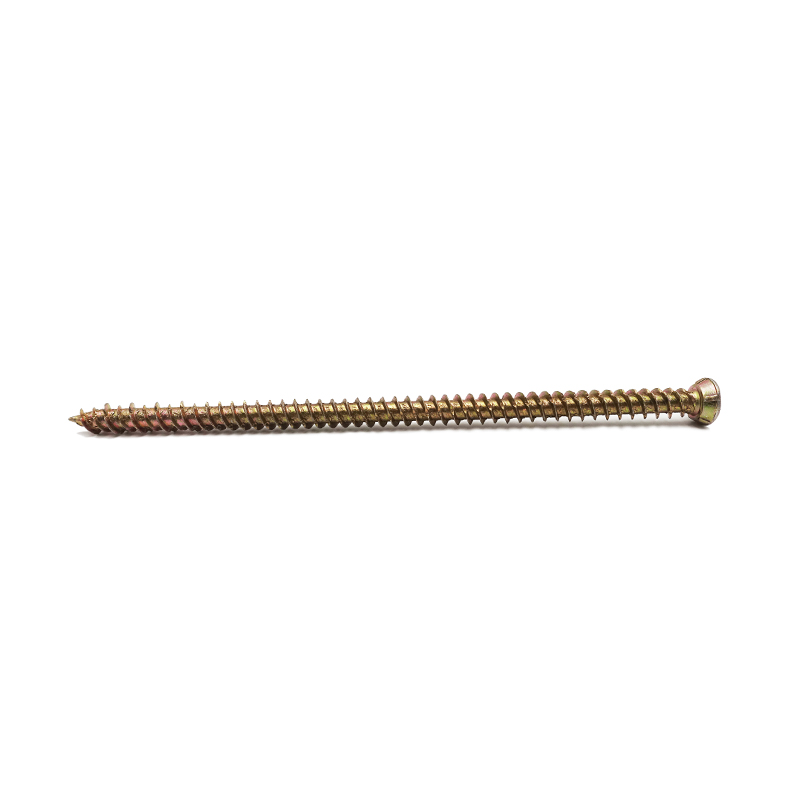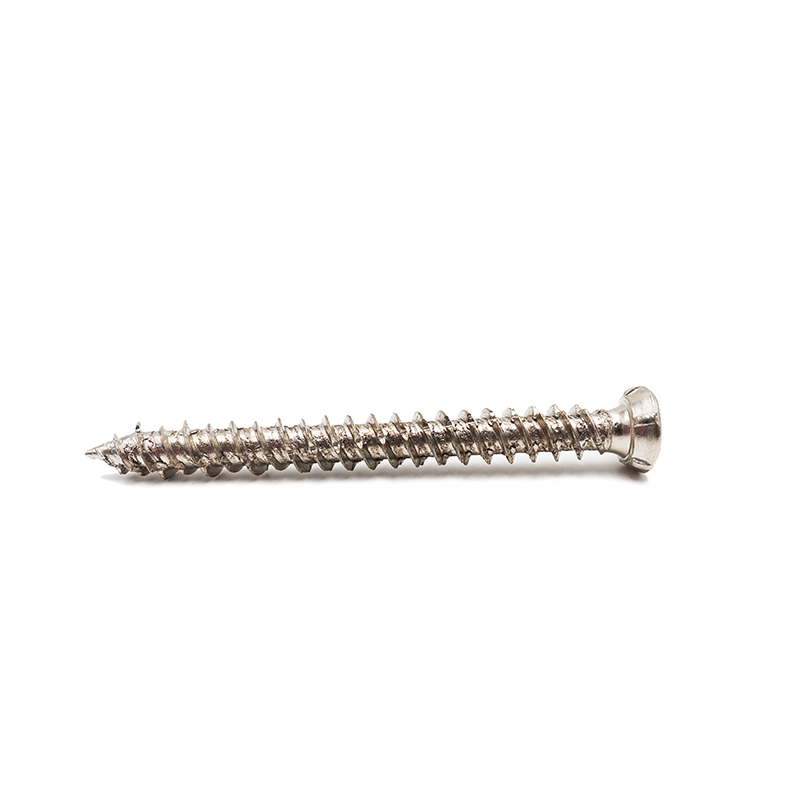
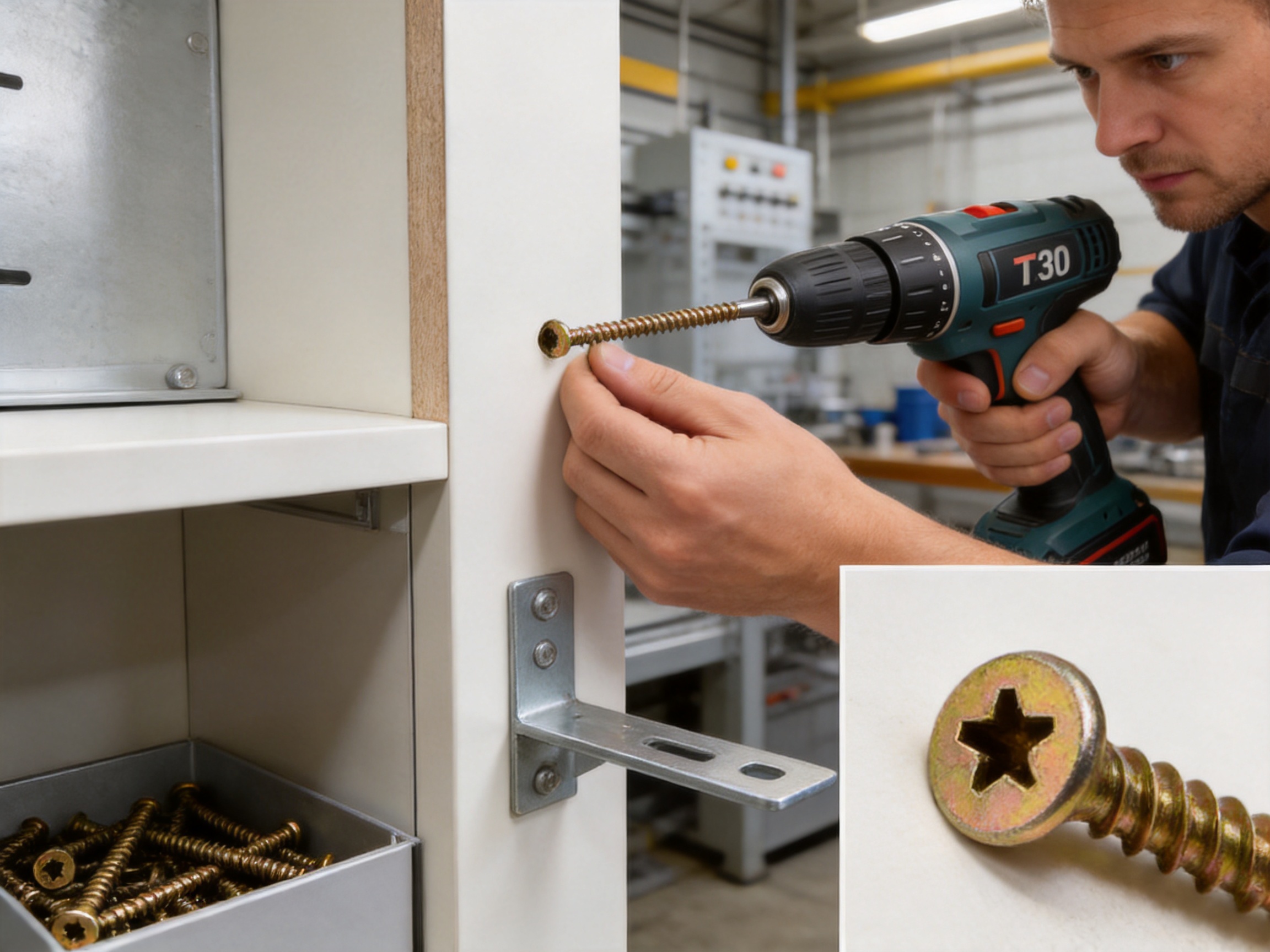
Fasteners used in construction, furniture assembly, interior installation, metal fabrication, and general maintenance must deliver more than basic holding power. A professional screw should install efficiently, resist premature corrosion, maintain reliable engagement with the driving tool, and provide a clean finished appearance. Torx drive small flat head self-tapping screws with yellow zinc plating are designed to address these requirements through a combination of a six-lobe Torx recess, countersunk head geometry, self-tapping thread design, and protective surface treatment.
This screw is manufactured from Grade 1022A steel and is available with a T30 Torx recess, a countersunk head, an approximate head diameter of 7.5 millimeters, and lengths in the 11.0 to 12.0 millimeter range. Depending on project requirements, the surface can be supplied with standard zinc plating, yellow zinc plating, Ruspert coating, or Magni coating. The thread configuration is a hi-low thread, helping the screw form or engage material efficiently while reducing installation resistance in suitable applications.
Although compact in size, this fastener is engineered for controlled installation and dependable performance. Its flat head can sit flush or nearly flush with the work surface, while the Torx drive provides positive tool engagement. The yellow zinc finish adds a recognizable gold-toned appearance and provides a barrier against environmental exposure. When specified correctly and installed in compatible base materials, this screw can offer a practical alternative to ordinary slotted, Phillips, or low-quality hexalobular fasteners.
Product Overview
The Torx drive small flat head self-tapping screw is a precision-produced fastening component intended for applications where a neat surface finish and efficient drive transfer are important. The product combines several design features that work together rather than functioning independently.
The T30 Torx recess distributes driving force across six contact lobes. Compared with a traditional cross recess, this geometry can reduce the tendency of the driver bit to slip out during installation. It also supports improved torque transmission, particularly when the operator uses a powered screwdriver or screw gun. Correct bit selection remains essential, but the recess design itself provides a stable interface between the tool and the screw.
The countersunk, or flat, head is designed to enter a prepared countersink or seat close to the material surface. This is valuable in applications where a projecting screw head could interfere with movement, create a snagging point, or reduce the visual quality of the finished product. The compact head diameter, specified at approximately 7.5 millimeters, is suitable for assemblies where the fastening point must remain relatively unobtrusive.
The hi-low thread profile provides a combination of major and minor thread engagement. Depending on the base material and pilot-hole conditions, this thread structure can help the screw start smoothly and create a secure mechanical connection. It may also reduce material displacement and installation effort compared with a conventional full-height thread in selected substrates.
Yellow zinc plating is used to improve surface protection and provide a distinctive finish. The coating forms a protective layer over the carbon steel base and can help delay the onset of red rust under ordinary indoor or moderately exposed conditions. For more demanding environments, alternative coatings such as Ruspert or Magni may be considered after reviewing the required corrosion rating, appearance, temperature exposure, and environmental conditions.
| Feature | Specification or Option | Practical Benefit |
|---|---|---|
| Drive recess | T30 Torx | Improved driving engagement and torque transfer |
| Head style | Small flat, countersunk head | Flush or low-profile installation and clean appearance |
| Approximate head diameter | 7.5 millimeters | Compact fastening footprint |
| Available length | 11.0 to 12.0 millimeters | Suitable for short fastening assemblies when specified correctly |
| Base material | Grade 1022A steel | Balanced formability, strength, and production consistency |
| Thread | Hi-low thread | Efficient material engagement and controlled installation |
| Surface options | Zinc plated, yellow zinc plated, Ruspert, or Magni | Choice of protection and appearance for different service conditions |
Why the Torx Drive Matters
The drive recess is one of the most important interfaces in a screw assembly. It determines how effectively installation torque is transferred from the tool to the fastener. If the recess is shallow, poorly formed, or not matched to the driver bit, the bit can cam out, damage the head, or create inconsistent installation results.
A T30 Torx recess uses a six-lobe design that provides multiple points of contact between the screw head and the driver. The geometry allows the applied force to be distributed more evenly around the recess. This can help reduce localized stress and improve the operator’s ability to maintain the bit in the center of the screw during installation.
In production environments, reduced bit slippage can improve cycle consistency. Operators may spend less time repositioning the bit, replacing damaged screws, or correcting installation defects. On automated or semi-automated assembly lines, stable drive engagement can support more consistent torque application and reduce interruptions caused by stripped recesses.
The Torx profile can also be advantageous when the fastener must be installed in a confined position. A driver that remains centered in the recess can be easier to control than a tool that repeatedly slips from a cross-shaped head. This is especially useful when working with short screws, where the available head area is limited and the installer must apply accurate downward pressure.
However, proper installation practice remains necessary. A T30 bit should be used rather than a visually similar but incorrect size. Worn or damaged bits should be replaced. Excessive rotational speed, excessive torque, or an unsuitable pilot hole can still damage the recess or the surrounding material. The Torx design improves the mechanical interface, but it cannot compensate for incorrect tooling or poor process control.
Advantages of the Small Flat Head Design
The small flat head is intended for assemblies where a low-profile finish is important. Once properly seated in a countersunk hole, the head can remain near the surface of the workpiece. This can prevent interference with sliding parts, panels, hinges, covers, or decorative surfaces.
A low-profile head may also improve safety. Protruding fasteners can catch clothing, scrape hands, interfere with packaging, or create unwanted contact points. In furniture components, cabinet fittings, interior panels, and light fabrication work, a flush head can contribute to a smoother finished assembly.
The countersunk shape can help distribute clamping pressure around the entrance of the hole. The exact result depends on the material, countersink angle, hole quality, and applied torque. For thin sheet materials or brittle substrates, the installer should verify that the head does not over-penetrate or cause cracking. A test assembly is recommended whenever the screw is being introduced into a new material or production process.
The relatively compact head diameter can be useful when the fastening location is close to an edge or when the visible surface must remain clean. It can also support closer spacing between fastening points, provided that the material thickness, edge distance, and structural requirements are evaluated by the designer.
Compared with larger pan-head or washer-head fasteners, a small flat head may reduce visual prominence. Compared with a fully exposed hex head, it can require less clearance around the assembly. These advantages make the design suitable for applications in which appearance, clearance, and surface continuity are important.
Grade 1022A Steel and Manufacturing Balance
Grade 1022A steel is a low-carbon steel commonly used in screw manufacturing. It offers a useful balance between formability and mechanical performance. The material can be processed through cold heading, thread rolling, heat treatment when required by the product specification, and surface finishing operations.
Material selection affects more than final strength. It also influences how reliably the screw head can be formed, how consistently the recess can be created, how the thread responds to rolling, and how the finished component behaves during installation. A material that is difficult to form may create defects around the head or recess. A controlled low-carbon steel grade can support stable high-volume production when incoming material quality is properly managed.
Manufacturing consistency depends on controlling the entire material chain. This includes verifying wire diameter, chemical composition, surface condition, mechanical properties, and cleanliness. Properly managed incoming inspection helps prevent issues such as inconsistent forming behavior, surface cracking, abnormal thread dimensions, or coating irregularities.
The final performance of the screw is determined by the interaction of the steel, geometry, thread, surface treatment, and installation conditions. For this reason, a professional producer should not treat the material grade as an isolated specification. It should be connected to forming capability, dimensional control, torque requirements, coating compatibility, and the customer’s intended use.
Hi-Low Thread Performance
The hi-low thread design uses alternating thread heights or a differentiated thread profile to support efficient engagement. In appropriate materials, the lower thread can help guide the screw while the higher thread creates the primary holding action. This configuration may reduce the amount of material displaced during installation and can contribute to smoother starting behavior.
Self-tapping performance depends heavily on the substrate. The screw may be suitable for certain wood-based boards, plastics, thin metal components, pre-drilled assemblies, and other compatible materials. It should not automatically be assumed that every self-tapping screw is appropriate for every concrete, masonry, or structural application. The product category may include concrete screws, but the user should confirm the required anchoring system, substrate strength, hole preparation, and load rating before use in concrete or masonry.
A correctly sized pilot hole can make a major difference. If the hole is too small, installation torque may become excessive and the recess or screw may be damaged. If it is too large, the screw may not develop sufficient thread engagement. If no pilot hole is required for a particular material, the installer should still confirm the manufacturer’s recommended procedure through testing or technical documentation.
The hi-low profile can be especially helpful in repetitive assembly. When the screw starts reliably and reaches the desired seating position with consistent resistance, the operator can maintain a more predictable installation rhythm. This may support better productivity and reduce variation between assembled units.
Thread performance should also be evaluated in relation to screw length. The listed length range of 11.0 to 12.0 millimeters is relatively short, so the fastener is best suited to assemblies where the available material thickness and required engagement are carefully matched. Designers should account for the thickness of the first component, the depth of any countersink, the thickness of the second component, and the possibility of hidden services or sensitive components behind the fastening point.
Yellow Zinc Plating and Surface Protection
Yellow zinc plating provides both functional protection and visual differentiation. The zinc layer acts as a sacrificial barrier, meaning that zinc can corrode preferentially to the underlying steel under many ordinary exposure conditions. The yellow or gold-toned appearance is produced through a post-plating conversion treatment and can help distinguish the product from clear zinc or uncoated fasteners.
For indoor applications, protected storage areas, furniture production, cabinetry, light fabrication, and general maintenance, yellow zinc can provide a useful level of corrosion resistance when the environment is not highly aggressive. The finish also gives the screw a more finished appearance than plain steel, which may be important when the head remains partially visible.
Surface treatment selection should reflect the actual service environment. Constant humidity, salt spray, chemical exposure, outdoor weathering, high temperatures, and contact with incompatible materials can affect coating life. Where stronger corrosion resistance is required, Ruspert or Magni coatings may provide an alternative, subject to the exact coating specification and performance test results.
Coating thickness and uniformity are important. Excessive coating may affect thread fit, recess dimensions, or installation torque. Insufficient or uneven coating may reduce corrosion protection and create visible color variation. A controlled finishing process should therefore monitor cleaning, plating, rinsing, conversion treatment, drying, and inspection.
Storage is also part of corrosion prevention. Finished screws should be kept dry, protected from condensation, and separated from materials that may introduce moisture or chemicals. Even a well-plated fastener can develop storage staining or white corrosion if it is packed while damp or exposed to repeated temperature changes in a humid environment.
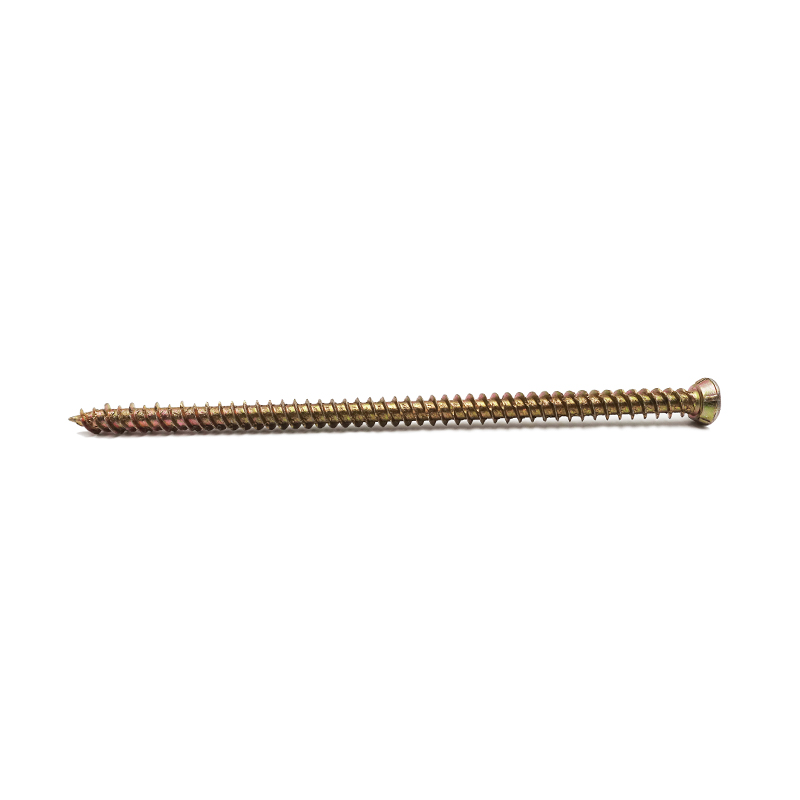
Torx drive small flat head self tapping screws yellow zinc plated
Advanced Manufacturing Process
Reliable screw production begins with controlled raw material preparation. Steel wire is selected according to the specified grade, diameter, and forming requirements. Incoming inspection may include dimensional measurement, surface examination, chemical verification, and mechanical testing. This stage helps ensure that the material is suitable for producing a consistent head, recess, and thread.
Cold Heading and Head Formation
The wire is cut into blanks and formed through cold heading operations. High-precision dies shape the blank into the required screw body and head. Cold forming is efficient for large-volume production because it minimizes material waste and provides repeatable geometry. It can also create a dense, uniform component when the tooling and forming sequence are properly controlled.
Head formation requires careful management of material flow. The countersunk shape must be formed without creating cracks, folds, excessive flash, or dimensional instability. Because the head is relatively small, small changes in die condition or wire size can influence the final result. Tooling maintenance and scheduled die replacement are therefore essential parts of a stable manufacturing system.
Torx Recess Forming
The T30 Torx recess is formed using a dedicated punch or forming tool. The recess must have the correct depth, lobe geometry, concentricity, and surface condition. If the recess is too shallow, the driver may not engage fully. If it is too deep or incorrectly shaped, the head may be weakened or the bit may not transmit torque properly.
Inspection can include visual checks, dimensional gauges, go/no-go tools, and practical drive tests. A drive test is particularly useful because it evaluates the interaction between the finished recess and the specified T30 bit. The objective is not merely to confirm appearance; it is to confirm functional engagement under realistic installation conditions.
Thread Rolling
After the blank and head are formed, the thread is commonly produced by rolling rather than cutting. Thread rolling displaces material to create the thread profile and can provide a smooth, strong surface structure. It also supports efficient production and consistent pitch when the rolling dies are correctly selected and maintained.
For hi-low threads, the rolling tools must produce the intended relationship between the higher and lower thread sections. Thread diameter, pitch, crest form, root form, and lead accuracy should be controlled. Inconsistent rolling can cause difficult starting, excessive torque, inadequate holding power, or poor compatibility with the mating material.
Heat Treatment and Mechanical Control
Where required by the product specification, heat treatment can be used to achieve the desired mechanical properties. The process must be controlled to prevent distortion, excessive hardness, brittleness, or surface damage. The appropriate treatment depends on the steel grade, screw dimensions, performance requirements, and intended application.
Mechanical verification may include tensile testing, hardness testing, torsional testing, and installation testing. The selected tests should reflect the customer’s requirements and the relevant technical standards. A small screw can experience substantial torsional stress during installation, so torsional performance and recess integrity are particularly important for self-tapping products.
Cleaning and Surface Finishing
Before plating or coating, the screw surface must be cleaned and prepared. Oil, scale, dust, and forming residues can interfere with coating adhesion and appearance. Cleaning, rinsing, activation, plating, conversion treatment, drying, and final inspection should be managed as a connected process.
Different finishes require different process controls. Zinc plating and yellow conversion treatment require attention to bath chemistry, current distribution, rinsing, and drying. Ruspert and Magni systems may involve layered coatings or specialized curing conditions. The selected finish should be confirmed before production because coating thickness, color, friction characteristics, and corrosion performance can vary between systems.
Final Inspection and Packing
Finished screws can be checked for length, head diameter, head angle, recess condition, thread dimensions, surface appearance, coating coverage, and contamination. Sampling plans may be used for high-volume production, while critical dimensions can be monitored with calibrated gauges and measurement equipment.
Packaging should protect the screws from impact, moisture, contamination, and mixing with similar products. Clear product identification is especially important when several lengths, coatings, or thread configurations are shipped together. Proper packaging supports traceability and reduces the risk of installation errors at the customer’s facility.
Quality Control Strengths
A reliable fastener supplier should apply quality control at multiple stages rather than relying only on final inspection. Process controls during heading, recess forming, thread rolling, heat treatment, and coating help identify problems before large quantities are completed.
Lizhan Hardware Co., Ltd. serves customers requiring screws and related fastening products for industrial and commercial applications. Its production capability is supported by experience in screw manufacturing, product customization, surface finishing, and supply coordination. The company operates a manufacturing base in Zhejiang, China, together with warehouse support in Thailand, allowing it to serve different supply requirements and regional distribution needs.
For international buyers, a combination of factory production and regional warehouse support can provide practical advantages. It may help improve communication, support shipment planning, and provide a more flexible route for customers in different markets. The value of this structure depends on the specific order, inventory plan, delivery destination, and agreed logistics arrangement.
Technical communication is also important. Customers may need assistance confirming screw dimensions, coating options, pilot-hole recommendations, packaging formats, sample approval, or production tolerances. A supplier with experience in these areas can help reduce uncertainty before mass production begins.
Quality should be supported by documentation where required. Depending on the project, buyers may request material certificates, inspection reports, coating information, dimensional reports, samples, or batch traceability. The exact documentation package should be agreed before production so that the supplier can prepare the correct records.
Advantages Over Conventional Fasteners
Compared with slotted screws, the T30 Torx drive is generally easier to control during powered installation. Slotted recesses can allow the driver to move laterally and may require continuous manual alignment. The six-lobe recess of the product provides a more stable drive interface for repetitive work.
Compared with many Phillips-style screws, the Torx drive can reduce cam-out under suitable conditions. Phillips recesses are designed to encourage disengagement at a certain torque level, while the Torx profile is intended to maintain positive engagement. This can be advantageous when the assembly process requires higher and more consistent torque transfer.
Compared with ordinary uncoated carbon steel screws, yellow zinc plating offers improved protection against early surface corrosion in suitable environments. It also produces a more finished appearance. Compared with a large exposed head, the countersunk head can provide better clearance and a cleaner surface.
Compared with a standard full-height thread, the hi-low thread can offer efficient engagement in selected materials and may reduce installation resistance. However, these benefits are application-dependent. The correct comparison must consider substrate, pilot-hole size, screw diameter, installation torque, load requirements, and environmental exposure.
| Comparison Point | Torx Small Flat Head Screw | Conventional Alternative | Potential Benefit |
|---|---|---|---|
| Drive engagement | T30 six-lobe recess | Slotted or cross recess | Improved centering and torque transfer |
| Finished profile | Countersunk flat head | Projecting pan or hex head | Lower profile and cleaner surface |
| Surface protection | Yellow zinc or other coating options | Plain steel or basic finish | Improved resistance to ordinary atmospheric exposure |
| Thread configuration | Hi-low self-tapping thread | Conventional full-height thread | Potentially smoother engagement in compatible materials |
| Production suitability | Designed for powered and repetitive installation | May require more manual alignment | Better assembly consistency when correctly specified |
Recommended Applications
These screws can be considered for furniture components, cabinet hardware, interior panels, decorative fittings, light metal fabrication, equipment covers, brackets, maintenance work, and other assemblies requiring a short, low-profile fastener. They may also be used in selected pre-drilled or self-tapping applications involving compatible plastics, wood-based materials, thin sheet metal, or composite components.
In furniture production, the countersunk head can help maintain a neat surface, while the Torx drive supports efficient assembly. The yellow zinc finish can complement warm-toned hardware and provide a recognizable appearance. Before use in visible furniture surfaces, the buyer should confirm color consistency and the desired level of head flushness.
In light metal work, the self-tapping thread can support attachment of thin components where the material thickness and thread engagement are sufficient. The installer should verify that the screw length does not pass through the assembly and create an unintended projection or interference point.
For interior panels and equipment covers, the low-profile head may reduce clearance problems. The T30 recess can be useful for maintenance teams that need to remove and reinstall panels repeatedly. If frequent disassembly is expected, the designer should evaluate thread wear, base-material strength, and the possibility of using a threaded insert or alternative fastening system.
Use in concrete or masonry requires special caution. A screw described within a concrete screw category may not automatically meet the requirements of a tested structural concrete anchor. Concrete density, compressive strength, crack condition, embedment depth, hole cleaning, edge distance, spacing, and load direction all affect anchor performance. Structural or safety-critical applications should use a fastening system supported by the necessary technical data and approvals.
Installation Recommendations
Select the Correct Driver
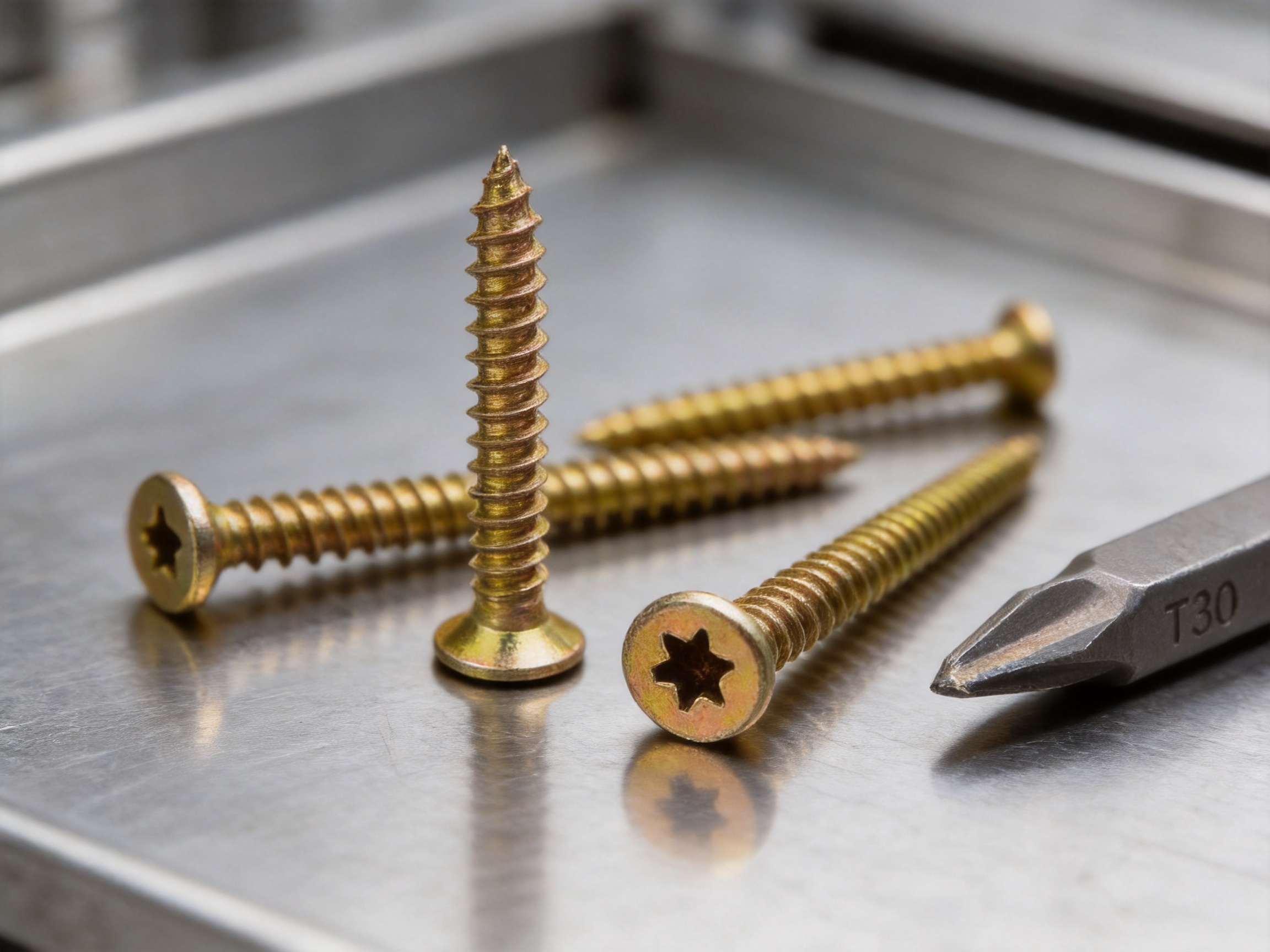
Use a clean, undamaged T30 driver bit. A worn bit may not fully engage the recess and can create premature wear or slipping. For powered tools, select a driver with adjustable speed and torque control. The correct setting should be established through trial installation in the actual material.
Prepare the Workpiece
Determine whether a pilot hole or countersink is required. The pilot-hole diameter should correspond to the material and the screw’s thread design. A countersink should be aligned with the screw head angle and deep enough to achieve the desired seating without excessively weakening the workpiece.
Maintain Alignment
Keep the driver centered with the screw axis during installation. Angular loading can increase stress on the recess, cause uneven seating, and reduce the quality of the finished assembly. In repetitive production, a guide, fixture, or controlled driver position may improve consistency.
Control Installation Torque
Apply enough torque to seat the countersunk head properly, but avoid excessive force. Overdriving can strip the substrate, break through thin material, damage the coating, deform the head, or compromise the recess. Underdriving can leave the head proud of the surface and reduce clamping performance.
Inspect the Finished Assembly
After installation, check that the head is seated correctly, the material is not cracked or crushed, and the screw has not been damaged. For production work, inspection criteria should be documented and applied consistently. If the screw is intended to carry a defined load, the assembly should be validated through appropriate testing rather than visual inspection alone.
Packaging, Storage, and Handling
Fasteners should be packed in a way that protects the recess and coating from damage. Excessive movement inside a carton can cause abrasion, especially when screws are shipped in bulk. Appropriate inner bags, boxes, dividers, or molded packaging can help preserve the surface and keep different specifications separated.
Labels should identify the screw type, size, coating, batch, quantity, and any customer-specific reference. Clear labeling reduces the chance of mixing yellow zinc screws with clear zinc, Ruspert, or Magni products. It also supports inventory control and traceability.
Store the product in a clean, dry, and ventilated location. Avoid direct contact with damp floors, exterior walls that experience condensation, or chemicals that could attack the coating. When cartons are moved from a cold transport environment into a warm warehouse, allow them to acclimatize before opening if condensation is likely.
During handling, avoid dropping large quantities onto hard surfaces. Impact may damage the heads, deform the recess, or produce coating chips. Although the screw is a durable industrial component, careful handling helps preserve the performance achieved during manufacturing.
Customization and Supply Options
Fastener projects often require more than a standard catalog description. Buyers may need a specific length, head geometry, coating, thread form, packaging quantity, labeling method, or inspection document. A manufacturer with production experience can review the application and determine whether the requested variation is feasible.
For this product family, potential discussion points include exact overall length, head diameter, countersink angle, recess depth, thread pitch, thread length, coating type, coating color, corrosion requirement, packaging format, and acceptable dimensional tolerances. These details should be confirmed on a technical drawing or approved sample before mass production.
Samples are valuable because they allow the customer to check actual installation behavior. A sample evaluation can confirm driver compatibility, seating depth, appearance, torque response, substrate engagement, and packaging suitability. It can also reveal whether the selected length is appropriate for the final assembly.
Large-volume orders may benefit from production scheduling and forecast planning. Because screws are commonly used as repeat-consumption components, stable inventory can be important to a customer’s manufacturing continuity. Coordinating forecast quantities, delivery timing, packaging requirements, and warehouse arrangements can help reduce supply interruptions.
How to Specify the Product
A complete purchase specification should describe the screw clearly. A useful designation may include the product type, drive, head style, nominal dimensions, material grade, thread form, surface finish, and quantity.
For example, a technical request could identify a small flat head self-tapping screw with a T30 Torx recess, approximately 7.5 millimeter head diameter, 11.0 to 12.0 millimeter length, Grade 1022A steel, hi-low thread, and yellow zinc plating. If the product is intended for a specific base material, that material should also be named.
The customer should state whether the screw is for indoor use, sheltered outdoor use, humid conditions, salt exposure, chemical exposure, furniture production, metal fabrication, or another environment. This information helps determine whether yellow zinc is appropriate or whether a higher-performance coating should be evaluated.
Load requirements should also be considered. A screw intended only to hold a decorative panel has different requirements from one used in a load-bearing bracket. If the application involves safety, vibration, overhead installation, or structural loading, the technical team should review the design and testing requirements before the fastener is approved.
Environmental and Operational Considerations
Fastener selection contributes to the overall service life of an assembly. A screw with an appropriate coating can help reduce maintenance caused by early corrosion. A suitable drive and head design can also reduce installation damage, which may otherwise create exposed steel and become a starting point for corrosion.
At the same time, coating selection should not be based solely on color. Yellow zinc may provide the desired balance for many indoor and moderately exposed applications, but severe environments may require a different system. Buyers should consider humidity, salt, pollutants, cleaning chemicals, temperature, and contact with dissimilar metals.
Efficient production can also reduce material waste. Cold heading and thread rolling are high-productivity processes that can produce large quantities with controlled material usage. Consistent process monitoring helps reduce reject rates and supports more predictable resource consumption.
From an operational perspective, a screw that installs reliably can reduce rework and downtime. Fewer damaged heads and fewer misaligned fasteners can improve assembly efficiency. These benefits are most likely when the screw, driver, pilot hole, torque setting, and workpiece are selected as a complete system.
Frequently Asked Questions
What is the drive type of this screw?
The screw uses a T30 Torx, also known as a six-lobe or hexalobular drive. A matching T30 driver bit should be used for installation.
What does the small flat head mean?
It means the screw has a compact countersunk head designed to sit flush or close to flush with a properly prepared surface. The specified head diameter is approximately 7.5 millimeters.
What lengths are available?
The supplied specification lists lengths in the 11.0 to 12.0 millimeter range. Exact length, tolerance, and usable thread length should be confirmed for the order because these details affect the final assembly.
What material is used?
The screw is specified as Grade 1022A steel. This low-carbon steel is commonly used for cold-formed and rolled-thread fasteners because it offers a practical balance of formability and mechanical performance.
What is a hi-low thread?
A hi-low thread uses a differentiated thread profile with higher and lower thread sections. In suitable materials, this design can support smoother starting, efficient engagement, and controlled installation resistance.
Is yellow zinc suitable for outdoor use?
Yellow zinc can be suitable for sheltered or moderately exposed conditions, but it should not be selected for every outdoor environment without evaluation. Constant moisture, salt spray, chemicals, and severe weather may require Ruspert, Magni, or another coating system with documented performance for the intended exposure.
Can the screw be used in concrete?
The answer depends on the exact product design, substrate, load, and approval requirements. A self-tapping screw should not automatically be treated as a structural concrete anchor. Concrete applications should be reviewed using the relevant technical data, installation procedure, and load requirements.
What type of driver should be used?
Use a properly sized T30 driver bit in good condition. The bit should be held in line with the screw, and the driver should have suitable speed and torque control.
Can the finish be customized?
Several surface options are available, including standard zinc plating, yellow zinc plating, Ruspert, and Magni. The preferred finish should be selected according to corrosion exposure, appearance, friction, temperature, and project requirements.
Can the product be customized?
Potential customization may include length, head dimensions, thread form, coating, packaging, labeling, and inspection requirements. Feasibility should be confirmed through a drawing, sample, or technical review before production.
How should the screws be stored?
Store them in a dry, clean, and ventilated area, protected from condensation, chemicals, and direct moisture. Keep different specifications separated and retain the original identification labels for traceability.
What should be checked before mass production?
The customer should verify the screw dimensions, driver fit, head seating, installation torque, thread engagement, surface appearance, corrosion requirement, and compatibility with the actual workpiece. A sample installation is strongly recommended.

Conclusion
Torx drive small flat head self-tapping screws with yellow zinc plating combine a stable T30 drive, compact countersunk head, hi-low thread, Grade 1022A steel construction, and a protective decorative finish. These features make the product a practical option for many short fastening applications where installation control, surface appearance, and moderate corrosion protection are important.
The product’s advantages are strongest when the screw is correctly matched to the substrate and installation process. The Torx recess can improve tool engagement, the flat head can provide a low-profile result, and the hi-low thread can support efficient fastening in compatible materials. Zinc, yellow zinc, Ruspert, and Magni surface options provide flexibility for different appearance and environmental requirements.
Manufacturing quality depends on controlled raw materials, precision cold heading, accurate recess formation, consistent thread rolling, appropriate heat treatment, reliable coating processes, and final inspection. With coordinated technical support, packaging, and supply planning, the product can serve both standard purchasing needs and customized industrial applications.
Before approval, buyers should confirm exact dimensions, coating performance, installation method, and application suitability. When these factors are properly evaluated, the screw can provide a clean, efficient, and dependable fastening solution for furniture, interior components, light fabrication, maintenance work, and other compatible assemblies.
References
1. General principles of carbon steel fastener production, including cold heading, thread rolling, and dimensional inspection.
2. Technical guidance for hexalobular internal drive systems and matching driver-bit selection.
3. General practices for zinc plating, yellow conversion coatings, corrosion prevention, and fastener storage.
4. Engineering guidance for self-tapping screw installation in wood-based materials, plastics, sheet metal, and composite substrates.
5. General fastener quality-control practices covering material verification, hardness, torsional performance, dimensional inspection, and surface evaluation.
6. Application-based recommendations for countersunk fasteners, pilot-hole preparation, installation torque, and flush-head seating.