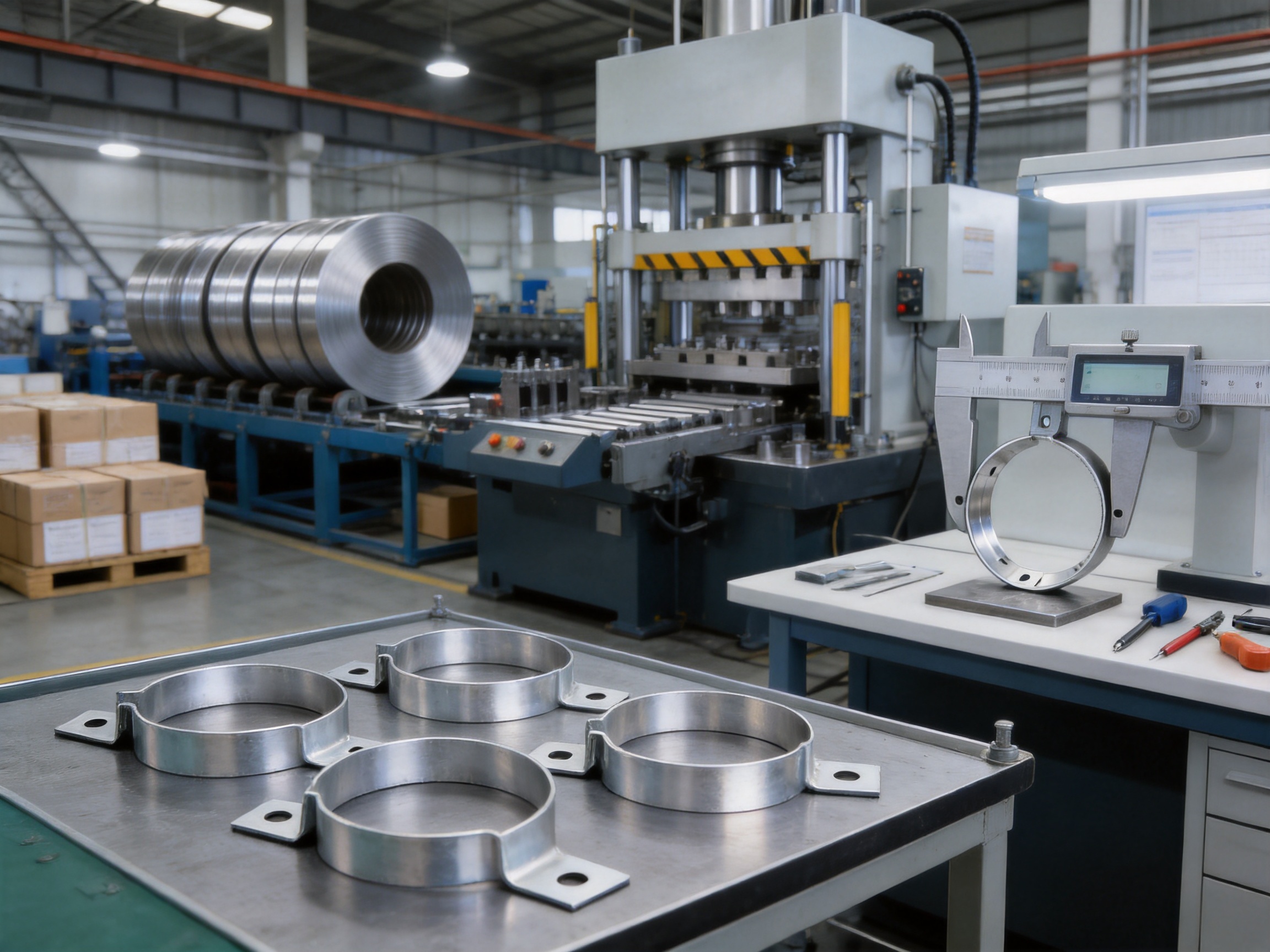
Reliable fastening is essential wherever tubes, pipes, rails, frames, and structural members must remain securely aligned over time. A fastening component may be small, but its influence on the safety, service life, appearance, and maintenance requirements of an entire assembly can be significant. The aluminum tube hoop is designed to provide a practical and dependable method for securing cylindrical or tubular components in photovoltaic systems, piping installations, HVAC assemblies, automotive equipment, marine applications, structural supports, and general maintenance projects.
This product combines a lightweight construction with useful mechanical strength, corrosion resistance, installation convenience, and broad application flexibility. It is particularly suitable for projects in which installers need a fastening solution that can be handled easily while still offering stable support under normal service conditions. The hoop design distributes clamping pressure around the tube rather than concentrating force at a single point, helping reduce movement, vibration, and installation damage when the correct size and fastening method are selected.
Manufactured for professional and industrial use, the tube hoop can be produced from aluminum or related zinc-aluminum-magnesium material systems according to project requirements. These material options are valuable in environments where weight control, weather resistance, and long-term durability are important. With precision stamping, forming, finishing, inspection, and packaging capabilities, Lizhan Hardware Co., Ltd. supports customers seeking consistent fastening components for domestic projects, commercial construction, photovoltaic installations, equipment manufacturing, and wholesale distribution.
What Is an Aluminum Tube Hoop?
An aluminum tube hoop is a formed fastening component used to hold a tube, pipe, conduit, rail, or similar cylindrical member against a supporting surface. Depending on the design, it may be used with a screw, bolt, nut, threaded insert, anchor, or other fastening accessory. The hoop wraps partially or fully around the tube and creates a controlled retaining force when attached to the base structure.
The component is commonly produced in a curved or semi-circular profile that corresponds to a selected tube diameter. Mounting holes or attachment points are incorporated into the design to make installation faster and more repeatable. Some configurations are suitable for direct fixing to a wall, frame, roof support, bracket, panel structure, or machinery base. Other configurations may be integrated into a larger mounting system.
Compared with improvised wire, plastic ties, untreated steel strips, or general-purpose clamps, a purpose-designed tube hoop offers a more organized and reliable solution. It helps maintain a consistent position, improves the visual quality of an installation, and supports easier inspection and future maintenance. The correct product selection depends on tube diameter, wall or frame material, environmental exposure, expected load, vibration, temperature, and the type of screw or anchor used during installation.
The aluminum tube hoop described in this article is intended as a versatile fastening part rather than a substitute for a complete structural engineering system. For applications involving high loads, safety-critical equipment, strong wind, seismic activity, pressure piping, or unusual thermal movement, the complete assembly should be reviewed by a qualified engineer.
Why Material Selection Matters
Material selection influences nearly every performance characteristic of a fastening component. It affects weight, corrosion resistance, formability, appearance, thermal behavior, electrical considerations, and compatibility with adjacent parts. Aluminum is widely used for tube hoops because it offers a useful balance between low density and practical strength.
Aluminum components are significantly lighter than many conventional steel alternatives. This reduces handling effort during installation and can also reduce the weight added to rooftop structures, solar frames, equipment enclosures, and mobile assemblies. Lower component weight may simplify transportation and make it easier for one installer to position multiple parts during a project.
Aluminum also develops a naturally protective oxide layer when exposed to air. This passive surface helps resist ordinary atmospheric corrosion and makes aluminum suitable for many indoor and outdoor applications. In coastal, industrial, or chemically aggressive environments, the specific alloy, surface treatment, and compatibility with adjacent metals must still be considered. A product should be selected according to the actual service conditions rather than by material name alone.
Zinc-aluminum-magnesium coated materials provide another useful option for fastening applications. This coating system is applied to steel substrates and is designed to improve corrosion protection compared with conventional metallic coatings in many environments. The aluminum and magnesium components can contribute to protective surface behavior, including the formation of corrosion products that help shield exposed areas and cut edges. The exact performance depends on coating composition, thickness, forming conditions, exposure, and installation practices.
For photovoltaic accessories and outdoor structural fasteners, zinc-aluminum-magnesium material can be especially useful where a high-strength steel core is desirable while improved corrosion resistance is required. It may provide a strong alternative to untreated steel and can be selected when customers need a balance between structural rigidity, cost efficiency, and environmental durability.
Material compatibility is also important. When aluminum is fastened directly against certain dissimilar metals in the presence of moisture, galvanic corrosion may occur. Installers can reduce this risk by using compatible screws, washers, coatings, isolating layers, sealants, or approved interface materials. The selected tube hoop, fastening hardware, and supporting structure should be evaluated as one system.
Key Advantages of the Tube Hoop Design
Lightweight Handling
The low density of aluminum makes the tube hoop easy to transport, position, and install. This is valuable for rooftop work, overhead piping, equipment service, and projects where installers must carry large quantities of components to the work area. Lightweight parts can also reduce fatigue during repetitive installation and make it easier to work in confined or elevated locations.
Stable Tube Retention
The curved hoop profile is designed to follow the outside surface of a tube. This provides a broad contact area and helps prevent the tube from rotating, sliding, or drifting after installation. Properly selected dimensions can distribute the retaining force more evenly than a narrow strap or a point-contact fastener.
Corrosion Resistance
Aluminum offers natural resistance to ordinary atmospheric corrosion, while zinc-aluminum-magnesium coated steel offers a protective metallic coating over a strong steel substrate. These material choices are appropriate for many indoor and outdoor environments, including rooftops, utility spaces, workshops, equipment rooms, and selected coastal or industrial applications.
Fast Installation
Pre-formed geometry and pre-drilled mounting holes help reduce installation time. The installer can place the hoop around the tube, align the mounting point, and secure it with the selected screw or anchor. Standardized hole positioning also improves repeatability when multiple components must be installed along a line or across a large frame.
Broad Application Compatibility
The tube hoop can be used with many types of tubular products, including aluminum tubes, steel pipes, conduit, cable protection tubes, support rails, and selected structural members. Different diameters, widths, hole patterns, material grades, and surface finishes can be developed to meet project-specific requirements.
Clean and Professional Appearance
A manufactured hoop gives an installation a more organized appearance than improvised fastening methods. Uniform curves, consistent edges, and aligned mounting holes contribute to a clean result. This is important in visible solar installations, commercial buildings, equipment rooms, retail facilities, and finished architectural spaces.
Convenient Maintenance
Because the tube is held in a defined position, technicians can more easily inspect the assembly, identify loose hardware, and replace or reposition components when necessary. A well-designed fastening arrangement can also leave sufficient access for servicing cables, pipes, or other equipment routed near the supported tube.
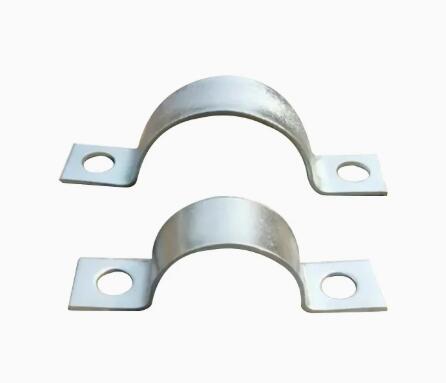
Aluminum tube hoop Photovoltaic Accessories Zinc Aluminum Magnesium Material Fastener Hold Hoop
Applications in Photovoltaic Systems
Photovoltaic installations depend on a large number of small accessories to connect rails, conduits, cable routes, support tubes, grounding components, and structural frames. These accessories must withstand outdoor exposure while maintaining accurate positioning over the service life of the system. The aluminum tube hoop is useful in this environment because it combines low weight, practical corrosion resistance, and installation efficiency.
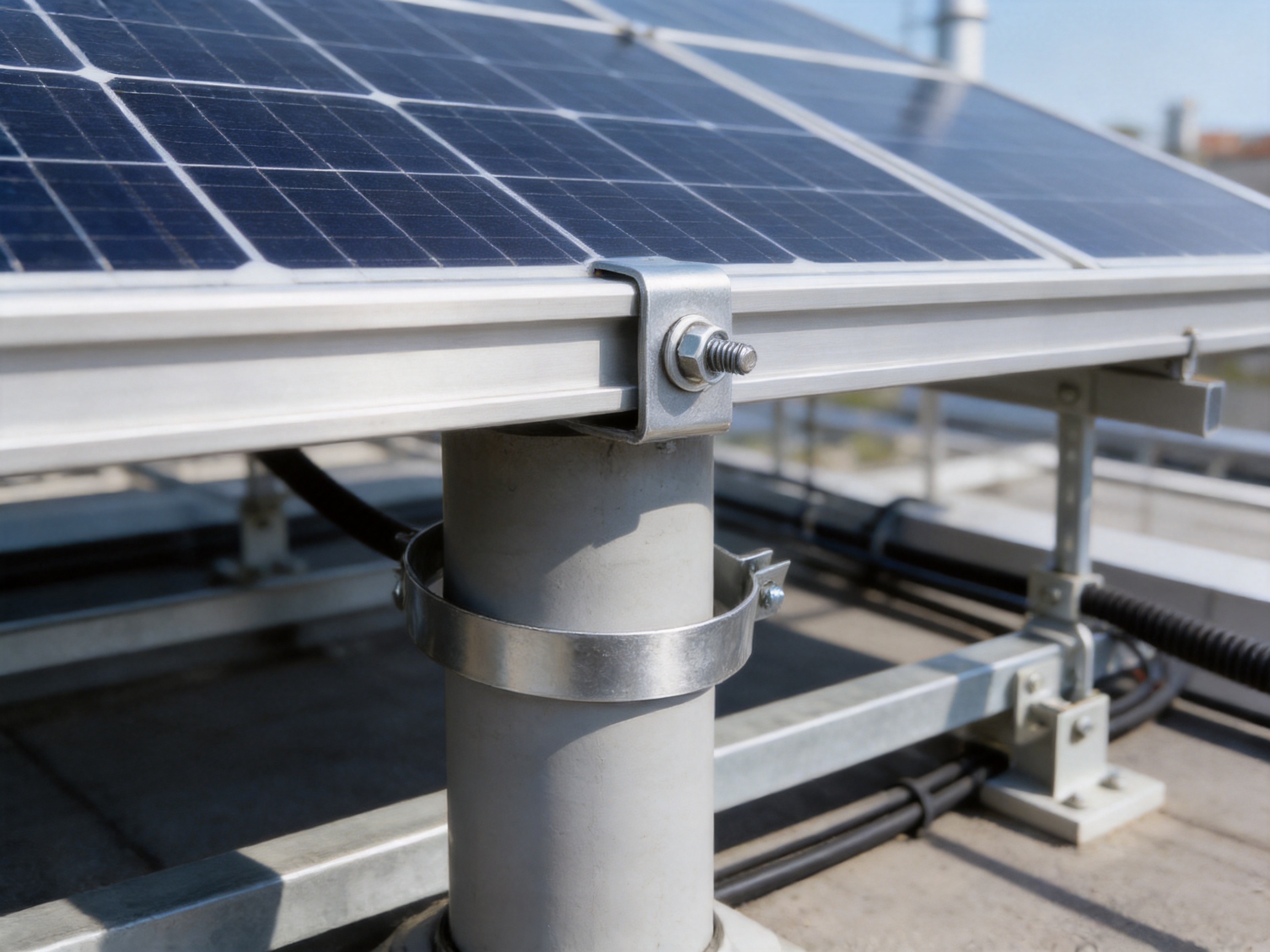
In solar projects, a tube hoop may be used to secure conduits beneath a panel array, retain tubular supports on a mounting frame, organize cable protection routes, or hold auxiliary components against a rail or bracket. It can also support sections of an equipment assembly near inverters, combiner boxes, monitoring equipment, and service pathways, provided that the selected configuration is suitable for the load and environmental conditions.
Photovoltaic systems are exposed to rain, ultraviolet radiation, temperature changes, wind, dust, and sometimes salt spray. Fasteners therefore need adequate resistance to weathering and should be installed in a way that prevents water from becoming trapped at vulnerable interfaces. Aluminum and zinc-aluminum-magnesium materials are frequently considered for such projects because they are available in durable configurations and can be integrated into corrosion-conscious designs.
Thermal movement should not be overlooked. Solar frames and metal tubes may expand and contract as temperatures change. If a hoop is tightened excessively or selected with insufficient clearance, it may restrict movement or create unwanted stress. If it is too loose, the tube may rattle or shift. The correct balance depends on the tube material, operating temperature, support spacing, and the function of the component.
For photovoltaic applications, product selection should also consider electrical bonding and grounding requirements. A tube hoop should not automatically be treated as a grounding or bonding component unless it has been specifically designed, tested, and approved for that purpose. Electrical continuity should be established using the correct grounding hardware and installation method.
Use in HVAC and Piping Assemblies
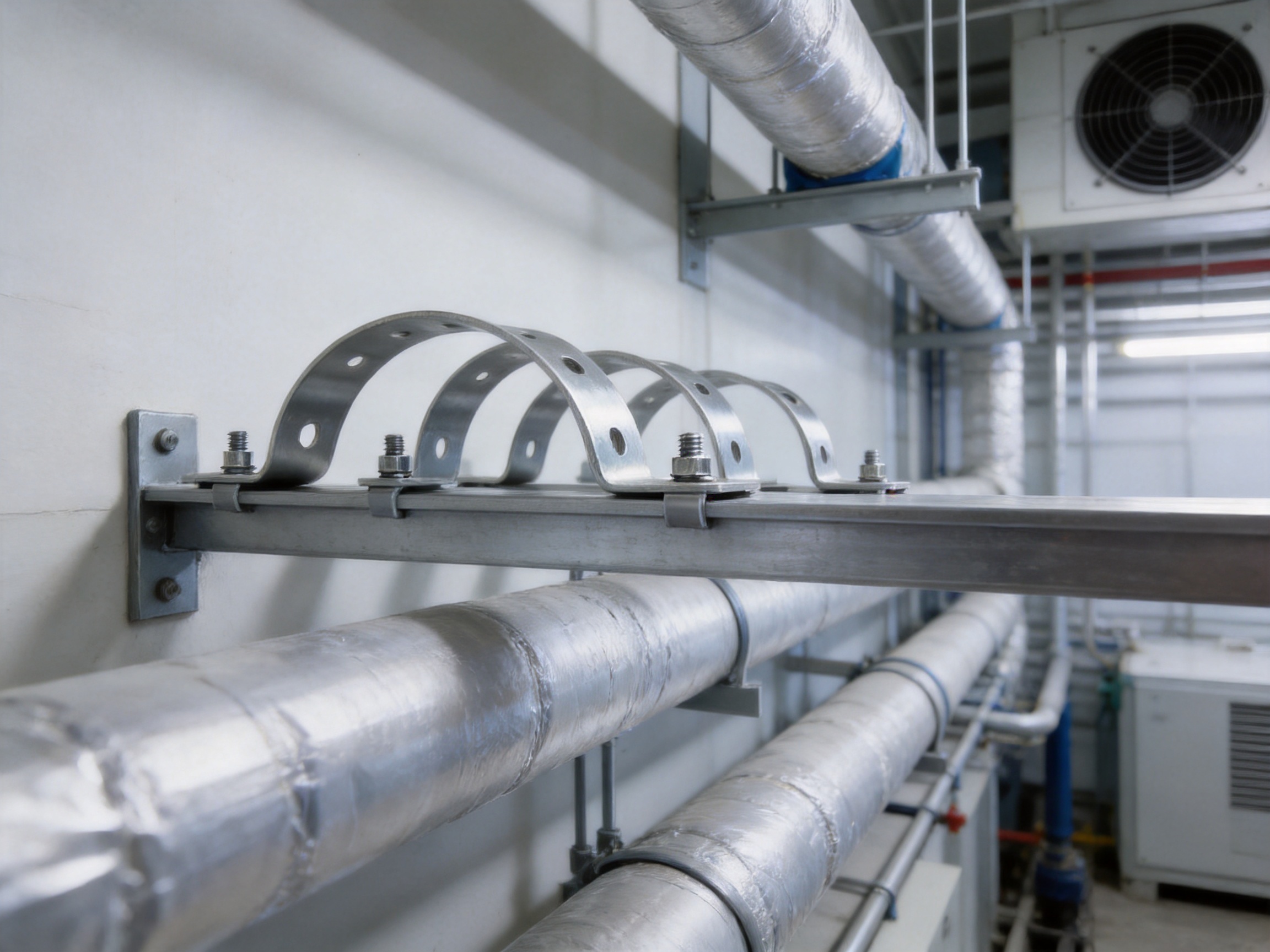
Heating, ventilation, and air-conditioning systems contain many pipes, conduits, drainage lines, refrigerant lines, and tubular supports. These components must be routed neatly and held at suitable intervals to minimize movement and avoid unnecessary stress on joints. Tube hoops can help organize these systems and provide a straightforward connection between the tube and a wall, ceiling, frame, or equipment base.
In HVAC applications, the hoop should be selected according to the outside diameter of the pipe or conduit. Clearance may be required for insulation, protective coverings, thermal expansion, or vibration isolation. A hoop that fits only the bare pipe may be unsuitable after insulation is installed. Installers should therefore confirm the final outside dimension before ordering or beginning installation.
Mechanical vibration is another consideration. Compressors, fans, pumps, and air-handling equipment can transmit vibration through connected piping and supports. A rigid hoop may be appropriate for some sections, while a vibration-isolated support or resilient insert may be necessary in other locations. The tube hoop can form part of a broader support arrangement, but it should not be expected to solve vibration problems by itself.
For drainage and low-pressure piping, the hoop can help maintain slope and alignment. For pressurized or safety-sensitive systems, support spacing and load capacity must follow the applicable engineering standard and project specification. The hoop is a fastening accessory, and the pipe system remains responsible for pressure containment and fluid safety.
Automotive, Marine, and Equipment Applications
Automotive equipment often contains fuel lines, coolant pipes, air tubes, electrical conduits, hydraulic lines, and protective sleeves. These components may experience vibration, temperature fluctuations, moisture, oil, and repeated movement. A properly selected tube hoop can help route and retain such components while maintaining a compact assembly.
In automotive environments, the compatibility of the material with oils, chemicals, heat, and adjacent metals must be reviewed. The hoop should not create sharp contact points that could abrade a hose or cable. Where necessary, an insulating sleeve, rubber insert, edge protection, or cushioned interface can be added. Fastening torque should be controlled so that the supported tube is held firmly without crushing or deforming it.
Marine applications present additional challenges because saltwater and high humidity can accelerate corrosion. Aluminum is widely used in marine equipment, but galvanic compatibility remains important when aluminum components are placed near stainless steel, galvanized steel, or other dissimilar metals. Appropriate isolation and protective measures should be incorporated into the design.
In industrial equipment, tube hoops may be used to secure sensor tubes, pneumatic lines, coolant circuits, protective conduits, structural braces, or machine guarding components. A consistent hoop design can simplify equipment standardization and reduce the number of unique parts held in inventory.
Comparison with Alternative Fastening Methods
Customers often compare tube hoops with metal straps, plastic clamps, U-bolts, cable ties, and welded brackets. Each method has appropriate uses, but the aluminum tube hoop offers a balanced solution for projects that require a combination of appearance, corrosion resistance, ease of installation, and reliable positioning.
| Fastening method | Typical advantages | Potential limitations | Where a tube hoop may be preferable |
|---|---|---|---|
| Aluminum tube hoop | Lightweight, corrosion-resistant, clean appearance, pre-formed shape, quick installation | Requires correct diameter and suitable hardware | Photovoltaic accessories, piping, conduits, structural tubes, outdoor assemblies |
| Untreated steel strap | Low initial cost and easy cutting | May corrode, can have sharp edges, inconsistent appearance | Projects requiring a finished and corrosion-conscious component |
| Plastic clamp | Lightweight and electrically insulating | May age under ultraviolet exposure, heat, or chemical contact | Applications where metallic strength and outdoor durability are more important |
| U-bolt | Strong and suitable for many heavy-duty assemblies | Can require more parts, may concentrate pressure, often less visually integrated | Assemblies that need a compact formed hoop and simple mounting holes |
| Cable tie | Very fast and inexpensive for temporary organization | Limited structural retention and service life in demanding environments | Permanent installations requiring a defined and maintainable support point |
| Welded bracket | High integration and rigidity | Requires fabrication, heat input, finishing, and more difficult replacement | Projects that need a replaceable, standardized fastening accessory |
The most important competitive advantage is not simply the material. It is the combination of material, geometry, manufacturing consistency, and application suitability. A low-cost alternative may appear attractive at the purchasing stage but create additional labor, corrosion, maintenance, or replacement costs later. A purpose-designed hoop can reduce those risks when correctly specified.
Manufacturing Process and Quality Focus
The performance of a stamped and formed fastening component begins with controlled raw material. Material thickness, grade, temper, coating condition, surface quality, and flatness influence how the part behaves during stamping and forming. Lizhan Hardware Co., Ltd. works with metal fastening products and stamping parts, giving customers access to a manufacturing approach centered on repeatable production and application-oriented customization.
Material Preparation
Incoming sheet or coil material is checked according to the applicable production requirements. Key considerations may include thickness tolerance, width, surface condition, coating uniformity, mechanical properties, and identification records. Proper material preparation helps reduce variation during stamping and supports consistent forming behavior from batch to batch.
Precision Stamping
Stamping is used to cut profiles, create mounting holes, and produce repeatable dimensions at production volume. A well-designed die helps maintain the correct outside shape, hole location, edge profile, and overall repeatability. For high-volume orders, progressive or multi-stage tooling may be considered to combine several operations efficiently.
Precision stamping offers several advantages over manual cutting or small-batch fabrication. It improves consistency, reduces dependence on operator judgment, and makes it easier to produce large quantities with similar dimensions. Consistency is particularly important when hoops are installed in rows, matched with standardized rails, or packaged as part of a larger kit.
Forming and Bending
After blanking and piercing, the flat part is formed into the required curved profile. The forming operation must account for material thickness, springback, bend radius, coating behavior, and the desired finished diameter. Excessive deformation can damage a protective coating or create stress concentrations, while insufficient forming can produce a poor fit around the tube.
Tooling design is therefore a central manufacturing consideration. Properly maintained forming tools support smooth curves, consistent ends, and reliable alignment between the hoop and the mounting surface. Production personnel can use first-piece inspection and in-process checks to confirm that the formed geometry remains within the agreed specification.
Edge Treatment
Stamped metal parts may have burrs or sharp edges if cutting conditions are not controlled. Edge treatment, deburring, or secondary finishing can improve handling safety and reduce the possibility of damage to cables, insulation, hoses, or installers’ gloves. The required edge condition depends on the application and customer specification.
Surface Protection
Surface treatment may include natural aluminum finishing, anodizing, painting, plating, coating, or the use of pre-coated zinc-aluminum-magnesium material. The selected finish should match the expected environment and the required appearance. Surface treatment can also influence friction, electrical contact, chemical resistance, and compatibility with other parts.
Inspection and Testing
Quality inspection may cover material verification, dimensional measurement, hole position, formed radius, surface condition, burr level, coating appearance, and packaging condition. Where required by a customer, additional checks can be developed for fit, load behavior, salt spray performance, coating adhesion, or assembly compatibility.
Inspection is most effective when it is integrated throughout the manufacturing process rather than performed only at the end. Incoming material checks, first-piece approval, process monitoring, final sampling, and traceable packaging work together to reduce the chance of nonconforming products reaching the customer.
Advanced Manufacturing Strengths
A capable fastening supplier must provide more than a drawing and a finished part. Customers generally need assistance with product selection, sample development, tooling, production scheduling, packaging, quality documentation, and delivery coordination. Lizhan Hardware Co., Ltd. combines experience in screws, fasteners, stamping parts, metal hooks, and related hardware, allowing the company to support tube hoop projects within a wider fastening-product portfolio.
One manufacturing strength is the ability to develop products around practical installation requirements. Customers may require a particular tube diameter, hole pattern, mounting width, material thickness, coating, or packaging quantity. A supplier with stamping and forming experience can review these requirements and convert them into a production-ready design.
Another strength is production scalability. Stamping processes are suitable for repeat orders because tooling can produce consistent parts efficiently once the design has been approved. This is useful for distributors, photovoltaic accessory brands, equipment manufacturers, and contractors who need the same component across multiple projects.
Tooling and process control also influence the final cost. A properly engineered die can reduce material waste, shorten cycle time, and improve dimensional stability. These benefits can make a meaningful difference in high-volume procurement, where small variations in scrap rate or labor time affect the total project cost.
International supply capability is another practical advantage for customers serving multiple markets. With a manufacturing base in Zhejiang, China, and warehouse support in Thailand, the business can coordinate production and distribution for customers who need access to Asian supply chains. Warehouse and logistics planning may help reduce delivery complexity for regional buyers, subject to product availability, order volume, and shipping arrangements.
Customer communication is also part of manufacturing strength. Clear confirmation of drawings, materials, quantities, inspection expectations, labeling, and packaging reduces misunderstandings before mass production begins. For customized hoops, the approval of a sample or technical drawing is especially important because diameter, hole spacing, and material thickness directly affect field performance.
Customization Options
Although standard sizes are useful for many projects, the most effective fastening solution may require customization. Tube diameter is the first consideration. The hoop must accommodate the actual outside diameter of the tube, including insulation, protective sleeves, coatings, or other coverings where applicable.
Material thickness can be adjusted according to the required rigidity, weight, forming radius, and expected load. A thinner material may be appropriate for lightweight conduit organization, while a thicker section may be more suitable for structural or equipment-support applications. The correct choice should be based on tested or engineered requirements rather than visual preference alone.
Mounting holes can be customized in diameter, shape, spacing, and position. Round holes are common for standard screws, while elongated slots may help accommodate alignment or thermal movement. Countersunk or special-profile holes may be considered when a flush surface is required, provided that the design remains compatible with the selected screw.
Surface finish is another option. Customers may request a natural metallic appearance, anodized aluminum, painted surfaces, or specific protective coatings. The finish should be selected based on outdoor exposure, color requirements, abrasion risk, electrical considerations, and compatibility with adjacent parts.
Packaging can also be adapted. Bulk packaging may be suitable for large contractors or automated assembly operations, while smaller labeled packs may be preferable for distributors, service departments, and retail channels. Clear product identification can help prevent diameter or material mix-ups during installation.
Installation Recommendations
Before installation, confirm that the hoop size corresponds to the actual tube or pipe outside diameter. Inspect the part for damage, deformation, sharp burrs, coating defects, or contamination. Verify that the selected screw, washer, anchor, or threaded component is compatible with the hoop material and the supporting structure.
Place the hoop around the tube without forcing the component into an unsuitable position. Align the mounting hole with the prepared support point and keep the tube in its intended route. If multiple hoops are used, check alignment before fully tightening the hardware. Consistent spacing can improve appearance and support system stability.
Tighten the fastener according to the project specification or the hardware manufacturer’s recommendation. Excessive torque may deform the hoop, crush a thin-walled tube, damage insulation, or strip the supporting material. Insufficient torque may permit movement or vibration. Where the assembly is exposed to vibration, locking hardware or an approved thread-retention method may be considered.
Do not drill additional holes, cut the hoop, or sharply bend the part in the field unless the design permits such modification. Unplanned modifications can weaken the component, damage a protective coating, or create sharp edges. If the required dimension is unavailable, it is generally better to request a revised product or a customized version.
In outdoor installations, avoid creating pockets where water, dirt, salt, or chemical residue can accumulate. Ensure that the supporting surface is suitable and that dissimilar metal interfaces are protected when necessary. After installation, inspect the assembly for movement, edge contact, loose hardware, and interference with nearby cables or hoses.
Quality, Reliability, and Total Cost of Ownership
Product price is only one part of the cost of a fastening component. Labor, installation speed, field adjustments, corrosion-related replacement, inventory complexity, and service access can have an equally important effect on total cost. A consistent tube hoop may reduce installation time because it arrives ready to position and fasten, without the cutting and forming often required with raw metal strip.
Dimensional consistency can also reduce rework. If every hoop in a large photovoltaic or piping project has the same radius and hole location, installers can work more quickly and predictably. Consistent components are easier to count, package, store, and reorder.
Corrosion resistance supports long-term value by reducing the likelihood of premature replacement in appropriate environments. However, no material should be considered universally corrosion-proof. The correct product must be selected according to humidity, salt exposure, pollutants, chemicals, temperature, and contact with other metals.
Good packaging protects the product before it reaches the job site. Parts that are scratched, bent, contaminated, or mixed with incorrect sizes may cause delays even if the manufacturing process itself was satisfactory. A quality-focused supplier therefore needs to consider protection during stacking, handling, transportation, and storage.
How to Select the Correct Product
Define the Supported Tube
Record the tube’s outside diameter, material, wall thickness, surface finish, insulation thickness, and operating temperature. If the tube is not perfectly round, measure the actual profile and discuss the condition with the supplier.
Assess the Environment
Identify whether the part will be installed indoors, outdoors, near the sea, in a humid plant, near chemicals, or in an area exposed to ultraviolet radiation. Environmental conditions affect material and surface-treatment selection.
Determine the Load and Movement
Consider the weight of the tube and its contents, the distance between supports, wind or vibration, thermal expansion, and any accidental impact. A lightweight conduit support has different requirements from a structural tube or process pipe.
Check Hardware Compatibility
Confirm screw diameter, washer size, anchor type, thread form, and supporting material. The hoop is only one part of the fastening assembly, and the weakest component may determine overall performance.
Confirm Installation Space
Measure the available clearance around the tube and the access available for tools. A hoop may fit the tube but still be unsuitable if the installer cannot reach the screw or if nearby components interfere with the fastening operation.
Request Samples for Customized Products
For non-standard dimensions, request a drawing, prototype, or sample before placing a large production order. A physical evaluation can reveal fit, clearance, appearance, and installation issues that may not be obvious on a two-dimensional drawing.
Ordering and Project Support
For wholesale and industrial orders, buyers should provide as much technical information as possible at the quotation stage. Useful information includes the required material, tube diameter, thickness, hole dimensions, surface treatment, estimated annual quantity, packaging preference, delivery destination, and applicable quality requirements.
A supplier can then recommend a suitable production route and identify whether a standard tool or new tooling will be required. For repeat customers, approved specifications can be retained as a reference for future orders. This helps maintain continuity when projects are divided into several production batches.
Lizhan Hardware Co., Ltd. serves customers requiring screws, self-drilling screws, furniture screws, stamping parts, metal hooks, photovoltaic accessories, and other hardware products. This broader product capability can be helpful when a customer wants to coordinate related fastening items through one supply channel. Product compatibility, packaging consolidation, and coordinated quality communication may be considered during project planning.
Buyers should distinguish between a standard product and a customized product when reviewing lead time and pricing. Standard products may be available more quickly, while customized parts may require engineering review, tooling preparation, sample approval, and production scheduling. Early technical confirmation helps avoid delays and supports more accurate quotations.
Maintenance and Inspection
Routine inspection is recommended for tube hoop assemblies used outdoors, in vibrating equipment, or in areas where safety and service continuity are important. Inspectors can check for loose screws, distortion, corrosion, coating damage, tube movement, broken supports, and contact with cables or insulation.
If corrosion appears, the cause should be investigated rather than simply covered. Possible causes include unsuitable material selection, damaged coating, trapped moisture, chemical exposure, or galvanic interaction with an adjacent metal. Corrective action may include improved drainage, replacement with a more suitable material, electrical isolation, or changes to the surrounding environment.
A damaged hoop should be replaced rather than repeatedly reshaped. Repeated bending can reduce strength and create fatigue points. Replacement is generally straightforward when the component uses standard screws and accessible mounting points.
Q&A
What is the primary purpose of an aluminum tube hoop?
Its primary purpose is to hold a tube, pipe, conduit, rail, or similar cylindrical component securely against a supporting surface. It helps maintain alignment, reduce movement, and create a neat, repeatable fastening arrangement.
Is the tube hoop suitable for photovoltaic installations?
Yes. It can be used for selected photovoltaic accessories, conduit routes, tubular supports, and auxiliary frame components. The exact use must be evaluated according to load, wind exposure, grounding requirements, tube size, and the applicable solar mounting specification.
What makes aluminum useful for this product?
Aluminum is lightweight, easy to handle, naturally resistant to ordinary atmospheric corrosion, and suitable for many formed fastening components. It can reduce installation weight while providing a clean metallic appearance and practical durability.
When should zinc-aluminum-magnesium material be considered?
Zinc-aluminum-magnesium coated steel may be considered when the application requires a steel substrate with enhanced corrosion protection compared with untreated steel or certain conventional coating systems. The selected coating and thickness should match the environmental and mechanical requirements.
Can the product be used outdoors?
It can be suitable for many outdoor applications, including rooftop and structural installations, when the material, finish, hardware, and installation method are correctly selected. Coastal, chemical, and high-humidity environments require additional compatibility evaluation.
Can the hoop support heavy pipes?
That depends on the product dimensions, material thickness, mounting hardware, support spacing, and the characteristics of the pipe system. A standard lightweight hoop should not be used for a heavy or safety-critical load without confirmation of its suitability.
Can the product be customized?
Customization may include tube diameter, material, thickness, hole pattern, mounting width, surface treatment, forming radius, labeling, and packaging. A drawing or sample should be approved before mass production of a non-standard design.
Does the hoop replace a grounding component?
Not automatically. Unless the product has been specifically designed and approved for electrical bonding, it should not be assumed to provide a reliable grounding path. Dedicated grounding hardware and the applicable electrical installation practice should be used.
How should the correct size be selected?
Measure the actual outside diameter of the tube, including insulation or protective coverings where relevant. Also consider clearance, thermal movement, vibration, mounting access, and the required retaining force.
What information should be included in an inquiry?
Provide the tube diameter, material, preferred hoop material, thickness, hole dimensions, surface finish, expected quantity, application environment, packaging requirements, and delivery destination. Photographs, drawings, or sample parts can further improve communication.
How does precision stamping benefit buyers?
Precision stamping supports repeatable dimensions, consistent hole locations, efficient high-volume production, and reduced variation between batches. These benefits can improve installation speed and reduce rework in large projects.
What should be checked after installation?
Check that the hoop is not distorted, the screw is secure, the tube is correctly aligned, the edges do not damage nearby materials, and there is no unwanted movement or water accumulation. Periodic inspection is recommended for exposed or vibrating installations.
Conclusion
The aluminum tube hoop is a practical fastening solution for projects that require secure tube retention, low component weight, corrosion-conscious material selection, and efficient installation. Its formed profile, mounting holes, and adaptable material options make it suitable for photovoltaic accessories, HVAC and piping systems, automotive equipment, marine assemblies, structural supports, and general industrial applications.
Its advantages over improvised or less specialized fastening methods include a cleaner appearance, more consistent geometry, easier handling, improved installation repeatability, and the potential for better long-term maintenance. Aluminum provides a lightweight option with useful atmospheric corrosion resistance, while zinc-aluminum-magnesium material can offer a strong coated-steel alternative for selected environments.
The final performance of the product depends on correct sizing, suitable hardware, controlled installation, and compatibility with the surrounding system. For this reason, product design and manufacturing quality are as important as the material itself. Through stamping, forming, finishing, inspection, customization, and packaging capabilities, Lizhan Hardware Co., Ltd. can support customers looking for dependable tube hoops and related fastening products for both standard and specialized projects.
When buyers provide accurate application information and approve the appropriate specifications before production, the tube hoop can become a reliable part of a broader fastening system—helping installers work faster, helping equipment remain organized, and helping project owners achieve durable results.
References
1. Aluminum Association, Aluminum Design and Material Selection Principles.
2. ASM International, Corrosion: Understanding the Basics.
3. International Organization for Standardization, Quality Management Systems—Requirements.
4. International Organization for Standardization, Corrosion of Metals and Alloys—Atmospheric Corrosion Guidance.
5. ASTM International, Standard Practices for Metallic Coatings and Corrosion Testing.
6. International Electrotechnical Commission, Photovoltaic System Installation and Safety Considerations.
7. Metal Forming and Stamping Engineering, Principles of Sheet Metal Cutting and Bending.
8. Engineering Fundamentals of Fasteners, Joint Design, Torque Control, and Mechanical Retention.