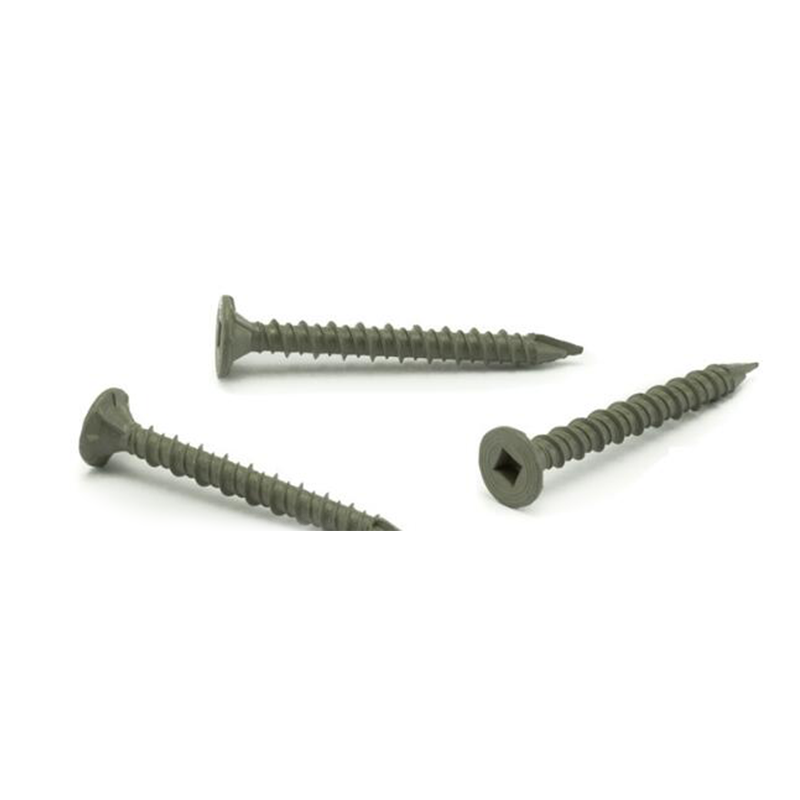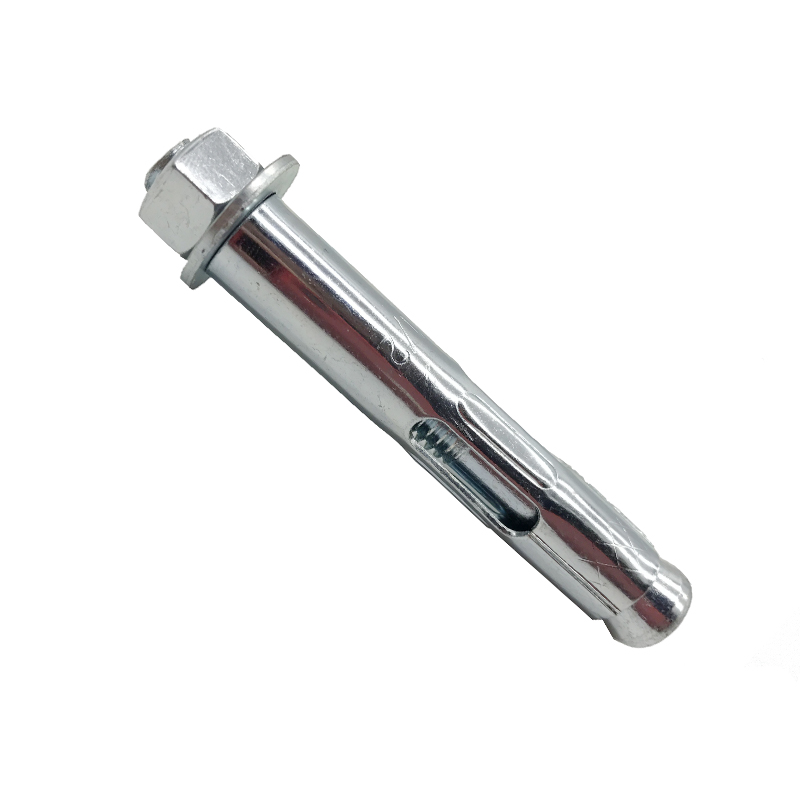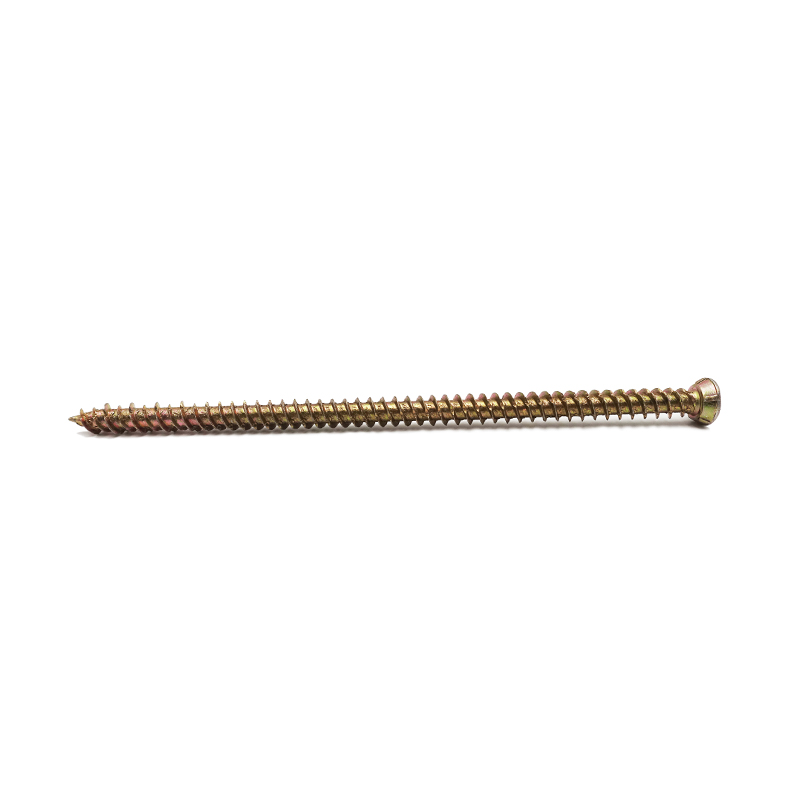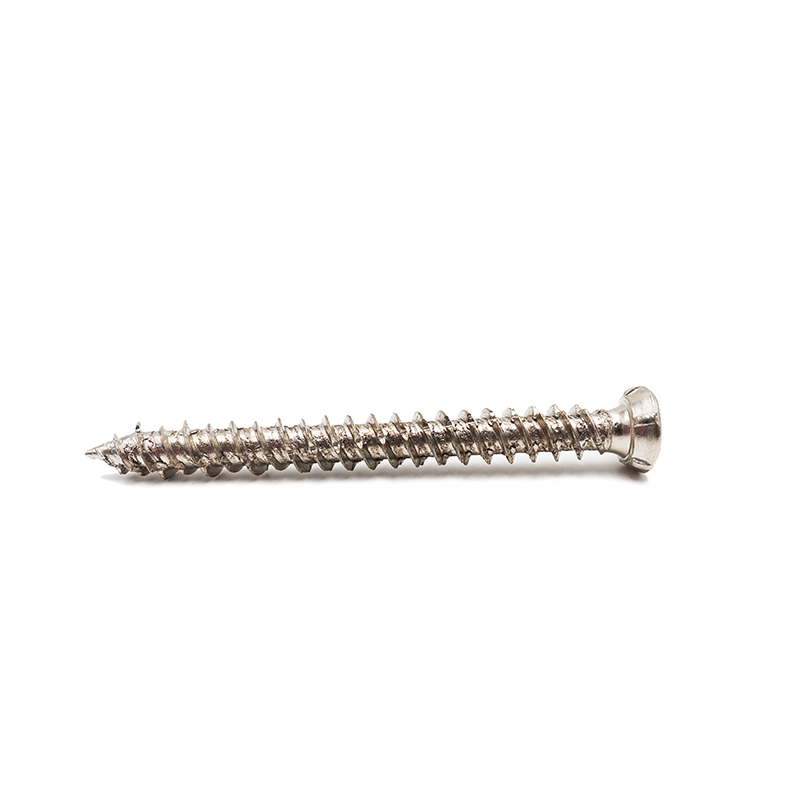

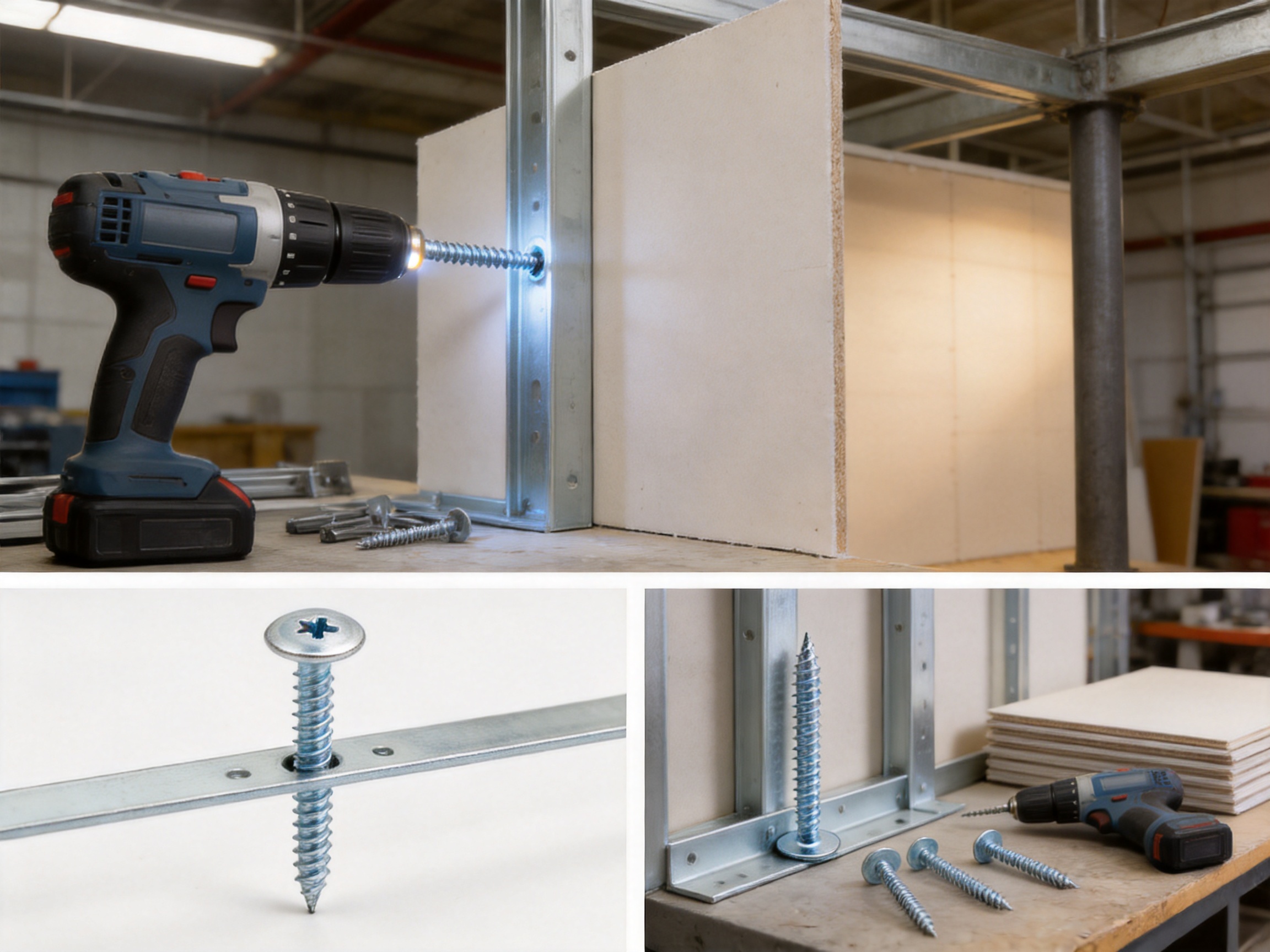
Phillips drive wafer head self-tapping screws are engineered for applications that require fast installation, dependable holding power, a low-profile appearance, and effective resistance to corrosion. Designed for use in drywall systems, light-gauge metal assemblies, interior construction, general hardware, and selected sheet-metal applications, these screws combine a sharp self-tapping point with a broad wafer-style head. The result is an efficient fastening solution for contractors, distributors, furniture manufacturers, construction professionals, and original equipment manufacturers.
The product range is manufactured from C1022A carbon steel and is available with several drive recesses, diameters, lengths, thread configurations, and surface finishes. Standard options include Phillips, square, and Torx recesses; fine or coarse threads; and black phosphate, zinc-plated, yellow-zinc-plated, Dacromet, Ruspert, and Magni surface treatments. This breadth allows buyers to select a configuration suited to the substrate, installation tool, environmental conditions, and required appearance.
Compared with ordinary low-cost tapping screws, a properly engineered wafer head screw can offer more consistent engagement, improved load distribution, cleaner seating, and better production efficiency. The screw head is designed to provide a relatively large bearing area without the excessive projection of a conventional hexagonal or pan-head fastener. Its Phillips drive supports rapid installation with commonly available tools, while alternative recesses can be specified when higher torque transfer or automated assembly is required.
Product Overview and Application Positioning
A self-tapping screw forms or cuts its mating thread as it enters a prepared or unprepared material. This eliminates the need for a separate nut in many applications and can reduce the number of assembly operations. When used with thin metal, drywall framing, sheet materials, or suitable composite boards, the screw creates a mechanical connection through the interaction of its point, thread profile, shank, and head.
The wafer head is a defining feature of this product. It is broader and flatter than many conventional screw heads, allowing the fastener to spread clamping pressure over a larger area. This can be valuable when attaching thin sheet metal, brackets, strips, panels, or accessories that could be damaged by a narrow bearing surface. The head also offers a neat finished appearance and can help reduce the risk of pull-through in suitable applications.
The supplied production information identifies the product family with drywall screw specifications and lists a bugle-head configuration within the range. This indicates that the manufacturing program can support related head geometries for different construction needs. Buyers should confirm whether they require the wafer head shown in the product title or a bugle-head drywall configuration before placing an order. Head style, point design, thread form, and coating should always be matched to the intended substrate.
Typical uses include fastening metal accessories to light-gauge framing, securing thin metal components, fixing drywall-related hardware, joining sheet materials, assembling cabinets and light fixtures, installing brackets, and supporting general industrial or construction operations. The precise suitability depends on substrate thickness, expected load, exposure conditions, installation torque, and applicable project standards.
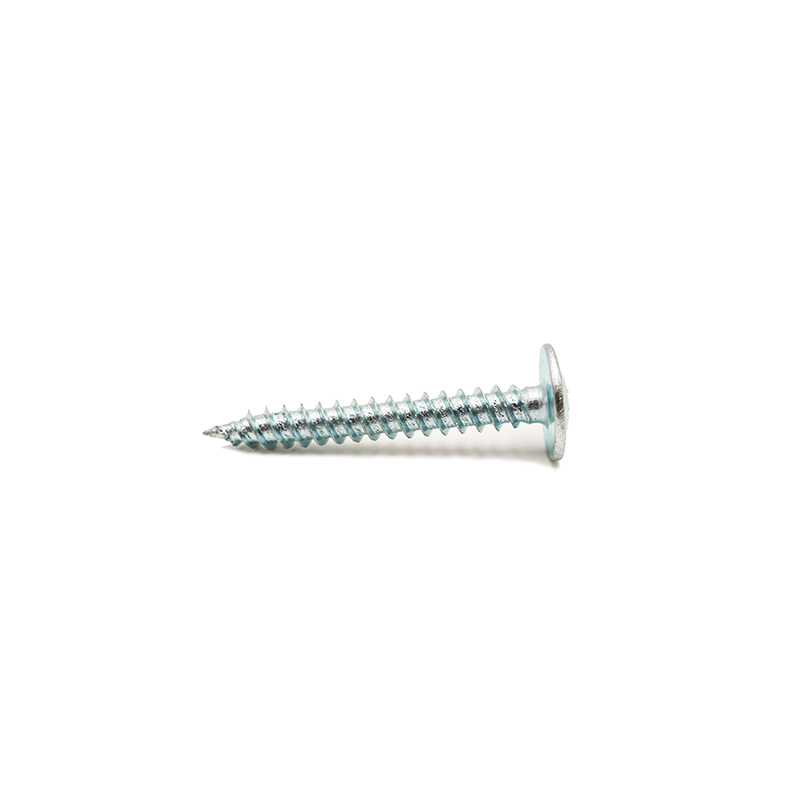
Phillips drive wafer head self tapping screws bule white zinc plated
Key Product Advantages
Efficient Self-Tapping Performance
The self-tapping thread is designed to penetrate and engage the mating material without requiring a fully preformed internal thread. This can reduce drilling, tapping, and handling time. In repetitive installation work, even a small reduction in the number of operations can produce significant labor savings.
For thin metal applications, the point and first thread must enter smoothly without excessive wandering. A well-controlled point geometry helps the operator start the screw accurately and maintain a stable direction during installation. Consistent thread formation also reduces the risk of stripped holes, loose connections, or screws that stop before the head is properly seated.
Broad Wafer Head for Improved Bearing
The wafer head provides a broad contact area between the screw and the attached component. This can help distribute clamping force and reduce localized deformation in thin materials. The low-profile form is particularly useful where the fastener must remain compact or where a large protruding head would interfere with another component.
In suitable assemblies, a wafer head can also help retain a thin bracket, washer-like component, or sheet section during installation. The head should not be treated as a substitute for structural design, however. Engineers must still verify pull-out resistance, shear capacity, edge distance, substrate strength, and the effects of vibration or repeated loading.
Phillips Drive Compatibility
Phillips recesses remain widely used in construction, hardware, maintenance, and general assembly because Phillips bits and drivers are readily available in many markets. The familiar drive style enables fast manual installation and is compatible with electric screwdrivers, cordless tools, pneumatic equipment, and automated fastening systems designed for Phillips screws.
The drive recess is formed to accept the corresponding driver size. Correct bit selection is important. A worn or incorrectly sized bit can cause cam-out, recess damage, slow installation, and inconsistent seating. For higher torque requirements or specialized production lines, square and Torx recesses are available within the production range. These alternatives may provide additional resistance to bit slippage when used with appropriate tools.
Multiple Diameter Options
The listed diameter range includes #6, #8, #10, #12, and #14 sizes, corresponding approximately to 3.5, 4.2, 4.8, 5.5, and 6.3 millimeters. This selection supports a broad range of light and medium fastening tasks. Smaller diameters are often chosen for thin materials and compact components, while larger diameters may be preferred when greater thread engagement or holding power is required.
Diameter selection should be based on the material thickness, the size of the clearance or pilot hole, the required clamp load, and the expected service conditions. Using a larger screw than necessary can damage thin material, while using an undersized screw may provide insufficient engagement. Technical drawings, prototypes, or application testing should be used for critical assemblies.
Flexible Length Selection
The listed length groups cover common short and medium fastening requirements. For #6, #7, and #8 sizes, the stated length range is approximately 7.9 to 8.4 millimeters. For #10, the indicated range is approximately 8.6 to 9.2 millimeters, while #12 and #14 sizes are listed at approximately 11.8 to 12.4 millimeters.
These dimensions should be interpreted as the available production range described in the supplied specification. Buyers requiring exact nominal lengths, special tolerances, or nonstandard combinations should provide drawings, samples, or a detailed purchase specification. Correct length is essential: excessive penetration may interfere with concealed components, while insufficient penetration can reduce thread engagement and joint stability.
Material: C1022A Carbon Steel
The screws are produced from C1022A carbon steel, a material commonly used for cold-forming and manufacturing fasteners. Its balance of strength, formability, and availability makes it suitable for producing screw blanks, heads, points, and threads with repeatable dimensions.
Material selection affects the entire production process. The wire or rod must possess sufficient consistency for heading and thread rolling, while the finished fastener must maintain suitable mechanical performance during installation. C1022A is widely recognized in the fastener industry as a practical material for construction and general-purpose screws, particularly where the product is protected by an appropriate surface treatment.
Carbon steel screws are not automatically suitable for every environment. In humid, outdoor, coastal, chemically exposed, or otherwise aggressive conditions, coating choice becomes especially important. Buyers should identify the expected service environment and request confirmation of applicable performance requirements before selecting a finish.
Surface Finish Options
The available surface treatments include black phosphate, zinc plating, yellow zinc plating, Dacromet, Ruspert, and Magni. Each finish provides a different balance of appearance, corrosion resistance, friction behavior, cost, and application suitability.
Blue-White Zinc Plating
The product title specifies a blue-white zinc-plated appearance. Blue-white zinc plating, also called clear or bright zinc in many commercial markets, provides a clean metallic appearance and a protective zinc layer over the carbon steel substrate. It is frequently selected for interior construction, hardware, furniture, light engineering, and general assembly.
The zinc layer acts as a sacrificial coating. Under suitable conditions, zinc preferentially corrodes before the underlying steel, helping extend the useful life of the fastener. Actual performance depends on coating thickness, passivation, storage, handling, installation damage, humidity, temperature, and exposure to chemicals or salts.
Black Phosphate
Black phosphate creates a dark surface commonly associated with drywall screws and interior construction fasteners. It can provide useful surface characteristics for dry indoor environments and offers a distinctive appearance. Black phosphate is often selected where visual color, paint compatibility, or traditional drywall installation requirements are important.
Phosphate finishes generally should not be assumed to provide the same corrosion protection as a robust zinc or advanced coating system. If the screw will be exposed to moisture or outdoor conditions, another finish may be more appropriate unless the complete system includes additional protection.
Yellow Zinc
Yellow zinc plating offers a golden or yellow-toned appearance and can provide a different level of corrosion protection from standard clear zinc, depending on the plating system and coating thickness. It is used in hardware, construction, and general industrial applications where color identification or enhanced surface protection is desired.
Dacromet, Ruspert, and Magni
Dacromet, Ruspert, and Magni represent advanced coating families that may be selected for more demanding corrosion, friction, or installation requirements. Their actual performance varies according to the coating specification, layer thickness, curing process, topcoat, and test method. These coatings are often considered when conventional electroplated finishes are insufficient or when a controlled coefficient of friction is important.
For projects with formal corrosion requirements, buyers should specify the required salt-spray performance, coating system, color, friction range, and applicable standard. A coating name by itself may not fully define performance because different suppliers and specifications can use different process parameters.
| Surface finish | Typical appearance | Common selection factors | General application direction |
|---|---|---|---|
| Blue-white zinc | Bright silver or blue-white | Clean appearance, general corrosion protection, broad availability | Interior construction, hardware, light industrial assembly |
| Black phosphate | Dark black or charcoal | Color, drywall compatibility, economical interior use | Dry indoor construction and finishing work |
| Yellow zinc | Yellow or golden | Color identification and additional protective performance | Hardware, construction, and general industrial use |
| Dacromet | Gray metallic | Corrosion resistance and controlled coating performance | Demanding industrial or automotive-related applications |
| Ruspert | Silver, gray, or colored | Layered corrosion protection and appearance options | Outdoor or higher-exposure applications, subject to specification |
| Magni | Gray, silver, or specified color | Corrosion protection, friction control, and process consistency | Engineered assemblies and specialized production |
The table provides general guidance only. Final coating selection should be confirmed against the project environment and the manufacturer's technical documentation.
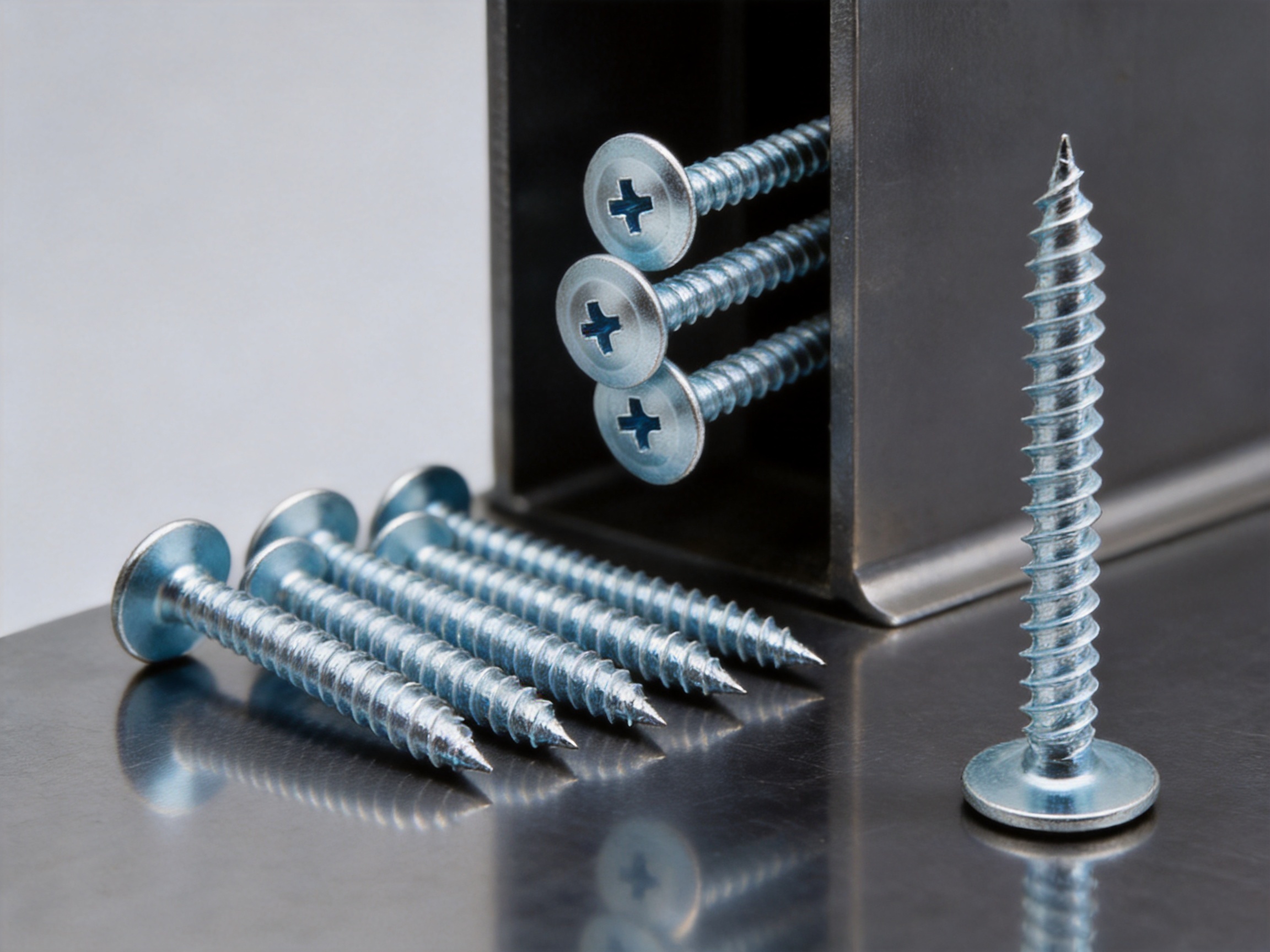
Thread Options: Fine and Coarse
The production range includes both fine-thread and coarse-thread configurations. Thread selection is one of the most important decisions in self-tapping screw performance because it affects insertion behavior, material engagement, stripping resistance, and installation speed.
Fine Threads
Fine threads have a smaller pitch and more threads per unit of length. They are often selected for thinner metal sections or applications where greater thread engagement is desired within a limited material thickness. Fine threads can provide controlled penetration and may be useful where the substrate is relatively hard or where the screw must form a precise mating thread.
Because fine threads have more thread turns over a given length, installation may require more revolutions. Tool speed, point design, and material hardness should be considered. Fine threads are not automatically stronger in every application; their performance depends on the substrate and the quality of engagement.
Coarse Threads
Coarse threads have a larger pitch and fewer threads per unit of length. They are commonly used in drywall, wood-based boards, softer materials, and applications where rapid installation is important. The larger thread profile can provide efficient material displacement and good holding performance in suitable substrates.
Coarse-thread screws may be especially convenient in construction environments because they can advance quickly and are often less sensitive to minor variations in soft material. However, the selected screw must still be compatible with the substrate. A coarse thread may not be suitable for thin or hard sheet metal if it cannot form enough effective engagement.
Manufacturing Process and Quality Control
Lizhan Hardware Co., Ltd. operates its own factory and testing laboratory and reports approximately 20 years of export experience. This combination of manufacturing capability and international market knowledge supports the production of standard and customized fasteners for customers in the Americas, Europe, Japan, and other regions.
A controlled screw manufacturing process normally begins with incoming raw-material inspection. Carbon-steel wire is checked for dimensions, surface condition, chemical consistency, and suitability for cold forming. Maintaining stable incoming material quality helps reduce variation during heading, point forming, thread rolling, heat