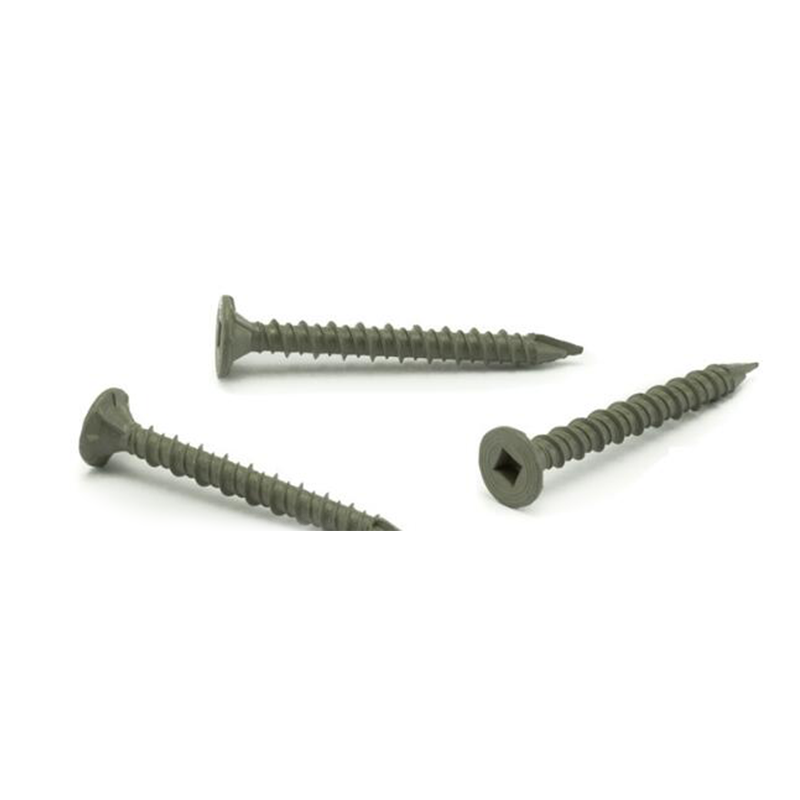
Drywall screws are small components, but they have a major influence on the quality, speed, and durability of interior construction. A suitable screws must penetrate the board and supporting material efficiently, hold securely, seat neatly below the surface, and resist corrosion throughout the intended service life. The Ph2 bugle head drywall screws with a black phosphated coarse thread is designed to meet these practical requirements in a wide range of drywall, gypsum board, partition, ceiling, furniture, and general fastening applications.
This product combines a Phillips Ph2 recess, a bugle head, a coarse thread profile, and a black phosphated surface. It is manufactured from C1022A carbon steel and can be supplied in a broad range of diameters and lengths. Alternative drives, coatings, and thread configurations are also available for customers whose applications require a different installation method or environmental performance.
The product range covers diameters from approximately #6 to #14, corresponding to common metric sizes from about 3.5 mm to 6.3 mm. Available lengths range from 1/2 inch to 5 inches, or approximately 13 mm to 152 mm. This range allows distributors, contractors, furniture manufacturers, and construction companies to select a screws suited to both thin board applications and deeper fastening requirements.
Lizhan Hardware Co., Ltd. supports the product with manufacturing resources in China and warehousing support in Thailand. Its product portfolio includes drywall screws, self-drilling screws, roofing screws, furniture screws, fasteners, stamping parts, hooks, and other hardware products. This broader production background is valuable for customers seeking a consistent supply of multiple fastener categories from one experienced source.
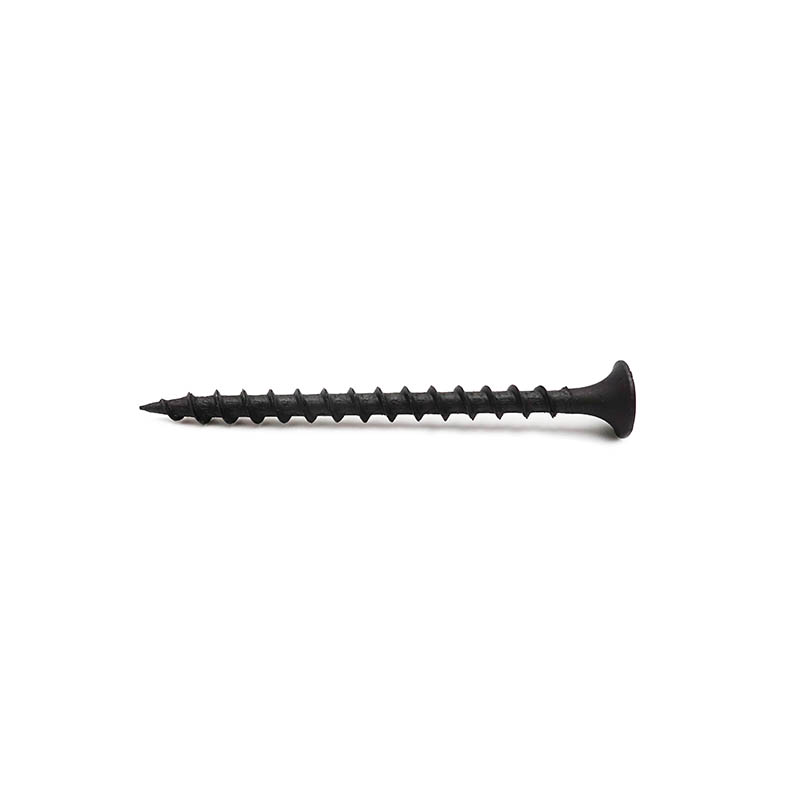
Ph2 Bugle head drywall screws black phosphated coarse thread
1. Understanding the Ph2 Bugle Head Drywall Screw
The Ph2 bugle head drywall screws is a specialized fastener intended primarily for securing drywall or gypsum board to wood or suitable metal framing. Its design is not based on one feature alone. The recess, head, thread, point, steel grade, length, diameter, and coating all work together to determine installation performance.
1.1 Phillips Ph2 recess
The Ph2 designation identifies the commonly used Phillips No. 2 drive size. Ph2 tools are widely available in manual screwsdrivers, electric screwsdrivers, cordless drills, and automated fastening equipment. This broad compatibility makes the screws convenient for contractors and distributors that already use standard drywall installation tools.
A properly formed recess helps the driver engage with the screws during installation. Consistent recess geometry is especially important when screws are installed at high speed. If the recess is shallow, irregular, or poorly centered, the bit can slip, damage the head, or reduce productivity. For this reason, recess forming and inspection are important parts of drywall screws manufacturing.
The product can also be produced with square or Torx drives. A square drive may provide useful resistance to cam-out in selected applications, while a Torx drive can provide strong driver engagement and controlled torque transfer. The standard Ph2 configuration remains a practical choice where installers prefer familiar tools and where replacement bits are readily available.
1.2 Bugle head geometry
The bugle head is shaped with a curved underside that distributes pressure over the face of the drywall. When installed correctly, the head can sit slightly below the surface without creating an excessively large crater. This supports a smooth finishing process because joint compound or another finishing material can cover the fastener location more easily.
Compared with a flat or pan head, a bugle head is better suited to board materials that may be damaged by concentrated head pressure. The curved transition helps reduce the likelihood of tearing the paper face when the screws is driven to the correct depth. However, installation depth remains important. Excessive torque or overdriving can still break the board surface, regardless of head design.
The head also contributes to pull-through resistance. A head that is too small may pull through the board under load, while one that is too large may leave an unnecessarily deep depression or create finishing difficulties. The bugle head provides a balance between holding area, surface seating, and appearance.
1.3 Coarse thread configuration
Coarse thread drywall screws have a relatively large pitch and deeper thread form. They are commonly selected for fastening gypsum board to wood studs, timber battens, and other comparatively soft substrates. The larger thread profile can provide efficient bite and rapid installation in wood-based framing.
Coarse thread screws are also useful in some general board-to-board or light-duty fastening operations, provided that the substrate and load requirements are appropriate. For metal framing, fine thread screws are often preferred because their smaller pitch can engage thin metal more effectively. Lizhan Hardware can offer both coarse and fine thread versions, allowing the fastener to be matched to the installation material rather than used as a one-size-fits-all product.
Thread selection should consider the substrate thickness, density, hardness, and expected load. A coarse thread can be highly effective in wood but may not be the best option for thin steel sections. Correct selection improves holding strength, reduces installation problems, and limits unnecessary damage to the supporting material.
1.4 C1022A carbon steel
The screws is manufactured from C1022A carbon steel, a material commonly used for production of construction screws. This steel provides a practical combination of formability, strength, and suitability for cold heading and thread rolling processes.
Material consistency is important because the screws must withstand several stages of production and installation. The wire must form cleanly into a head and point, the thread must roll accurately, and the finished screws must resist deformation when driven. C1022A is widely recognized in the fastener industry as a suitable base material for many standard screws applications.
Actual mechanical requirements may vary according to diameter, length, application, applicable standard, and customer specification. Buyers requiring defined tensile strength, hardness, torsional performance, or other mechanical values should confirm the requested specification before ordering.
2. Main Product Specifications
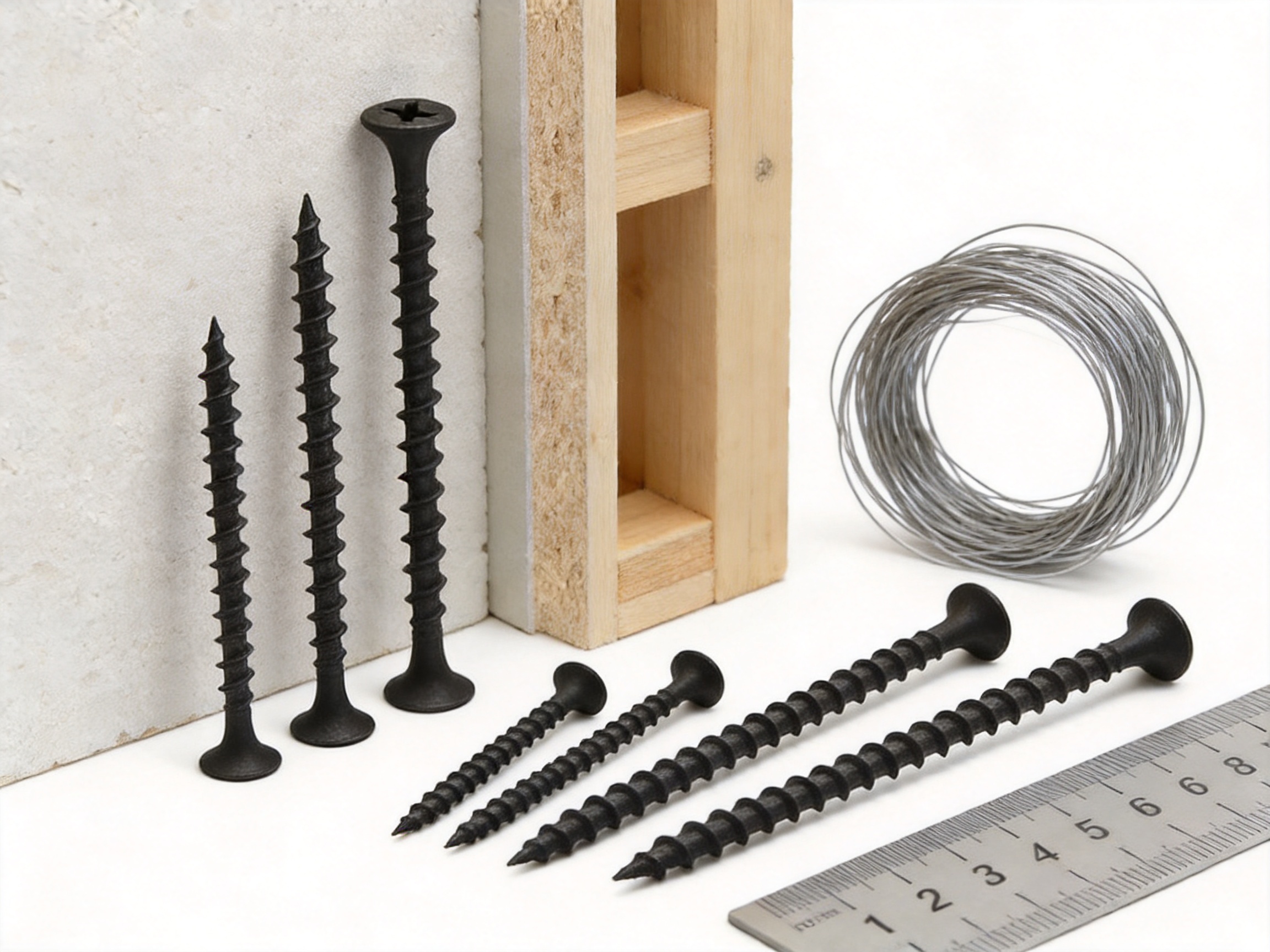
The product range is designed to cover the most frequently requested drywall screws sizes. Standard configurations include a Ph2 recess, bugle head, coarse or fine thread, and several surface treatments. Custom combinations may be reviewed according to order quantity, tooling requirements, and technical feasibility.
| Feature | Available or Standard Configuration | Application Value |
|---|---|---|
| Drive | Phillips Ph2; square and Torx options may be available | Compatible with common installation tools and customer preferences |
| Head | Bugle head | Supports controlled seating in drywall and gypsum board |
| Material | C1022A carbon steel | Suitable for cold forming, thread rolling, and construction screws production |
| Diameter range | #6-3.5, #8-4.2, #10-4.8, #12-5.5, #14-6.3 | Covers light, medium, and larger fastening requirements |
| Length range | 1/2 inch to 5 inches; approximately 13 mm to 152 mm | Supports different board thicknesses, framing depths, and overlap needs |
| Thread | Coarse thread or fine thread | Allows selection for wood or metal framing conditions |
| Surface | Black phosphate, zinc plated, yellow zinc plated, Dacromet, Ruspert, or Magni options | Provides choices for appearance and corrosion-resistance requirements |
2.1 Diameter selection
The diameter affects both holding capability and the amount of material displaced during installation. Smaller screws are often selected for lighter board and lower-load applications. Larger diameters may be appropriate when additional holding capacity or greater resistance to pull-out is required.
A #6 screws, approximately 3.5 mm in diameter, is commonly used where a relatively compact fastener is sufficient. A #8 screws, approximately 4.2 mm, offers a balance of installation ease and holding performance and is frequently considered for general drywall work. Larger sizes such as #10, #12, and #14 can be selected for deeper, heavier, or more demanding fastening conditions, subject to the substrate and project specification.
Diameter should not be selected independently from length and thread type. A long, large-diameter screws may be unnecessary for a thin board assembly and could increase the risk of damaging concealed services. Conversely, a short or narrow screws may not provide enough engagement in the framing. Professional selection considers the complete assembly.
2.2 Length selection
The listed length range extends from approximately 13 mm to 152 mm. Shorter screws may be used for thin materials, repair work, or applications where only limited penetration is needed. Longer screws are useful when the assembly includes multiple layers, insulation boards, thicker panels, or a deeper framing member.
The screws should penetrate the supporting material sufficiently to create reliable engagement without extending unnecessarily far beyond the back of the substrate. In drywall installation, the required length depends on board thickness, the presence of multiple layers, the type of framing, and local construction practice.
Accurate length control is a basic but essential quality factor. A screws that is shorter than specified may fail to reach the frame, while an oversized screws can increase material consumption and create installation hazards. Production inspection and packaging checks help maintain consistency between the ordered size and the delivered product.
2.3 Surface treatment choices
Black phosphate is a widely used surface treatment for standard drywall screws. It gives the screws a dark appearance and provides a base level of corrosion protection suitable for many normal indoor applications. It also offers a surface that is familiar to drywall installers and distributors.
Zinc plating provides a bright metallic appearance and improved corrosion resistance compared with untreated steel. Yellow zinc plating adds a distinctive yellow or gold appearance and may be chosen for identification or specific market preferences. Dacromet, Ruspert, and Magni coatings can be considered for applications requiring enhanced corrosion protection or a particular performance profile.
Coating selection should reflect the actual service environment. Standard indoor rooms with controlled humidity may not require the same coating as exterior, coastal, industrial, or high-condensation environments. Customers should communicate the expected exposure conditions so that the most suitable finish can be evaluated.
3. Advantages Compared with Generic Alternatives
Many drywall screws appear similar at first glance, but differences in production accuracy and material control can affect the installation experience. The Ph2 bugle head drywall screws offers several practical advantages over low-consistency generic alternatives when it is manufactured and inspected to the requested specification.
3.1 Reliable driver engagement
A properly formed Ph2 recess helps the driver remain engaged during installation. This can reduce bit slipping and head damage, especially when the screws is driven with a power tool. Consistent recess depth and alignment also make the product more suitable for repetitive work on construction sites and in manufacturing environments.
Driver engagement is influenced by more than the recess alone. The quality of the driver bit, the applied torque, the angle of installation, and the condition of the screws all matter. A well-made screws gives the installer a dependable starting point and reduces avoidable variation.
3.2 Controlled surface seating
The bugle head is designed to seat into drywall in a controlled manner. When the screws is set correctly, the head is recessed enough for finishing but not driven so deeply that it tears the paper face. This can improve the visual quality of completed walls and reduce the amount of repair compound needed around fastener locations.
Compared with basic pan-head or incorrectly shaped screws, a properly proportioned bugle head is more suitable for board fastening. Its geometry supports a smoother transition between the head and the board surface, which is particularly helpful in applications where the finished wall will be painted or covered.
3.3 Efficient coarse-thread penetration
The coarse thread is designed to bite into wood framing efficiently. Its larger thread profile can help the screws advance quickly with less unnecessary rotation. Faster installation can reduce labor time, especially when large numbers of screws are used for ceilings, partitions, and wall systems.
Efficient penetration also helps limit excessive heat generation and driver wear. The screws should still be used with an appropriate tool setting and installed at the correct angle. No thread design can compensate for a substrate that is unsuitable, excessively hard, cracked, or improperly prepared.
3.4 Broad size coverage
A product range extending from #6 to #14 and from 1/2 inch to 5 inches gives buyers more flexibility than a narrow standard offering. Distributors can stock several popular configurations while also requesting less common combinations for specific projects.
This broad range supports different trades and applications. Drywall installers may require standard short and medium lengths, furniture manufacturers may need particular diameters, and contractors working with multiple board layers may need longer screws. A supplier able to manage these variations can simplify purchasing and reduce the need to coordinate with multiple sources.
3.5 Multiple finish options
Black phosphate remains an economical and recognizable finish for indoor drywall work, but the availability of zinc, yellow zinc, Dacromet, Ruspert, and Magni options allows the product to be adapted to different requirements. This is an advantage over suppliers that provide only one surface treatment.
Multiple coating options can also help distributors serve different regional markets. Some customers prioritize price and standard appearance, while others require improved corrosion performance or a particular color. A flexible product program supports both needs without changing the fundamental screws design.
3.6 Suitable balance of performance and cost
The combination of C1022A steel, cold-forming suitability, standard Phillips drive technology, and common drywall geometry provides a practical balance between manufacturing cost and installation performance. Customers do not necessarily need an oversized or highly specialized fastener for ordinary indoor board installation.
Cost effectiveness should be evaluated through total installed value rather than unit price alone. A screws that installs smoothly, reduces damaged heads, minimizes rework, and arrives in the correct sizes may offer better project economics than a cheaper product with inconsistent quality.

4. Manufacturing Process and Quality Control
Advanced fastener manufacturing is a controlled sequence rather than a single operation. The quality of the finished drywall screws depends on material preparation, forming, thread production, heat treatment where required, surface finishing, inspection, packing, and shipment control.
4.1 Raw material preparation
Production begins with steel wire suitable for the specified screws grade and size. Incoming material should be checked against purchasing and production requirements. Important considerations include diameter consistency, surface condition, chemical composition documentation where required, and the material’s suitability for cold heading and thread rolling.
Proper storage helps protect wire and finished components from unnecessary contamination and moisture. Material identification is also important when multiple steel grades or diameters are processed in the same facility. Clear lot control supports traceability and helps reduce the risk of mixing materials.
4.2 Cold heading and head forming
Cold heading forms the screws blank and head through controlled forming operations. The wire is cut to a defined blank length and placed into tooling that shapes the head, shank, and point-related geometry. The bugle head requires accurate tooling because its underside and outer profile influence how the finished screws seats in drywall.
Cold forming offers several production benefits. It can produce high volumes efficiently, maintain repeatable dimensions, and preserve useful grain flow in the formed steel. Tool condition is critical. Worn or damaged dies can affect head diameter, recess shape, concentricity, and surface appearance.
For a Ph2 screws, the recess is formed during the head-making process. The recess must be deep and accurately centered enough to accept the intended driver bit. Production personnel may use visual checks, gauges, sample measurements, and process monitoring to confirm that the recess remains within the required range.
4.3 Point forming
The point helps the screws start into the board and supporting material. A consistent point geometry can reduce wandering during the initial stage of installation. It can also improve the installer’s ability to position the screws accurately before full thread engagement begins.
Point design may vary according to the target substrate and customer requirements. Drywall screws for wood framing generally use a sharp point suitable for board and timber penetration. The point must be formed without excessive burrs, deformation, or damage that could interfere with installation.
4.4 Thread rolling
Thread rolling forms the thread by displacing material rather than cutting it away. The screws blank passes between dies that create the required coarse or fine thread profile. This process can provide efficient high-volume production and a smooth, consistent thread when the tooling and blank dimensions are properly controlled.
Thread rolling requires attention to pitch, major diameter, minor diameter, thread depth, and run-out. Coarse thread screws must maintain a consistent profile along the intended engagement length. Fine thread versions require a different die configuration and are generally evaluated for their compatibility with metal framing and other thin sections.
Correct thread formation helps the screws advance predictably and develop engagement in the substrate. Inconsistent threads may cause excessive driving torque, poor holding power, or premature stripping. For this reason, thread gauges and dimensional inspections are valuable parts of production control.
4.5 Heat treatment and mechanical performance
Depending on the requested specification and product size, heat treatment may be used to achieve the required hardness and mechanical performance. The treatment must be controlled to avoid excessive brittleness, distortion, or inconsistent results between production lots.
Mechanical testing may include hardness checks, torsional evaluation, tensile-related testing, or other customer-specified examinations. The appropriate testing program depends on the order requirements and applicable industry standards. Customers with defined performance obligations should identify them before production so the inspection plan can be aligned with the order.
4.6 Surface treatment
After forming and any required heat treatment, screws may undergo cleaning and surface finishing. Black phosphating creates the characteristic dark finish of the standard product. Zinc plating and yellow zinc plating provide alternative appearances and corrosion performance. Dacromet, Ruspert, and Magni are additional coating options for more specialized requirements.
Surface treatment quality involves more than color. Coating coverage, adhesion, thickness, cleanliness, and post-treatment handling all influence the final result. Screws should be protected from contamination and unnecessary moisture after finishing. Packaging materials and storage conditions should also be selected to reduce the chance of corrosion before installation.
4.7 Inspection and sorting
Finished screws can be checked for dimensions, head shape, recess condition, thread quality, point form, coating appearance, and packaging accuracy. Depending on the order, inspections may be performed at defined stages or through final sampling.
Inspection is most effective when it is integrated into the process rather than limited to the final shipment. Early detection of tooling wear, material deviation, or coating problems helps reduce waste and supports more consistent production. A supplier with experience across several fastener categories can apply similar control principles to drywall screws, roofing screws, self-drilling screws, and furniture fasteners.
4.8 Packaging and shipment preparation
Packaging should protect the screws from impact, moisture, contamination, and mixing of sizes. Labels should identify the product description, diameter, length, thread type, finish, quantity, and other information required by the customer or distribution channel.
For export orders, packaging may be adapted to container loading, palletization, warehouse handling, and regional labeling requirements. Lizhan Hardware’s China manufacturing base and Thailand warehouse support can be useful for customers that need production coordination in China and regional stocking or distribution assistance in Southeast Asia.
5. Application Guidance
The product is primarily intended for drywall and gypsum board fastening. It may also be considered for selected interior construction, partition, ceiling, furniture, and general board fastening applications when the substrate, load, and environmental conditions are appropriate.
5.1 Drywall to wood framing
This is the most natural application for a coarse thread bugle head drywall screws. The screws passes through the board and develops thread engagement in the wood stud, joist, batten, or other suitable timber support. The installer should choose a length that provides adequate penetration without excessive protrusion.
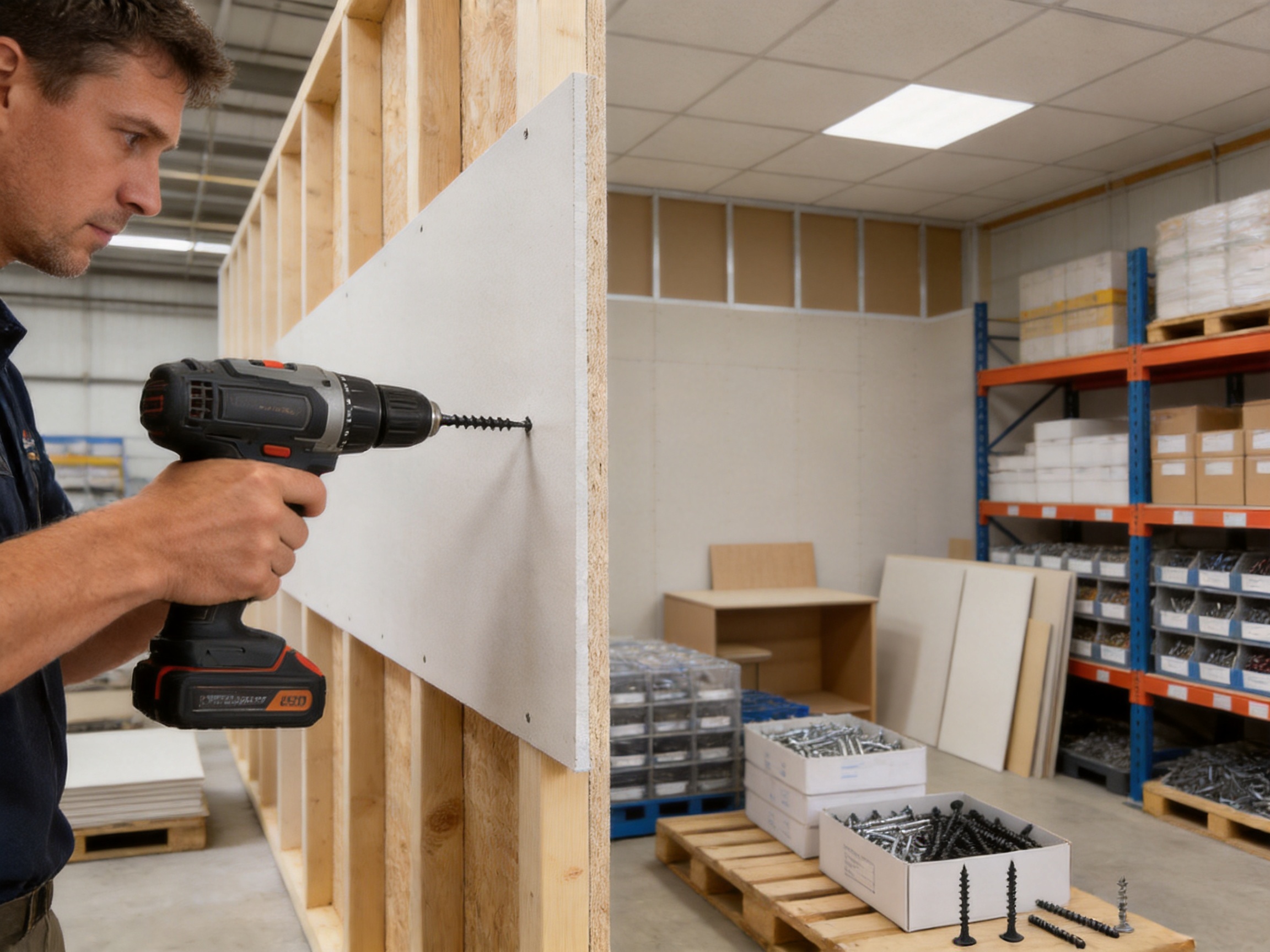
The board should be positioned securely before driving. The screws should enter straight and should be driven until the bugle head is slightly recessed. If the head is left proud, finishing may be difficult. If it is driven too deeply, the paper face may be broken and the holding performance may be reduced.
5.2 Drywall to metal framing
Metal framing generally requires careful thread selection. Fine thread drywall screws are often selected for thin-gauge steel because they can engage the metal more effectively. In heavier steel or applications requiring drilling through metal, a self-drilling screws may be more suitable than a standard drywall screws.
The coarse thread version should not automatically be used for every metal framing application. Buyers should provide details about the metal thickness and profile so the appropriate screws can be selected. Lizhan Hardware’s wider screws range can support evaluation of alternative thread forms or self-drilling products where necessary.
5.3 Multiple-layer board assemblies
Longer screws may be required when two or more layers of board are installed. The selected length should account for the total board thickness and the required penetration into the supporting frame. The screws should not be so long that it creates avoidable interference behind the assembly.
When multiple layers are installed, consistent driving depth becomes more important because uneven seating can affect the flatness of the finished surface. A power tool with an adjustable clutch or depth-control nose can help maintain uniform installation.
5.4 Interior furniture and panels
Some furniture and panel manufacturers use drywall-style screws for selected non-structural interior applications. The suitability of the product depends on panel composition, joint design, expected loads, and required appearance. Where the joint requires a specialized furniture screws, confirmat screws, or self-tapping screws, a dedicated product may be preferable.
The broad diameter and length range makes the product worth considering for certain panel fastening tasks, but the screws should not be used as a substitute for a product designed for a higher load or a specialized joint. Technical selection should always reflect the finished product’s requirements.
6. Installation Best Practices
6.1 Select the correct screws
Begin by identifying the board thickness, framing material, environmental exposure, and required penetration. Choose the diameter, length, thread, and coating accordingly. A standard black phosphated coarse thread screws is often suitable for ordinary indoor drywall-to-wood installation, while other conditions may call for fine thread or a more corrosion-resistant coating.
6.2 Use a compatible driver bit
A clean, correctly sized Ph2 bit helps transfer torque efficiently and reduces recess damage. Worn bits are more likely to slip, especially when the screws is driven at an angle or into a harder-than-expected section of material. For production work, regular bit inspection can prevent avoidable defects.
6.3 Maintain the correct angle
The screws should generally be driven perpendicular to the board surface unless the construction system specifies another angle. An angled screws may create uneven head seating and can reduce the effective holding area. Straight installation also improves the appearance of the finished surface.
6.4 Control driving depth
The head should be recessed enough to allow finishing but not so deep that the board face is torn. Many professional installers use tools with a depth-setting nose or adjustable clutch. Operators should avoid excessive pressure because the bit may continue rotating after the head has reached the correct depth.
6.5 Observe edge and spacing requirements
Screws placed too close to the board edge can cause cracking or breakout. Spacing should follow the applicable construction method, project specification, and local practice. The fastener pattern may vary for walls, ceilings, fire-rated systems, moisture-resistant boards, and multilayer assemblies.
6.6 Store screws properly
Even a well-coated screws can be affected by poor storage. Keep cartons in a dry, covered location and avoid direct contact with standing water or highly humid surfaces. Opened packages should be resealed when practical. Stock should be rotated so that older material is used first when appropriate.
7. Quality, Supply, and Customization Strengths
For professional buyers, the product itself is only one part of the purchasing decision. Reliable supply, communication, specification control, packaging, and after-sales support also influence project success. Lizhan Hardware Co., Ltd. presents a combination of product breadth and manufacturing support that can benefit importers, wholesalers, contractors, and industrial users.
7.1 Experience across several fastener categories
A supplier producing drywall screws alongside self-drilling screws, roofing screws, furniture screws, stamping parts, hooks, and other hardware can offer broader technical coordination. Knowledge gained from one fastener category often supports improvements in another, particularly in areas such as cold heading, thread rolling, heat treatment, coating, sorting, and packaging.
This product breadth can reduce purchasing complexity for customers who need several types of hardware. Instead of managing unrelated suppliers for every screws category, a buyer may consolidate suitable products through one manufacturing partner, subject to each item’s technical and quality requirements.
7.2 China production and Thailand warehouse support
The company’s factory address is in Haiyan, Jiaxing City, Zhejiang, China, an area with an established hardware and fastener manufacturing base. Its Thailand warehouse address in Chonburi provides a regional logistics option for customers operating in Thailand or nearby Southeast Asian markets.
Warehouse support can be valuable when customers require shorter regional delivery times, supplementary stock, or a more convenient distribution point. Actual availability, lead time, and stock status should be confirmed for each order because they depend on product size, quantity, packaging, and production schedule.
7.3 Flexible specifications
The standard product uses a Ph2 drive, bugle head, C1022A steel, black phosphate finish, and coarse thread. At the same time, the listed production range includes square and Torx drives, fine thread, zinc-based finishes, Dacromet, Ruspert, and Magni coatings.
This flexibility allows buyers to request a product aligned with their market or application. For example, a distributor may need a black phosphated Ph2 screws for the construction channel, while an industrial customer may require a Torx drive and a different coating. Custom orders should be reviewed for minimum quantities, tooling, sample approval, and production lead time.
7.4 Export-oriented communication
International purchasing requires clear communication of dimensions, thread type, coating, packaging, labeling, quantity, and delivery terms. The company provides sales contacts and communication channels for customer inquiries. Buyers should prepare a complete product specification sheet to reduce misunderstandings and accelerate quotation and sample review.
7.5 Support for private-label and distribution programs
Fastener distributors often need consistent packaging and product identification for their own markets. Depending on the order arrangement, customers may discuss carton design, inner box quantity, labels, barcodes, pallet requirements, and other packaging details. Private-label or branded packaging should be confirmed during the quotation stage rather than assumed to be included in a standard order.
8. How to Compare Suppliers
Price is important, but it should be compared together with product consistency and service capability. A useful supplier evaluation considers the following factors.
| Evaluation Area | Questions for Buyers | Why It Matters |
|---|---|---|
| Material | Is the requested C1022A or equivalent material clearly identified? | Material consistency affects forming and mechanical performance. |
| Dimensions | Are diameter, length, head, and drive specifications confirmed? | Correct dimensions ensure compatibility with the installation system. |
| Thread | Is the screws coarse thread or fine thread, and is it suited to the substrate? | Thread selection influences penetration and holding performance. |
| Coating | Is black phosphate, zinc, yellow zinc, or another coating required? | Finish affects appearance and corrosion resistance. |
| Inspection | What dimensions and performance characteristics are checked? | Inspection reduces the risk of inconsistent batches. |
| Packaging | How are sizes, quantities, and lots identified? | Good labeling supports warehouse control and resale. |
| Supply | Can the supplier support repeat orders and regional delivery needs? | Continuity is important for contractors and distributors. |
| Technical response | Can the supplier help select a thread, coating, or alternative screws? | Technical guidance helps avoid unsuitable product selection. |
A supplier that answers these questions clearly demonstrates stronger process control than a seller that provides only a low unit price. Sample approval is also recommended for new projects, especially where the screws will be used in automated equipment, exposed environments, or high-volume installation.
9. Ordering Recommendations
When requesting a quotation for the Ph2 bugle head drywall screws, buyers should provide the required diameter, length, thread type, surface treatment, quantity, packaging format, destination, and any applicable standard. If the application involves metal framing, include the metal thickness and profile. If the screws will be used in a humid or exterior environment, identify the expected exposure conditions.
Customers should also specify whether the order requires bulk packaging, small boxes, blister packs, plastic containers, cartons, pallets, or private labeling. Clear packaging instructions are particularly important for distributors handling several similar screws sizes.
For repeat programs, buyers may establish an approved sample, reference drawing, inspection agreement, and packaging standard. These documents help maintain consistency between orders. If a change is proposed to the material, coating, tooling, or packaging, it should be communicated and approved before mass production where the change could affect product performance or customer acceptance.
10. Environmental and Corrosion Considerations
Black phosphate is generally selected for indoor applications where the screws is not expected to experience prolonged moisture or direct weather exposure. It should not be treated as a universal exterior coating. Where humidity, condensation, salt spray, chemical exposure, or outdoor service is expected, a more suitable coating should be considered.
Zinc plating can provide improved protection for many general-purpose applications, while yellow zinc may be chosen for appearance or market convention. Dacromet, Ruspert, and Magni coatings can be evaluated for more demanding corrosion requirements. The correct choice depends on the specific environment, coating system, installation condition, and expected service life.
Coating performance can also be affected by installation damage. Excessive driver torque, scratches, contact with incompatible materials, and exposure at cut or damaged areas may reduce protection. For critical applications, customers should request relevant coating information and conduct testing under conditions that reflect actual service.
11. Common Problems and Their Causes
11.1 Screw head stripping
Head stripping may result from an incorrect or worn Ph2 bit, excessive torque, poor recess formation, installation at an angle, or a substrate that requires more driving force than expected. Using a fresh, correctly sized bit and adjusting the tool setting can reduce this problem.
11.2 Paper tearing around the head
Paper tearing is commonly caused by overdriving, excessive pressure, incorrect tool depth, or installation too close to the board edge. The bugle head helps distribute pressure, but it must still be seated carefully. A depth-control tool is useful for maintaining consistency.
11.3 Screw spinning without holding
A screws may spin without developing holding power if the supporting material is too soft, damaged, too thin, or already overused. The wrong thread type may also be responsible. In wood, coarse thread is generally more appropriate; in thin metal, fine thread or a self-drilling screws may be needed.
11.4 Corrosion before installation
Corrosion can occur when screws are stored in damp conditions, when packaging is damaged, or when the coating is unsuitable for the environment. Proper stockroom management and a suitable finish are important. Buyers should report any packaging or surface issue promptly so that the lot can be evaluated.
11.5 Incorrect size delivery
Mixed sizes or incorrect labels create problems for both distributors and installers. Separate packaging, clear lot identification, final quantity checks, and warehouse controls help reduce this risk. Customers should inspect incoming cartons and retain product labels for traceability.
12. Frequently Asked Questions
Q1: What is the main application of this screws?
The main application is fastening drywall or gypsum board to suitable wood or metal framing. The correct thread type should be selected according to the framing material. It may also be used for selected interior board and panel applications when the load and substrate are appropriate.
Q2: What does Ph2 mean?
Ph2 means Phillips No. 2 drive. It identifies the recess size intended for a commonly used Phillips driver bit. This drive is widely available for manual and power-tool installation.
Q3: Why is the bugle head suitable for drywall?
The curved bugle head distributes pressure over the board and is designed to seat slightly below the surface for finishing. When installed at the correct depth, it can reduce surface damage compared with an unsuitable head shape.
Q4: Is the black phosphated version suitable for exterior use?
Black phosphate is generally intended for standard indoor applications and should not automatically be selected for exterior or continuously damp conditions. Zinc, yellow zinc, Dacromet, Ruspert, or Magni coatings may be considered for enhanced corrosion protection, depending on the environment and project requirements.
Q5: Should I choose coarse thread or fine thread?
Coarse thread is commonly selected for wood framing because it provides efficient engagement in timber. Fine thread is often preferred for thin metal framing. The correct choice depends on the actual substrate, thickness, and installation method.
Q6: What steel is used to make the screws?
The listed material is C1022A carbon steel. This material is widely used for construction screws production because it is suitable for forming and thread rolling. Specific mechanical requirements should be confirmed with the supplier before ordering.
Q7: What sizes are available?
The listed diameters are #6-3.5, #8-4.2, #10-4.8, #12-5.5, and #14-6.3. Lengths range from approximately 1/2 inch to 5 inches, or 13 mm to 152 mm. Availability of each combination should be confirmed for the required quantity.
Q8: Are other drive types available?
Yes. In addition to Phillips, the production range includes square and Torx drive options. The requested drive should be identified clearly in the inquiry because tooling, pricing, and minimum quantities may differ.
Q9: Can the screws be supplied with another coating?
Yes. Options listed for the product range include zinc plated, yellow zinc plated, Dacromet, Ruspert, and Magni finishes. The best option depends on appearance, corrosion exposure, performance requirements, and budget.
Q10: Does the supplier provide only drywall screws?
No. Lizhan Hardware Co., Ltd. also works with self-drilling screws, roofing screws, furniture screws, fasteners, stamping parts, hooks, and other hardware products. This may help customers consolidate several related purchasing requirements.
Q11: Is a sample recommended before bulk production?
A sample is recommended for new applications, private-label programs, automated installation, unusual sizes, special coatings, or demanding environments. Sample approval allows the buyer to confirm fit, appearance, driver engagement, packaging, and installation behavior before placing a larger order.
Q12: What information should be included in a purchase inquiry?
Include diameter, length, thread type, drive, head style, surface treatment, quantity, packaging, destination, required delivery date, and any inspection or standard requirements. Photos, drawings, or samples are useful when the order involves a non-standard configuration.
13. Conclusion
The Ph2 bugle head drywall screws with black phosphate and coarse thread is a practical fastening solution for many indoor drywall and board installation requirements. Its standard Phillips drive supports broad tool compatibility, while the bugle head is designed for controlled seating and easier finishing. The coarse thread provides efficient engagement in wood framing, and the C1022A carbon steel supports the forming and thread-rolling processes used in construction screws production.
The product range is strengthened by broad diameter and length coverage, alternative fine-thread configurations, several drive options, and multiple surface treatments. These choices allow the fastener to be adapted to different substrates, environments, distribution channels, and customer preferences.
Its advantages over inconsistent generic alternatives depend on controlled manufacturing. Cold heading, accurate recess forming, thread rolling, suitable heat treatment, coating control, inspection, and protective packaging all contribute to dependable product performance. A supplier with experience in several fastener categories can also provide broader purchasing support and help customers choose related products when a standard drywall screws is not the correct solution.
Lizhan Hardware Co., Ltd. combines China-based manufacturing with Thailand warehouse support and a product portfolio covering drywall screws, self-drilling screws, roofing screws, furniture screws, and other hardware. For contractors, importers, wholesalers, and industrial buyers, the best purchasing decision will come from matching the screws specification to the substrate and environment, confirming quality requirements in advance, and establishing clear packaging and delivery expectations.
References
1. General fastener engineering principles for carbon steel screws forming, thread rolling, and dimensional inspection.
2. Industry guidance on gypsum board installation, screws spacing, head seating, and substrate selection.
3. Construction screws product specifications covering Phillips drives, bugle heads, coarse threads, and fine threads.
4. Technical references for zinc plating, phosphate conversion coatings, and corrosion-resistant fastener finishes.
5. Manufacturer product information for Ph2 bugle head drywall screws, C1022A carbon steel, available sizes, thread options, and surface treatments.
6. Quality-control practices for cold-headed screws, threaded fasteners, packaging identification, and shipment inspection.