Irregular Hinge Stainless Steel Heavy Duty Hinge RV Cabinet Door Hinges Industrial Casting Hinge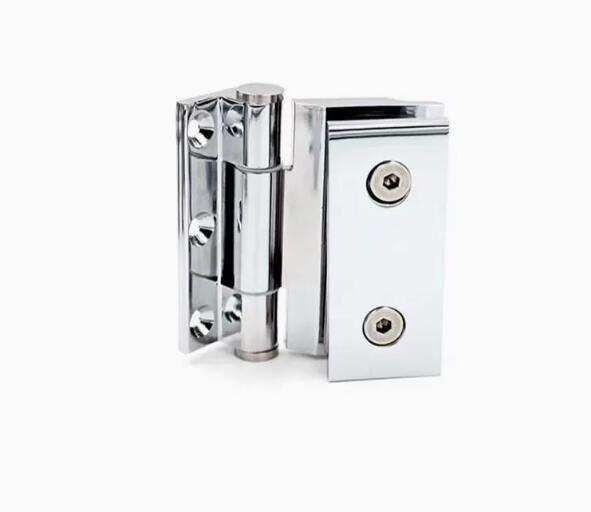
Irregular stainless steel heavy duty hinges are designed for installation environments where ordinary rectangular hinges cannot provide the required fit, load distribution, corrosion resistance, or movement control. In modern furniture, RV interiors, compact industrial equipment, specialty cabinets, access panels, and architectural door systems, the hinge is no longer just a simple rotating connector. It has become a structural component that must match complex geometry, withstand repeated opening cycles, support asymmetric loads, and remain visually compatible with the finished product.
The irregular hinge featured here is engineered for these demanding conditions. It combines a non-standard geometric profile, stainless steel strength, corrosion-resistant finishing, smooth rotation, and OEM/ODM adaptability. Unlike common hinges that force designers to change their cabinet, door, or frame structure around the hinge, this type of hinge supports more flexible product design. It can be used where space is limited, where hidden or semi-hidden installation is needed, or where the load does not transfer evenly through a conventional hinge leaf.
As a product category, irregular hinges serve a wide range of industries because they solve a very practical problem: not every door, cabinet, RV compartment, machine cover, or access panel is shaped in a standard way. A hinge for a small furniture cabinet may need a different offset from a hinge used on a stainless equipment enclosure. A hinge for an RV door may require durability under vibration and changing weather conditions. A hinge for industrial equipment may need compact mounting points and reliable operation after thousands of cycles. This product is built to respond to those real-world challenges.
Developed with attention to stamping, forming, finishing, assembly, and quality control, the hinge reflects the manufacturing strengths of Lizhan Hardware Co., Ltd., a supplier with experience in hardware components, fasteners, packaging-related hardware, home tools, and stamping parts. The company’s production background supports the precise processing required for a hinge that must be both strong and accurate. Stainless steel material selection, non-standard shape control, surface treatment, and dimensional consistency all play a role in creating a hinge suitable for OEM projects and customized applications.
Product Overview: A Hinge Built for Non-Standard Engineering Needs
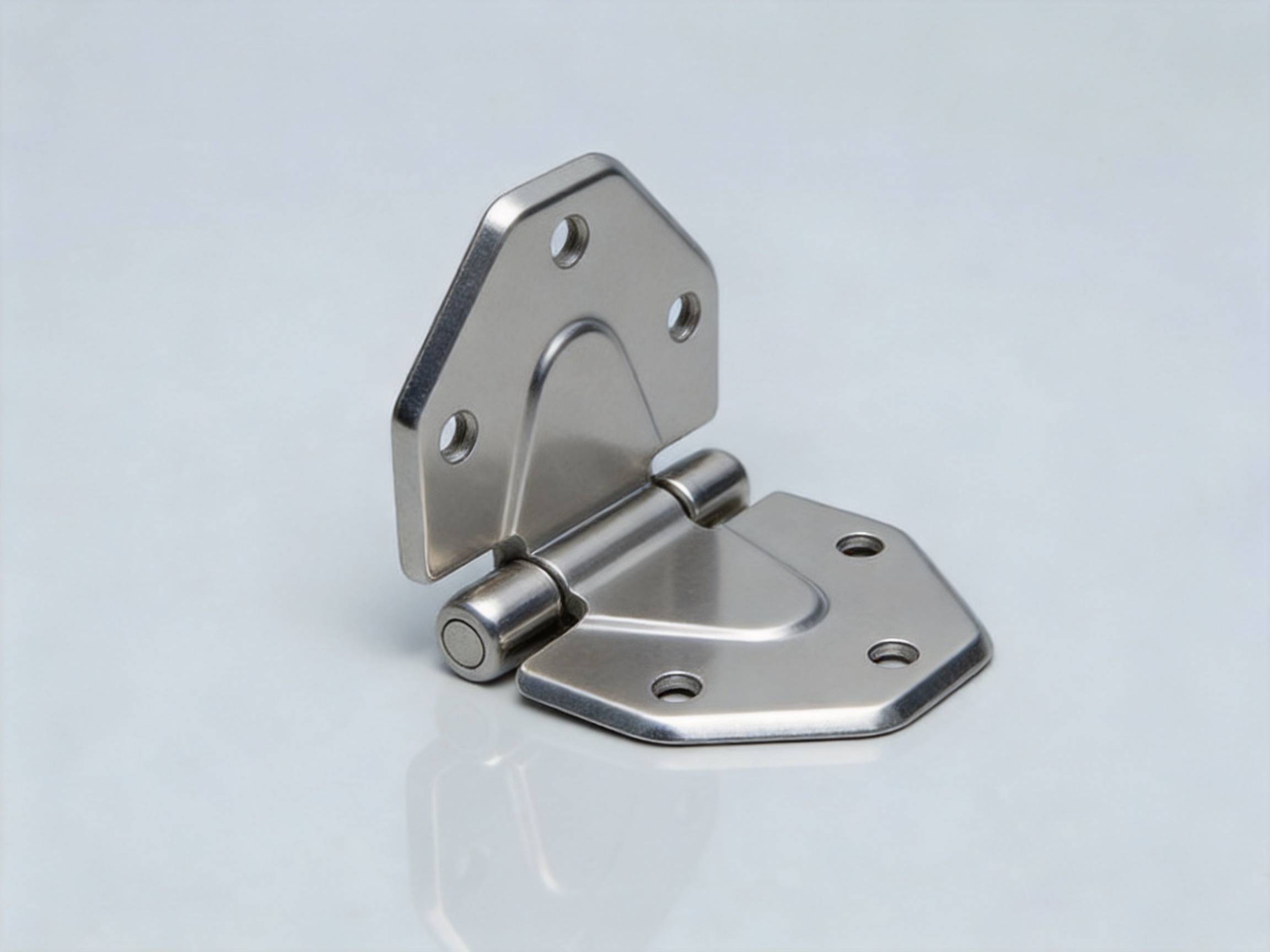
The product is an irregular stainless steel heavy duty hinge suitable for RV cabinet doors, industrial cabinet doors, furniture systems, specialty access panels, and other equipment that requires a reliable pivoting connection. Its irregular profile is the central feature. Rather than relying on a simple straight rectangular leaf, the hinge can adapt to special mounting structures, asymmetric frames, hidden mounting arrangements, or designs where traditional hinges may interfere with the surrounding assembly.
The hinge is manufactured from high-grade stainless steel, giving it strong resistance to rust, moisture, and environmental wear. Stainless steel is widely used in hardware because it provides an advantageous balance between strength, corrosion resistance, formability, and finish quality. For applications such as RV interiors, outdoor cabinets, food service fixtures, marine-adjacent environments, and industrial enclosures, this resistance can significantly increase service life compared with ordinary carbon steel hinges that depend entirely on coating protection.
The hinge design supports smooth operation and can be paired with precision bearing or self-lubricating mechanisms depending on the application requirement. Smooth motion is not merely a comfort feature. In repeated-use systems, stable movement reduces stress concentration, limits wear between moving parts, protects screws and mounting points, and helps maintain alignment over time. For an RV cabinet door, that means less rattling and more stable operation during travel. For industrial access equipment, that means safer and more predictable opening and closing.
The hinge is also suitable for brushed and electroplated finishes. These finishes provide both visual and functional value. Brushed stainless steel has a clean technical appearance and can hide minor handling marks better than mirror polishing in many practical settings. Electroplated finishes may be selected when additional surface appearance requirements or compatibility with surrounding hardware are necessary. This makes the hinge suitable for both visible design applications and practical industrial installations.
A key advantage is the availability of OEM and ODM support. Many buyers do not need only a hinge; they need a hinge that fits their project. This may involve changes in hole position, leaf shape, thickness, surface finish, opening angle, installation method, or packaging requirements. By supporting customized production, Lizhan Hardware Co., Ltd. enables equipment manufacturers, furniture makers, RV component suppliers, and hardware distributors to integrate the hinge into their own product lines more efficiently.
Why Irregular Hinge Geometry Matters
In many hardware applications, the hinge shape determines whether a design is easy to assemble, stable in use, and visually acceptable. A standard hinge is typically symmetrical and rectangular. This works well for many flat doors and frames, but it becomes restrictive when the application includes unusual clearances, curved edges, offset mounting surfaces, decorative overlays, hidden panels, recessed doors, or compact equipment housings.
An irregular hinge solves these problems through customized geometry. The hinge leaf can be shaped to avoid interference with other components. Mounting holes can be positioned where structural support is strongest. The load path can be distributed over a wider or more strategically located area. The hinge can support asymmetric load distribution, which is important when a door or panel is heavier on one side, contains accessories, or opens from a frame that is not evenly supported.
In furniture, irregular geometry allows designers to create cleaner external lines and more concealed mounting systems. Modern cabinets often prioritize minimalism, smooth exterior surfaces, and compact construction. A standard hinge may be too visible, too bulky, or unable to fit the interior frame. An irregular hinge can be adapted to the structure rather than forcing the structure to change.
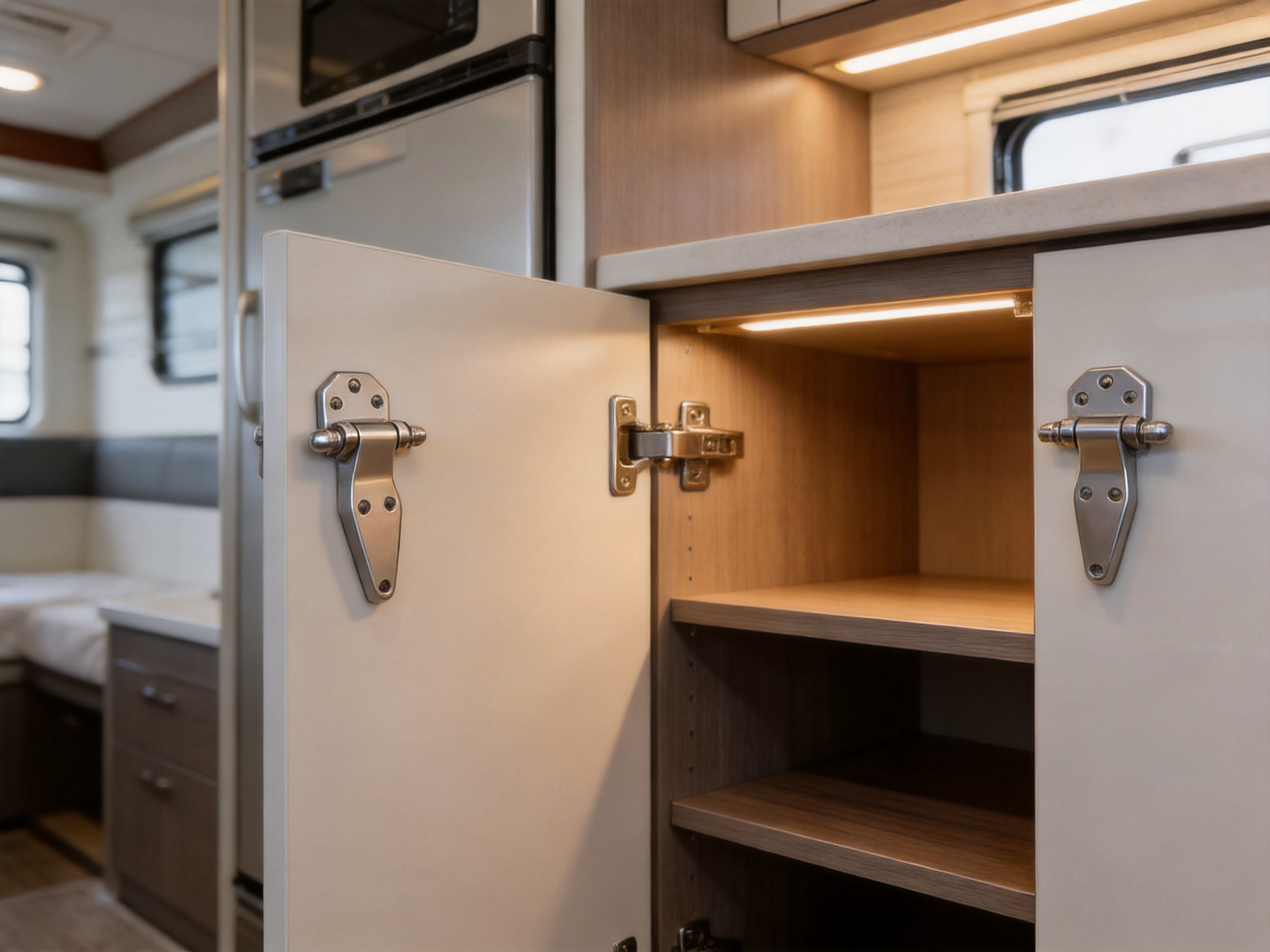
In RV applications, space is extremely valuable. Cabinet doors, storage compartments, and service panels must operate reliably despite vibration, frequent motion, and limited installation depth. Irregular hinge shapes can help avoid interference with internal panels, seals, trims, or other hardware. Stainless steel construction further improves reliability when the RV is exposed to humidity, changing temperatures, or outdoor environments.
In industrial equipment, irregular hinges are often used because the equipment housing is designed around function, not around hinge convenience. Control panels, protective covers, access doors, and maintenance lids may have unusual dimensions or restricted mounting areas. A compact irregular hinge can provide strong rotation while preserving valuable machine space. This is especially important in equipment where every millimeter is allocated to structural, electrical, or mechanical components.
Compared with competitors that offer only standard hinge catalog items, an irregular hinge solution provides broader engineering flexibility. It can reduce the need for extra brackets, spacer plates, frame modifications, and secondary machining. By fitting the application more directly, it may lower total assembly cost even if the hinge itself is more specialized than a basic commodity hinge.
Material Advantages of Stainless Steel Construction
Stainless steel is one of the most important reasons this hinge performs well in demanding environments. In a hinge, the material must resist bending, wear, corrosion, and fatigue. It must also remain dimensionally stable after forming and finishing. Stainless steel offers these benefits better than many low-cost alternatives.
Carbon steel hinges may be economical, but they often rely heavily on paint, zinc plating, or other coatings to resist corrosion. If the coating is scratched or worn at the pivot point, corrosion can develop quickly. Aluminum hinges are lightweight and corrosion resistant, but may not provide the same strength or wear resistance for heavy-duty industrial or high-cycle applications. Plastic hinges are useful in lightweight systems, but are not suitable for many heavy-duty doors, RV cabinets, or equipment panels.
Stainless steel provides a stronger long-term foundation. Its corrosion resistance comes from the material itself, not only from a surface layer. This is especially valuable around hinge barrels, holes, edges, and formed areas where coatings can be thinner or more easily damaged. When stainless steel is properly processed and finished, it can continue to perform in humid indoor environments, semi-outdoor locations, and applications exposed to cleaning, handling, or temperature variation.
For cabinet and furniture applications, stainless steel also delivers a premium appearance. Customers increasingly expect hardware to support both function and design. A brushed stainless hinge can match appliances, architectural hardware, metal frames, and modern interior accessories. For industrial applications, the clean appearance supports professional equipment presentation and easier maintenance inspection.
Another material benefit is strength-to-thickness performance. A stainless steel hinge can often provide strong load support without becoming excessively bulky. This is important for RV cabinets and compact machinery where space and weight must be controlled. The hinge can be formed or stamped into special profiles while maintaining the mechanical integrity required for repeated rotation.
Lizhan Hardware Co., Ltd. applies its metal hardware and stamping experience to material selection and processing. For irregular hinges, material consistency is essential. Uneven sheet thickness, poor forming response, or inconsistent hardness can lead to misalignment, rough rotation, or reduced load capacity. Careful material control helps ensure that each hinge meets the required shape and performance standard.
Heavy Duty Performance for Cabinets, RVs, and Industrial Equipment
The term heavy duty should mean more than simply making a hinge thicker. A true heavy duty hinge must combine material strength, precise geometry, stable pivoting, secure mounting, and resistance to wear. The irregular stainless steel hinge is designed to deliver these qualities in applications where ordinary hinges may loosen, deform, corrode, or create installation difficulties.
For cabinet doors, heavy duty performance is important when doors are large, frequently opened, or fitted with additional features such as glass, insulation, latches, decorative panels, or storage attachments. A weak hinge may sag over time, causing misalignment between the door and frame. This can lead to poor closing, uneven gaps, noise, or damage to the cabinet body. A properly engineered stainless hinge helps maintain door position and operating feel.
For RV cabinets, the hinge must handle both normal use and dynamic movement during travel. Vibrations and road shocks can amplify small weaknesses in hardware. Screws may loosen, hinge leaves may flex, and doors may rattle. A strong hinge with accurate mounting geometry helps reduce these risks. Stainless steel further protects the hinge from moisture that can occur in mobile living environments, kitchens, bathrooms, and storage compartments.
For industrial equipment, the hinge may support access panels that are opened for inspection, cleaning, adjustment, or maintenance. These panels may be heavier than furniture doors and may be exposed to dust, oil mist, temperature changes, or frequent use by technicians. A heavy duty stainless hinge provides a practical combination of strength and maintainability. Smooth rotation can also improve workplace safety because panels open predictably and do not bind unexpectedly.
Competitor products in the low-cost hinge market often focus on simple mass production. They may be acceptable for light-duty doors but can fail to meet the requirements of specialized installations. Common problems include inconsistent hole positions, rough pivoting, thin material, weak plating, visible burrs, poor edge finishing, and limited customization. In contrast, a well-manufactured irregular stainless steel hinge is designed to reduce those risks by focusing on process control and application-specific fit.
Manufacturing Strength: From Design Review to Finished Hinge
The quality of an irregular hinge depends heavily on manufacturing process capability. Because the shape is non-standard, production requires more careful control than a simple commodity hinge. The process may include design review, material preparation, stamping or cutting, forming, barrel or knuckle shaping, hole punching, deburring, surface treatment, assembly, inspection, and packaging.
Lizhan Hardware Co., Ltd. has a manufacturing background in hardware and stamping parts, supporting the technical requirements of such products. Stamping expertise is especially important because irregular hinge leaves must maintain accurate dimensions while being cut and formed. Poor die control or unstable forming can create small dimensional errors that affect installation and rotation. For OEM projects, repeatability is just as important as the initial sample.
In the early design stage, CAD files can be used to confirm installation dimensions, hole positions, bend lines, open angle, clearance requirements, and load expectations. This helps customers integrate the hinge into their cabinet, door, or equipment model before mass production begins. Design-for-manufacturing review can also identify whether a shape should be adjusted to improve forming stability, reduce waste, increase strength, or simplify assembly.
Material preparation includes selecting stainless steel that matches the required strength, corrosion resistance, surface appearance, and forming behavior. Sheet or strip material must be clean, consistent, and suitable for precise stamping. If the hinge requires a heavier gauge, the tooling and press parameters must be matched to the material thickness to prevent distortion or cracking.
Stamping or cutting creates the irregular leaf profile and mounting holes. For this product category, hole accuracy is critical. A hinge may appear acceptable visually, but if the hole locations are slightly off, installation can become difficult or alignment may be affected. Consistent hole punching helps customers maintain efficient assembly on their own production lines.
Forming creates bends, offsets, and structural features. In irregular hinges, these formed features may be necessary to achieve clearance, hidden mounting, or proper door movement. The forming process must avoid warping the hinge leaf. Tooling must control springback, which is the tendency of metal to partially return toward its original shape after bending. Skilled process adjustment helps ensure that the final hinge matches the intended geometry.
Deburring and edge finishing are particularly important for hinges used in furniture, RV interiors, and hand-accessible equipment. Sharp edges are unacceptable because they can scratch surfaces, injure users, damage packaging, or interfere with finishing. A clean edge also improves the appearance of the hinge and reflects manufacturing discipline.
Surface treatment may include brushing, polishing, electroplating, or protective finishing depending on the product specification. Surface treatment must be compatible with hinge movement. A beautiful finish is not enough if it increases friction, flakes at the pivot area, or hides defects. Proper finishing supports both corrosion resistance and product presentation.
Assembly and inspection complete the process. The hinge pin, bearing, self-lubricating element, or rotating joint must be assembled to provide smooth and stable movement. Inspectors may check opening angle, rotational resistance, hole position, surface condition, burr control, and packaging quality. For OEM/ODM orders, inspection can also include customer-specific requirements.
Precision Stamping and Forming as a Competitive Advantage
Precision stamping is one of the key advantages behind reliable irregular hinge production. A non-standard hinge cannot depend on rough manual shaping if it is intended for repeatable industrial use. The stamping process must create consistent profiles, accurate holes, and clean edges at scale.
In many competitor products, the weakness is not the concept of the hinge but the execution. A hinge may be advertised as heavy duty, but if the holes are inconsistent, the leaf surfaces are warped, or the pivot line is not straight, the final installation will suffer. Precision stamping reduces these problems by controlling the part shape from the beginning.
For irregular hinge designs, die development and process planning are important. The tooling must account for material flow, punching order, part orientation, and burr direction. If a part has complex contours, narrow sections, or offset areas, the process must prevent distortion during punching and forming. Advanced manufacturing knowledge helps reduce scrap, improve dimensional accuracy, and stabilize mass production.
Forming operations must be carefully sequenced. A bend made too early may interfere with later punching. A hole punched after forming may require special fixtures to maintain position. A stamped part with an irregular outline may require customized support during bending to avoid uneven pressure. These manufacturing considerations are essential for producing a hinge that not only looks correct but also installs correctly.
Lizhan Hardware Co., Ltd. can support customers who require customized non-standard shapes. This is important because many buyers cannot use off-the-shelf hinges without redesigning their products. The ability to adjust shape, hole layout, thickness, finish, and packaging provides a major advantage over suppliers limited to catalog-only hardware.
Precision production also helps control total customer cost. Although customized hardware may seem more specialized, a hinge that fits properly can reduce assembly time, eliminate secondary drilling, reduce field complaints, and improve the perceived quality of the final product. In industries such as RV manufacturing and industrial equipment, those savings can be more valuable than choosing the cheapest possible hinge.
Rotation, Smooth Movement, and Long-Term Reliability
A hinge is judged every time it opens and closes. Users may not notice the engineering behind it, but they immediately notice rough movement, squeaking, looseness, or misalignment. For this reason, smooth rotation is a core performance requirement of the irregular stainless steel heavy duty hinge.
The product content notes 180-degree rotation capacity and a self-lubricating mechanism. A wide rotation range increases application flexibility. In some cabinet or equipment designs, the door must open fully to provide access. In others, the hinge must allow the panel to move out of the way without putting stress on the frame. A 180-degree capable hinge can support these requirements when correctly installed.
Self-lubricating movement helps reduce maintenance requirements. In many applications, especially furniture and RV cabinets, users do not want to regularly oil hinges. In industrial settings, lubrication may attract dust or contamination if not properly managed. A self-lubricating design can maintain smoother motion while reducing the need for frequent service.
Precision ball bearings or bearing-assisted structures may be used where higher smoothness and load support are required. Bearings reduce friction between moving parts, distribute load more evenly, and support quieter operation. For heavy or frequently used doors, this can be a meaningful advantage over simple pin-only hinges that may wear faster or become noisy.
Long-term reliability also depends on preventing looseness. If the pivot area wears quickly, the door may sag or rattle. If the hinge leaves flex too much, screws may loosen or the frame may be damaged. A strong stainless steel structure, accurate assembly, and controlled rotation mechanism all contribute to maintaining alignment over repeated use.
Compared with ordinary hinges, the irregular stainless steel heavy duty hinge offers a stronger combination of design adaptability and movement quality. Many low-cost hinges focus on only opening and closing. This product is designed to fit unusual structures while still providing stable, quiet, and durable movement.
Weatherproof and Corrosion-Resistant Finishing
Weatherproof performance is important for hinges used in outdoor cabinets, RV compartments, industrial facilities, semi-exposed architectural features, and humid indoor environments. Moisture, temperature variation, and airborne contaminants can shorten the life of ordinary hinges. Once corrosion begins, movement becomes rough, appearance declines, and structural strength may gradually weaken.
The irregular hinge uses stainless steel and can be supplied with suitable surface finishes. Stainless steel offers inherent corrosion resistance, while surface finishing improves appearance and may add additional protection depending on the specification. Brushed and electroplated finishes give buyers options for both functional and decorative requirements.
For RV applications, weather resistance is especially valuable. RVs may travel through rain, coastal air, dust, heat, and cold. Hardware inside and outside the vehicle can experience condensation and vibration. Stainless steel hinges help maintain reliable use in these changing conditions. They also support a cleaner appearance in visible cabinet and compartment areas.
For industrial equipment, corrosion resistance reduces downtime and maintenance cost. Hinges on machine covers, electrical cabinets, tool enclosures, and inspection panels must remain functional even after exposure to workplace contaminants. A hinge that corrodes or binds can delay maintenance and create safety concerns. Stainless steel construction helps protect against these risks.
For furniture and architectural interiors, corrosion resistance contributes to lasting appearance. In kitchens, bathrooms, laboratories, and commercial spaces, hinges may be exposed to humidity and cleaning agents. Stainless steel provides a more durable solution than finishes that depend only on thin decorative coatings.
Snap-Fit and Tool-Friendly Installation Concepts
The product description mentions patent-pending snap-fit technology for tool-free installation. In modern manufacturing and assembly, installation efficiency is a major competitive factor. A hinge that is easier to install can reduce production time, improve consistency, and lower labor cost.
Tool-free or tool-reduced installation is especially useful in modular furniture, RV interiors, display systems, and equipment panels that require fast assembly or replacement. A snap-fit design can help position the hinge quickly before final fastening, or it may reduce the number of assembly steps depending on the project structure. Even when screws are still used for load-bearing security, a snap-fit positioning feature can improve alignment and reduce errors.
In competitor products, installation often depends entirely on manual alignment. Workers must hold the hinge, position the door, insert screws, and correct misalignment. This can be slow and inconsistent, especially when the hinge shape is unusual. A well-designed snap-fit or positioning feature helps the hinge locate correctly, improving repeatability.
For OEM projects, installation method can be customized according to the customer’s assembly line. Some customers may need pre-punched screw holes. Others may require clips, tabs, locating bosses, or special offsets. The ability to discuss and adjust the installation concept is a significant advantage of working with a manufacturer capable of custom hardware development.
Application Scenarios and Design Value
The irregular stainless steel heavy duty hinge is suitable for diverse applications because it addresses multiple design problems at once: strength, corrosion resistance, smooth rotation, non-standard geometry, and customization. The following table summarizes common application areas and the hinge value in each situation.
| Application Area | Common Challenge | Hinge Advantage | Customer Benefit |
|---|---|---|---|
| Modern furniture cabinets | Hidden or compact mounting, clean appearance, limited internal space | Irregular shape, brushed finish, accurate hole placement | Better design freedom and improved user experience |
| RV cabinet doors and compartments | Vibration, humidity, space limitation, frequent opening | Stainless steel strength, corrosion resistance, stable rotation | Reduced rattling, longer service life, dependable operation |
| Industrial equipment panels | Heavy panels, restricted installation zones, maintenance access | Heavy duty structure, 180-degree rotation, customized geometry | Safer access and better fit in compact machinery |
| Architectural specialty doors | Asymmetric loads, unusual frames, visible hardware requirements | Non-standard hinge profile, finish options, load distribution support | Functional hardware that supports design intent |
| Storage and service enclosures | Moisture exposure, repeated use, need for secure mounting | Weatherproof surface, stainless steel base material, precise forming | Lower maintenance and improved reliability |
In modern furniture, the hinge can be used where designers want the door movement to feel smooth without exposing bulky hardware. A non-standard hinge can be shaped around internal panels or decorative structures. This supports the trend toward customized furniture and integrated storage systems.
In RV manufacturing, every hardware component must contribute to durability and efficient use of space. The hinge can support compact cabinet systems while resisting vibration and moisture. Because RV owners frequently open and close storage areas during travel, reliable movement and secure mounting are essential.
In industrial equipment, the hinge can be specified for covers, service panels, electrical compartments, machine guards, and inspection doors. The irregular shape allows the hinge to fit around obstructions or align with structural members. The 180-degree rotation capacity can improve access during maintenance.
In architectural and specialty door systems, irregular hinges help solve installation problems where conventional butt hinges do not match the frame or door design. Stainless steel appearance also supports professional interior and exterior applications.
Advantages Over Conventional and Competitor Hinges
The competitive advantage of this hinge comes from the combination of customization, stainless steel strength, irregular geometry, smooth operation, and manufacturing control. Many hinges on the market offer only one or two of these benefits. A standard stainless hinge may resist corrosion but not fit an unusual frame. A custom-shaped hinge may fit the frame but lack smooth rotation or surface quality. A low-cost hinge may be easy to purchase but may not support long-term reliability.
First, the irregular hinge offers superior adaptability. It is designed for niche applications where ordinary hinges create compromise. Instead of adding brackets, drilling new holes, or redesigning the door frame, the customer can use a hinge developed around the actual installation requirement.
Second, the stainless steel material provides stronger corrosion resistance than many carbon steel alternatives. This improves value in humid, outdoor, RV, and industrial environments. A hinge that stays clean and functional over time protects the reputation of the final product.
Third, smooth rotation and self-lubricating concepts improve user experience. Noise, friction, and binding are common complaints with poor-quality hinges. A hinge designed for silent and stable movement feels more premium and reduces maintenance concerns.
Fourth, the product supports OEM and ODM development. This is especially valuable for manufacturers who need a hinge that matches their product line rather than a generic catalog part. Flexible customization can include shape, thickness, hole pattern, finish, packaging, and functional details.
Fifth, manufacturing process strength helps ensure repeatability. Irregular hinges are not useful if every batch varies in dimension or finish. Stamping, forming, deburring, finishing, and inspection capability support consistent production for customers who need dependable supply.
Finally, the hinge can reduce total project cost by improving assembly efficiency and reducing redesign work. The purchase price of a basic hinge is only one part of cost. If a hinge requires extra labor, causes alignment problems, corrodes quickly, or leads to warranty complaints, it becomes expensive. A better-engineered hinge provides value through performance and integration.
OEM and ODM Customization Support
Customization is one of the most important features for irregular hinges. Customers may have different requirements depending on their industry, product design, installation method, and target market. OEM and ODM support allows the hinge to be adapted rather than forcing customers to accept a fixed standard.
Possible customization elements include hinge length, leaf width, irregular outline, material thickness, hole diameter, hole position, countersunk or flat holes, bend offset, rotation angle, finish type, packaging format, and logo-neutral supply requirements. For industrial buyers, CAD file support can simplify design integration. Engineers can check clearances, open angles, and mounting interfaces before committing to tooling or production.
Flexible MOQ support is useful for customers developing new products, testing prototypes, or serving niche markets. Many specialized hinges are needed in moderate volumes rather than massive commodity quantities. A manufacturer that can support flexible order planning gives buyers more freedom to innovate.
ODM support can also include design suggestions. If a customer provides an installation problem rather than a finished hinge drawing, the manufacturer can help propose a hinge structure. This may include adjusting the mounting plate shape, strengthening the load area, changing bend direction, or selecting a more suitable finish.
For distributors, customization can create product differentiation. Instead of selling the same standard hinge as every competitor, distributors can offer specialized hinges for RV, furniture, industrial cabinet, or architectural applications. This supports stronger market positioning and customer loyalty.
For manufacturers, customization improves product integration. A hinge designed for the exact cabinet or equipment structure can speed assembly, reduce rework, and improve finished appearance. This is especially important in competitive industries where small hardware details influence customer perception.
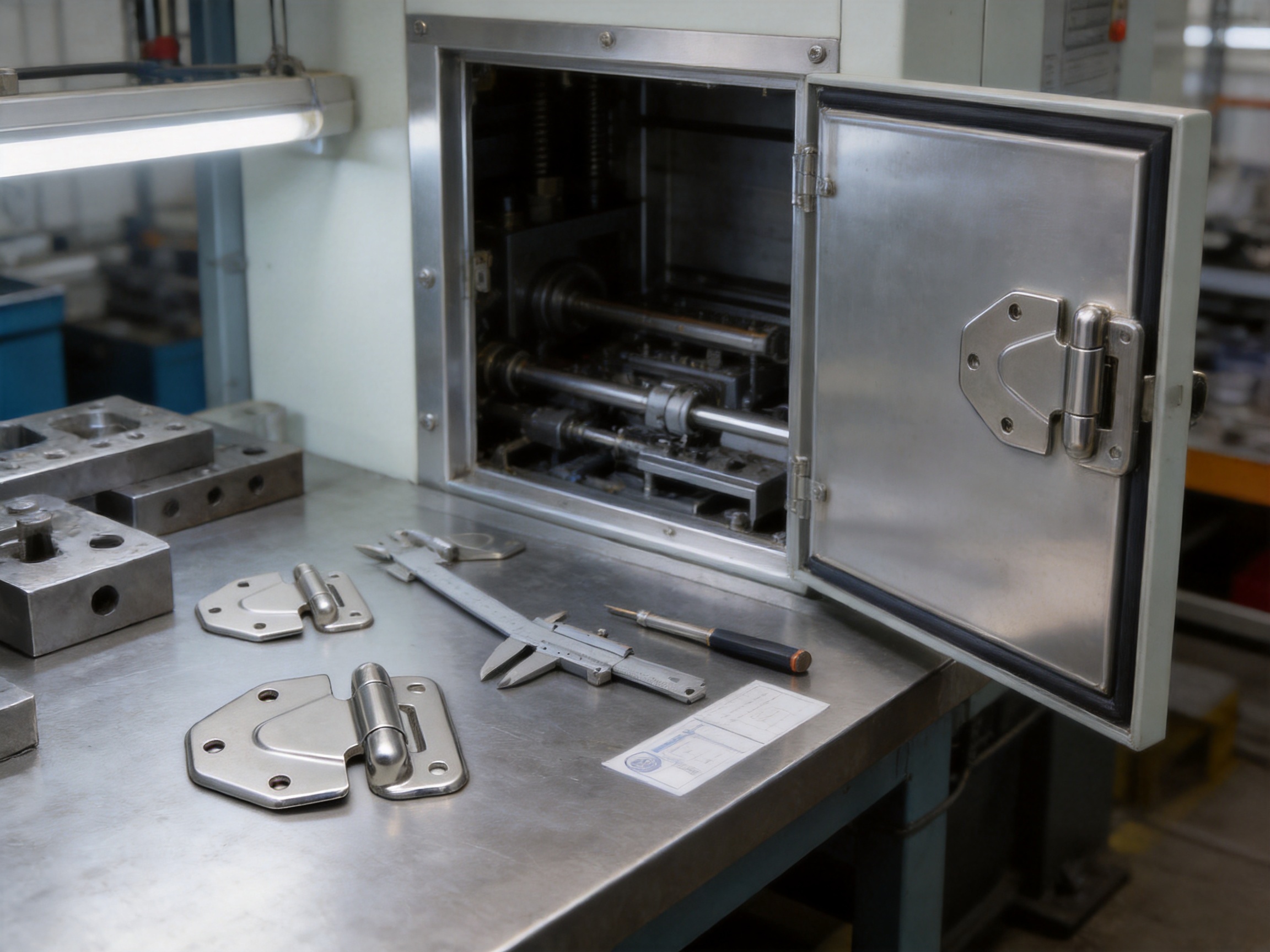
Quality Control and Inspection Priorities
A hinge may be small compared with the finished product it supports, but its quality has a large impact. If a hinge fails, the entire door, cabinet, or access panel becomes unreliable. Therefore, quality control must focus on both visible and functional details.
Dimensional inspection is the first priority. The irregular outline, hole positions, bend angles, and pivot alignment must match the drawing. Even small errors can cause installation difficulties. For OEM customers, consistency across batches is essential because their assembly fixtures and production lines depend on predictable parts.
Surface inspection is also important. Scratches, stains, plating defects, sharp burrs, and uneven brushing can reduce product value. In visible furniture or RV applications, customers judge quality by appearance as well as function. In industrial settings, clean finishing can reduce injury risk and improve professional presentation.
Movement inspection checks whether the hinge opens smoothly, reaches the intended angle, and does not bind. The hinge should not be excessively loose or excessively tight. The correct rotational feel depends on application requirements, but it must be consistent within a batch.
Material verification helps ensure that the hinge meets corrosion and strength expectations. Stainless steel grade selection, thickness, hardness, and surface condition all affect performance. Proper material control helps avoid premature failure.
Packaging inspection protects the hinge during transportation. Stainless steel surfaces can still be scratched if parts rub against one another without suitable packaging. For export customers, packaging must support long-distance shipping and warehouse handling.
Lizhan Hardware Co., Ltd. benefits from its hardware manufacturing experience by understanding these quality priorities. Hardware components must be practical, repeatable, and ready for assembly. A strong inspection process supports customer confidence and long-term cooperation.
Packaging, Warehousing, and Supply Chain Support
For hardware products, packaging is more than a final step. It protects surfaces, organizes quantities, supports customer assembly, and improves logistics efficiency. Hinges may be packed in bulk, separated by protective material, grouped with fasteners, labeled for production lines, or customized for retail or distributor needs.
Because the product belongs to a broader hardware supply environment that includes fasteners, home tools, package-related products, and stamping parts, supply chain coordination can be an advantage. Customers often need more than one component. A cabinet manufacturer may need hinges, screws, brackets, and packaging. An equipment maker may require stainless hinges together with specialty fasteners. A supplier with broad hardware experience can support more integrated purchasing.
The company has a China factory address and a Thailand warehouse location, which may help support regional supply strategies for certain customers. Manufacturing in China provides production capability, while overseas warehousing can support distribution planning and customer service in relevant markets. For international buyers, stable communication and logistics support are important parts of supplier selection.
Packaging can also be customized according to OEM requirements. Some customers need neutral cartons. Others require part numbers, batch labels, installation instructions, or barcode systems. Proper labeling reduces confusion during assembly and helps trace quality records if a problem occurs.
Good supply chain support also includes responsive communication. For customized hinges, drawings, samples, revisions, and production confirmations must be handled carefully. Clear communication reduces risk and helps the customer move from design stage to mass production more efficiently.
Design Recommendations for Buyers and Engineers
When selecting an irregular stainless steel heavy duty hinge, buyers and engineers should consider several factors. The first is load requirement. The hinge must support the weight of the door or panel, including any dynamic forces from movement, vibration, or impact. It is usually wise to include a safety margin rather than selecting a hinge only for the exact static weight.
The second factor is mounting structure. A strong hinge will not perform well if it is mounted to a weak frame or thin panel without reinforcement. Engineers should check the material and thickness of the door and frame, the screw type, and the distance between mounting holes. If the application has asymmetric loading, the hinge shape and hole placement should distribute force effectively.
The third factor is opening angle. If the door needs to open fully, the hinge must support the required rotation without interference. A 180-degree capable hinge can be valuable, but the surrounding structure must also allow that movement. CAD review helps confirm this before production.
The fourth factor is environment. For humid, outdoor, RV, marine-adjacent, kitchen, bathroom, or industrial settings, stainless steel is strongly recommended. Surface finish should also match the environment. Brushed finishes may be suitable for visible applications, while additional finishing may be chosen for specific appearance or protection needs.
The fifth factor is installation efficiency. If the hinge will be installed on a production line, hole accuracy, positioning features, snap-fit options, and packaging organization can significantly affect labor cost. A slightly more advanced hinge can save time during assembly.
The sixth factor is appearance. In furniture, RV interiors, and architectural hardware, hinge appearance affects the perceived quality of the final product. Finish consistency and edge quality should be included in the specification.
The seventh factor is supplier capability. Irregular hinges require customization and process control. Buyers should work with a supplier that can discuss drawings, provide CAD support, manage samples, control mass production, and inspect finished parts.
How the Hinge Supports Product Innovation
Hardware innovation often happens quietly. A hinge may not be the most visible part of a product, but it can determine whether a new design is possible. When designers are limited to standard hinges, they may avoid certain shapes, hidden structures, or compact layouts. Irregular hinges remove some of those restrictions.
In furniture innovation, a custom hinge can allow thinner frames, special opening directions, concealed compartments, and more refined visual lines. This supports modern design trends in residential, commercial, and hospitality furniture.
In RV innovation, custom hinges can help maximize storage and improve usability in small spaces. The ability to design around limited clearance is extremely valuable. Strong stainless steel hardware also supports the durability expectations of mobile living products.
In industrial innovation, irregular hinges can help engineers build more compact machines and easier service access. Maintenance panels can be placed where they are needed rather than only where a standard hinge can fit. This improves equipment usability and can reduce maintenance time.
In architectural innovation, unusual door and panel designs may require hardware that does not disrupt the visual concept. Stainless steel irregular hinges can combine strength with a clean appearance, making them suitable for specialty installations.
By supporting CAD integration, OEM/ODM customization, and flexible development, the hinge becomes part of the customer’s innovation process. It is not only a purchased component; it is an engineering solution.
Q&A Section
Q1: What makes an irregular hinge different from a standard hinge?
An irregular hinge has a non-standard shape or structure designed to fit special installation conditions. Unlike common rectangular hinges, it can adapt to offset mounting surfaces, hidden designs, asymmetric loads, compact spaces, and unusual door or frame geometry.
Q2: Why is stainless steel a good material for this heavy duty hinge?
Stainless steel provides strength, corrosion resistance, durability, and a premium appearance. It is suitable for humid, outdoor, RV, furniture, and industrial environments where ordinary carbon steel hinges may rust or require more maintenance.
Q3: Can this hinge be used for RV cabinet doors?
Yes. The hinge is well suited for RV cabinet doors and compartments because it offers compact installation potential, corrosion resistance, stable movement, and durability under vibration and frequent use.
Q4: Does the hinge support 180-degree opening?
The product design can support 180-degree rotation capacity when correctly specified and installed. Engineers should confirm surrounding clearances and mounting structure during the design stage.
Q5: What finishes are available?
Brushed and electroplated finishes are available. The best finish depends on the application environment, appearance requirement, and customer specification.
Q6: Is customization available for special projects?
Yes. OEM and ODM services are supported. Customization may include hinge shape, hole position, thickness, bend offset, finish, packaging, and installation features. CAD files can be requested for easier design integration.
Q7: How does this hinge compare with low-cost competitor hinges?
Compared with many low-cost standard hinges, this product offers better design adaptability, stronger corrosion resistance, smoother movement, more precise manufacturing, and customization support. These advantages can reduce assembly problems and improve long-term reliability.
Q8: What industries commonly use irregular stainless steel hinges?
Common industries include furniture manufacturing, RV production, industrial equipment, architectural hardware, storage enclosures, service panels, and specialty cabinet systems.
Q9: Why is precision stamping important for this product?
Precision stamping ensures consistent irregular profiles, accurate mounting holes, clean edges, and repeatable dimensions. This is essential for easy installation and stable hinge performance in mass production.
Q10: What information should buyers provide when requesting a custom hinge?
Buyers should provide drawings or CAD files if available, door weight, application environment, required opening angle, mounting hole requirements, material thickness preference, finish requirement, estimated quantity, and packaging needs.
Conclusion: A Practical Hardware Solution for Complex Installations
The irregular stainless steel heavy duty hinge is designed for customers who need more than a standard hinge. It combines customized geometry, stainless steel durability, heavy duty support, smooth rotation, corrosion resistance, and advanced manufacturing control. These qualities make it suitable for RV cabinet doors, modern furniture, industrial equipment, architectural applications, and specialty enclosures.
Its key advantage is adaptability. In many real-world projects, the hinge must fit the product, not the other way around. By supporting non-standard shapes, CAD integration, OEM/ODM development, and flexible production requirements, the hinge helps designers and manufacturers solve installation challenges without compromising strength or appearance.
The manufacturing strengths behind the product are equally important. Precision stamping, controlled forming, surface finishing, deburring, assembly inspection, and packaging all contribute to hinge quality. Lizhan Hardware Co., Ltd. brings hardware production experience and customization capability to support customers who require reliable components for competitive markets.
Compared with ordinary competitor hinges, this irregular stainless steel hinge provides a stronger total value proposition. It can improve product design, reduce installation difficulty, support harsh environments, and enhance the finished product’s quality perception. For buyers seeking a durable, customizable, and professional hinge solution, it offers a practical path from concept to finished assembly.
References
Budynas, R. G., and Nisbett, J. K. Mechanical Engineering Design. McGraw-Hill Education.
Davis, J. R. Stainless Steels. ASM International.
Kalpakjian, S., and Schmid, S. R. Manufacturing Engineering and Technology. Pearson.
Oberg, E., Jones, F. D., Horton, H. L., and Ryffel, H. H. Machinery’s Handbook. Industrial Press.
Totten, G. E. Steel Heat Treatment: Metallurgy and Technologies. CRC Press.
ASM International. Metals Handbook: Forming and Forging. ASM International.