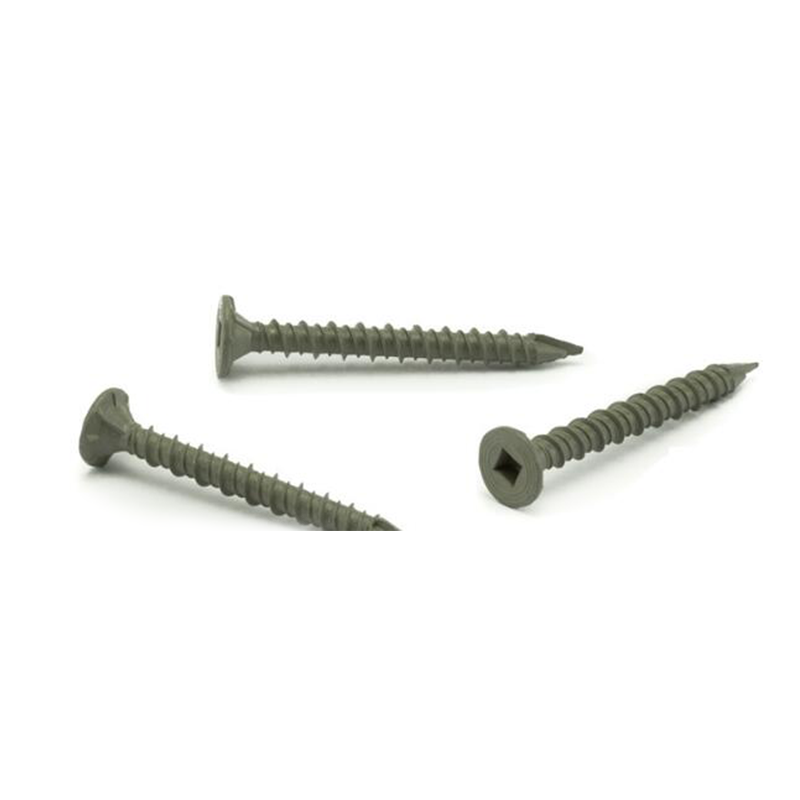
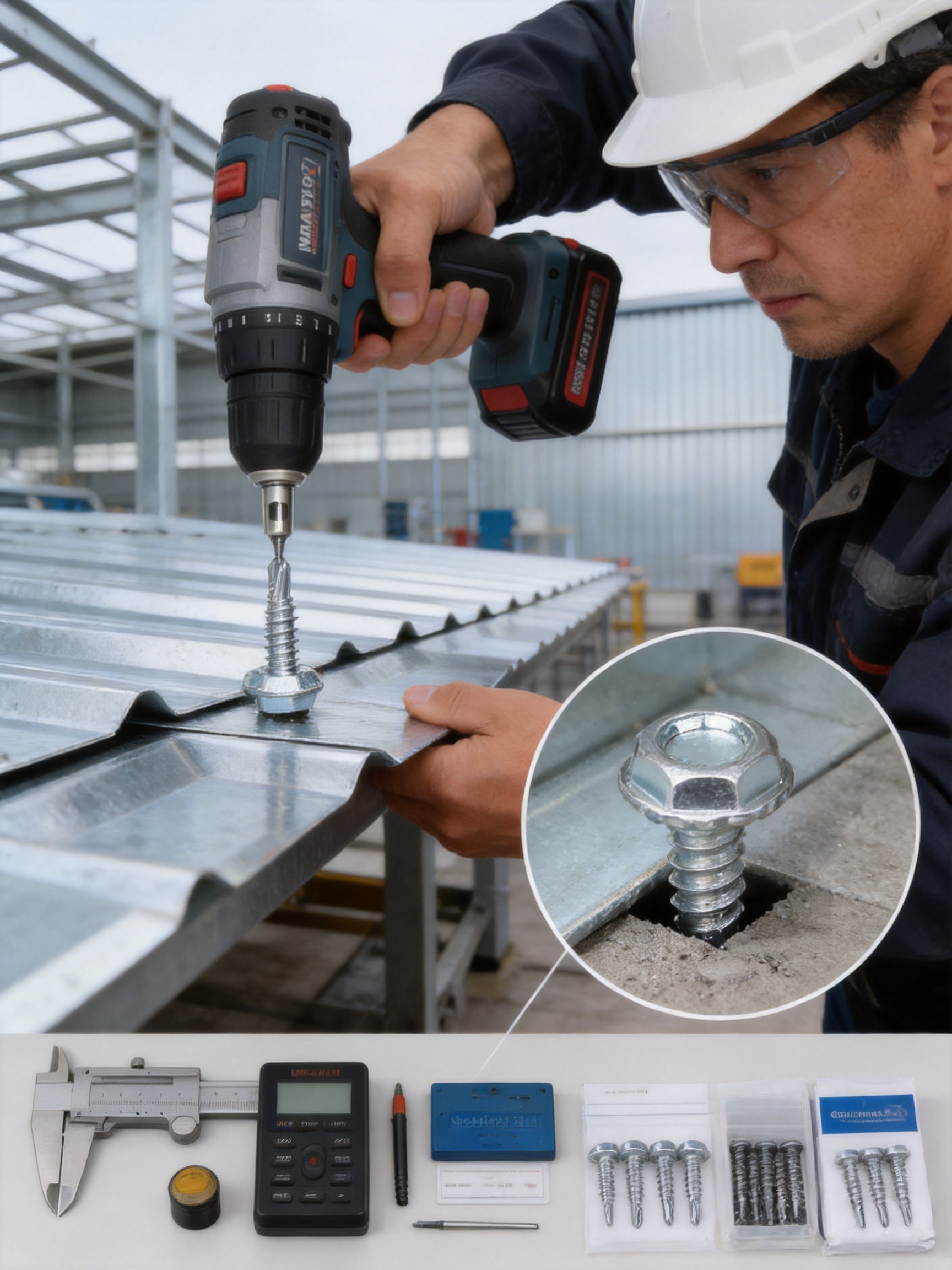
Hex washer head with serrated self-drilling screws are engineered fastening components designed to join metal sheets, profiles, panels, and other construction materials without requiring a separately drilled pilot hole. Their combination of a hexagonal drive head, integrated washer flange, serrated underside, drilling point, and corrosion-resistant zinc-plated surface makes them a practical choice for roofing, light steel construction, HVAC installation, cladding, machinery assembly, agricultural equipment, and general industrial fastening.
Unlike ordinary machine screws or standard sheet-metal screws, self-drilling screws perform several operations in one installation cycle. The drill-point tip penetrates the material, creates the initial hole, forms a suitable thread path, and allows the screw to secure the assembled components. The washer head distributes clamping pressure over a broader area, while the serrations beneath the head help resist loosening caused by vibration and movement.
This article examines the design, material, manufacturing process, performance advantages, installation requirements, quality considerations, and application range of zinc-plated hex washer head serrated self-drilling screws. It also explains how an experienced fastener manufacturer can create more consistent products through controlled wire processing, cold heading, thread rolling, point forming, heat treatment, surface finishing, inspection, packaging, and customer service.
1. Product Overview
A hex washer head with serrated self-drilling screw is a specialized drilling screw developed for applications in which two or more components must be joined efficiently to a metal substrate or thin construction material. The screw has a built-in washer-like flange under the hexagonal head. This flange increases the bearing area against the fastening surface and helps distribute the installation load.
The hexagonal head is normally driven with a socket or nut driver. Compared with a cross recess, a hex drive generally provides positive torque transmission during installation, especially when the screw is installed with a power tool. The integrated flange means that a separate washer is usually unnecessary, reducing the number of components handled by the installer.
The serrated underside of the head contains small radial or circumferential teeth. When the screw is tightened, these teeth engage with the surface coating or material beneath the head. This mechanical engagement can improve resistance to rotational movement and help maintain clamping stability under vibration. The serrations also help the screw remain seated during installation.
The drilling point is one of the defining features of the product. It is formed to cut through the target material and generate a hole suitable for the screw body. The drilling capacity depends on the point geometry, material hardness, screw diameter, tool speed, applied pressure, and thickness of the connected materials. Correct matching of point design and application is essential for reliable performance.
Zinc plating provides a basic protective barrier against atmospheric moisture and oxidation. It also creates a clean, bright metallic appearance that is widely accepted in construction and industrial environments. Depending on the required performance, other finishes such as black phosphate, yellow zinc plating, Ruspert, or Magni coating may be available for different environmental and aesthetic requirements.
2. Main Design Features
2.1 Hexagonal Washer Head
The hex washer head combines a six-sided external drive with an integrated load-bearing flange. This design supports fast installation with a compatible socket and helps reduce the possibility of cam-out compared with some recess-driven fasteners. The flange spreads the tightening force over a larger area than a narrow screw head.
A larger bearing surface is particularly useful when fastening thin sheet metal, roofing components, brackets, profiles, or panels. Without an adequate bearing area, excessive pressure may deform the surface around the hole. The washer head helps control this effect while providing a neat and stable seating position.
The head dimensions must be controlled carefully. If the head is too thin, it may deform or fail during tightening. If the flange diameter is inconsistent, the clamping load may not be distributed evenly. Accurate cold heading and die maintenance are therefore important to achieving a uniform head profile.
2.2 Serrated Underside
The serrated underside is designed to increase mechanical grip between the head and the fastening surface. The teeth can bite into painted steel, galvanized sheet, aluminum, or other suitable materials, depending on the application. This feature is particularly valuable in assemblies exposed to vibration, thermal cycling, wind movement, or equipment operation.
Serrations should be formed consistently. Uneven or incomplete teeth may reduce the anti-loosening effect and may create uneven contact pressure. Excessively sharp or irregular serrations can damage delicate coatings more than intended, so the design should be matched to the substrate and the required surface protection.
The serrated washer head may also assist with electrical continuity in selected metal assemblies by creating localized contact through certain surface coatings. However, electrical grounding requirements should always be evaluated by a qualified engineer, because coating thickness, substrate type, installation torque, and applicable regulations can affect continuity.
2.3 Self-Drilling Point
The self-drilling point removes the need for a separate drilling operation in many applications. The point geometry determines how quickly the screw penetrates the material and how effectively it clears chips from the hole. A properly formed point should begin cutting without excessive wandering and should maintain alignment as the screw enters the substrate.
Point performance depends on more than sharpness. The included angle, flute configuration, point length, material hardness, heat treatment, and relationship between the point and thread all contribute to drilling behavior. A point that is too soft may wear quickly, while a point that is excessively hard or brittle may chip under impact or misalignment.
Different standards and market practices may classify drilling points according to material thickness and application. The selected screw should therefore be tested against the actual base material rather than chosen solely by appearance or nominal diameter.
2.4 BSD and CSD Thread Options
Production ranges for drilling screws may include BSD and CSD thread configurations. The appropriate thread design depends on the substrate, material thickness, desired pull-out resistance, installation speed, and industry practice. Coarse threads are often used where rapid engagement and strong grip in relatively thin materials are required.
Thread geometry must be consistent along the working length. Poorly formed threads can increase driving torque, reduce holding strength, or cause the screw to strip the material. Rolled threads generally provide a smooth, continuous profile and can improve fatigue resistance compared with threads formed by removing material.
Thread pitch and crest shape also affect chip evacuation and material engagement. A suitable design balances fast penetration with adequate thread contact. This balance is especially important when the screw is used in thin sheet metal, where only a limited number of threads may engage the substrate.
3. Available Product Range
A broad product range allows buyers to select a screw that matches the installation tool, material, finish, and design requirement. The described production range includes several common recess and head options, while the featured product uses a hex washer head with serrations.
| Product Parameter | Available or Typical Options | Selection Consideration |
|---|---|---|
| Diameter | #6-3.5, #8-4.2, #10-4.8, #12-5.5, #14-6.3 | Choose according to load, material thickness, hole size, and required pull-out resistance. |
| Head style | Hex washer, bugle, flat, pan, wafer, pan framing | Select based on bearing area, appearance, clearance, and installation method. |
| Recess or drive | Phillips, square, Torx, external hex | Match the drive to the tool, torque requirement, and installer preference. |
| Thread type | BSD thread, CSD thread | Match thread geometry to the substrate and fastening application. |
| Material grade | C1022A carbon steel | Suitable for cold forming and heat treatment when processed under controlled conditions. |
| Surface finish | Zinc plated, yellow zinc plated, black phosphate, Ruspert, Magni | Choose according to corrosion exposure, appearance, and performance requirements. |
| Standards | ASTM, DIN 7504K, DIN 7504P, DIN 7504N | Confirm the exact dimensional and performance requirements before ordering. |
| Length | Specified according to customer requirement | Ensure sufficient penetration without excessive protrusion or interference. |
The diameter range from approximately 3.5 mm to 6.3 mm covers many common construction and industrial requirements. Smaller diameters are useful for light sheet fastening and trim work, while larger diameters provide increased cross-sectional area and higher potential load capacity for heavier assemblies.
Length should be selected based on the combined thickness of the attached materials, the required thread engagement, and the drilling capacity of the point. Excessive length can create installation interference or unwanted protrusion. Insufficient length may reduce holding strength and prevent the threads from engaging adequately.
4. Material Selection: C1022A Carbon Steel
C1022A is a commonly used carbon steel grade for self-drilling and self-tapping screws. It offers a practical combination of formability, strength, machinability, and availability. These properties make it suitable for cold heading, thread rolling, point formation, and subsequent heat treatment.
Material quality begins with incoming wire inspection. Diameter, surface condition, chemical composition, and mechanical consistency should be verified before the wire enters production. Reliable raw material helps reduce variation during heading and heat treatment and supports stable finished-product performance.
The steel must be sufficiently formable for the head and washer flange to be produced without cracks or folds. At the same time, the finished screw needs adequate hardness and strength to drill the intended substrate and resist deformation during installation. This balance is achieved through controlled forming and thermal processing.
For applications with severe corrosion exposure, carbon steel with zinc plating may not be sufficient by itself. Coastal locations, chemical processing areas, high-humidity environments, and exterior assemblies may require a higher-performance coating or a stainless-steel alternative. Product selection should always consider the actual service environment.
5. Advanced Manufacturing Process
5.1 Raw Material Preparation
Manufacturing begins with the selection and preparation of steel wire suitable for cold heading. The wire is inspected for surface defects, dimensional consistency, and conformity with the specified grade. Surface cleanliness is important because scale, oil contamination, or scratches can affect forming quality and later coating adhesion.
Wire may be processed through drawing or other preparation steps to achieve the required diameter and surface condition. Lubrication is controlled during forming to reduce friction between the wire and tooling. Correct lubrication supports longer die life and helps prevent surface damage.
5.2 Cold Heading
Cold heading forms the basic screw head by forcing a measured length of wire into precision dies at room temperature. For a hex washer head screw, the process must create the external hexagon, the integrated flange, and the underside serrations or the preform needed to produce them.
Modern multi-station cold heading equipment can complete several forming operations in sequence. The wire is cut to a controlled blank length, transferred between stations, upset to create the head volume, and shaped into the final profile. This process produces high output while maintaining repeatable dimensions when the tooling and machine settings are properly controlled.
Cold forming also preserves the continuity of the steel grain around the head. Compared with machining the entire head from bar stock, cold heading can reduce material waste and provide an efficient production route for large quantities of screws.
5.3 Serration Formation
The serrated washer feature is produced using dedicated tooling that forms teeth on the underside of the flange. The number, depth, shape, and spacing of serrations depend on the product design. Tooling must be maintained carefully because worn dies can create rounded, incomplete, or uneven teeth.
Inspection of the serrated surface may include visual examination, dimensional checks, and functional testing on representative materials. The objective is to confirm that the teeth provide effective engagement without causing unacceptable damage to the intended substrate or coating.
5.4 Thread Rolling
After heading, the blank is transferred to thread-rolling equipment. Thread rolling displaces material to form the external thread rather than cutting away the thread profile. This process can improve dimensional consistency, surface finish, and resistance to certain forms of fatigue.
Thread-rolling dies must be aligned accurately with the blank. Incorrect setup may cause double threads, incomplete crests, damaged flanks, or irregular pitch. The rolling pressure and feed rate must be adjusted to the screw diameter, steel condition, thread type, and required thread length.
A stable thread profile helps the screw enter the substrate smoothly and provides predictable torque during installation. It also supports more consistent pull-out and strip-out performance when the screw is used within its intended design range.
5.5 Point Forming
The self-drilling point is formed after or during the thread-making operation, depending on the production line and product design. The point must be concentric with the screw axis so that it begins drilling accurately. The transition from the drilling point to the threaded section must also be smooth enough to support continuous penetration.
Point length and geometry are checked against the applicable product specification. A point that is too short may fail to drill the required material thickness, while a point that is too long may reduce the effective thread engagement or create unnecessary protrusion.
5.6 Heat Treatment
Heat treatment is used to develop the hardness and mechanical properties required for drilling and fastening. The process generally includes controlled heating and cooling stages, followed by tempering or other treatment as necessary to achieve the desired balance between hardness and toughness.
Self-drilling screws require a carefully controlled hardness profile. The point must be hard enough to cut the substrate, but the screw body and head must retain sufficient toughness to resist cracking or brittle failure. Excessive hardness without adequate toughness can create reliability risks, while inadequate hardness may result in point wear or deformation.
Furnace temperature, atmosphere, residence time, quenching conditions, and tempering parameters must be monitored. Sampling and testing can include hardness measurements, dimensional checks, drilling tests, and torque-related evaluations.
5.7 Zinc Plating
Zinc plating is applied to improve resistance to oxidation and provide a uniform surface appearance. Before plating, screws undergo cleaning and preparation steps to remove oil, scale, and other contaminants. Proper pretreatment is essential for coating adhesion and consistent coverage.
The plating process may be followed by rinsing, passivation, drying, and additional handling controls. Coating thickness, color, coverage, and surface condition should be checked according to the agreed specification. Particular attention is required around the threads, point, flange, and recess or drive surfaces.
Zinc-plated screws should be packaged and stored in a dry environment. Although zinc provides sacrificial protection to the underlying steel, prolonged exposure to condensation, salt spray, or aggressive chemicals can eventually cause white corrosion products or red rust. The coating selection should therefore reflect the service conditions.
5.8 Final Inspection and Packaging
Final inspection typically covers dimensions, head profile, thread quality, point condition, surface finish, hardness, and overall appearance. Functional tests may be conducted to confirm drilling ability, installation torque, and holding performance in representative materials.
Packaging protects the product from contamination, moisture, mixing, and physical damage. Products may be packed in bulk cartons, smaller retail boxes, plastic containers, or customer-specific packaging. Labels should identify the product specification, diameter, length, quantity, finish, batch information, and applicable standard where required.
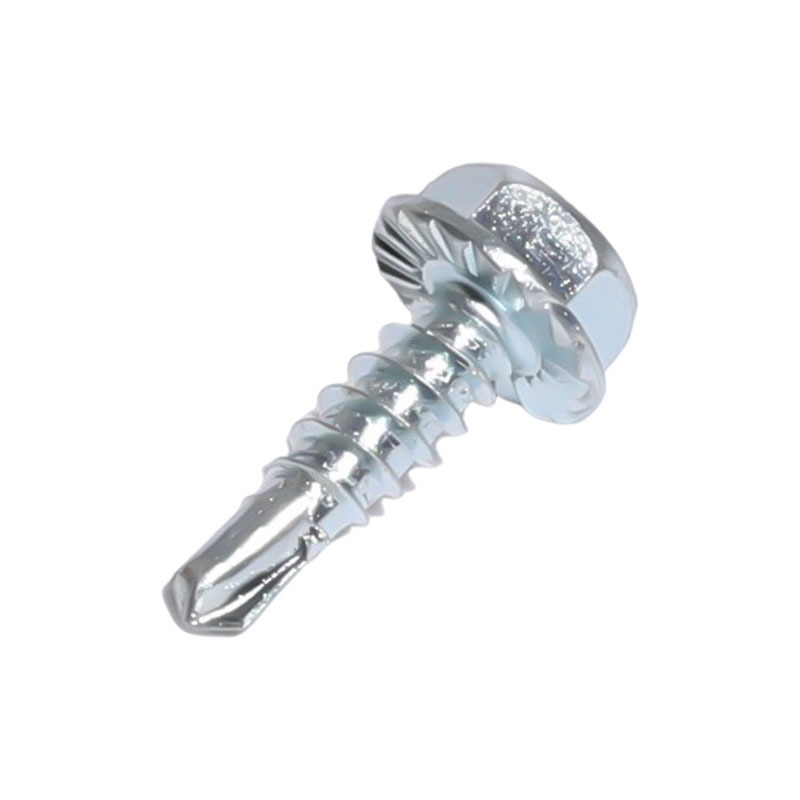
Hex washer head with serrated self drilling screw zinc plated
6. Advantages Over Conventional Fasteners
6.1 Reduced Installation Steps
The most direct advantage of a self-drilling screw is the reduction in installation steps. A conventional assembly may require marking, drilling a pilot hole, removing chips, positioning a fastener, and then tightening it. A self-drilling screw can often perform the drilling and fastening operations in one continuous process.
Fewer operations can reduce labor time and simplify workflow. This is particularly useful in repetitive construction work, factory assembly, roofing installation, and maintenance tasks where hundreds or thousands of fasteners may be installed during a project.
6.2 Integrated Washer Function
The integrated washer head eliminates the need to select, handle, and install a separate washer in many applications. This reduces the risk of missing components and can simplify automated or semi-automated fastening. The wider flange also helps distribute clamping pressure and can improve seating on sheet materials.
Using one integrated component may reduce inventory complexity. Buyers do not need to manage a separate washer specification for every screw size, provided the head design meets the requirements of the application.
6.3 Improved Torque Transfer
The external hex drive is well suited to socket-driven installation. A properly matched socket can transfer torque efficiently while keeping the tool aligned with the screw axis. This can be an advantage when working with harder substrates or when higher installation torque is required.
Compared with some recess types, an external hex head is less dependent on perfect bit engagement. Nevertheless, the socket must be correctly sized and kept in good condition. Excessive torque or an unsuitable tool can still damage the head or strip the substrate.
6.4 Vibration Resistance
The serrated underside provides a mechanical anti-rotation feature. In assemblies subject to vibration, the serrations can help maintain the position of the screw head and reduce the risk of gradual loosening. This is an advantage over a plain washer head when the application does not permit the use of a separate locking washer or chemical threadlocker.
Actual vibration performance depends on joint design, clamping force, substrate condition, torque control, and external loads. Serrations are not a substitute for correct joint engineering, but they provide an additional resistance mechanism within the fastener design.
6.5 Broad Application Range
The product can be used in numerous applications involving thin and medium-gauge metal, depending on point capacity and screw specification. Typical uses include metal roofing, flashing, wall panels, steel framing, ductwork, metal brackets, garage structures, fencing components, appliance parts, furniture fittings, and general fabrication.
The availability of multiple diameters, lengths, thread configurations, head styles, and coatings allows the same manufacturing source to support different markets. This is valuable for distributors and contractors seeking product consistency across several project types.
6.6 Manufacturing Efficiency
Cold heading and thread rolling support high-volume production with efficient material utilization. When combined with automated inspection, controlled heat treatment, and organized packaging, these processes can provide stable output and competitive total cost.
The cost advantage is not limited to the purchase price. The screw can also reduce labor, eliminate separate pilot-hole drilling in suitable materials, simplify component handling, and reduce the number of parts required for an assembly.
7. Comparison with Alternative Fasteners
| Fastener Type | Pilot Hole Usually Required | Washer Integration | Vibration Features | Typical Strengths |
|---|---|---|---|---|
| Hex washer head serrated self-drilling screw | Often not required in suitable sheet materials | Integrated flange | Serrated underside | Fast installation, broad bearing area, efficient metal fastening |
| Plain sheet-metal screw | May be required depending on material | Usually no integrated washer | Generally none | Simple fastening for light-duty applications |
| Machine screw with nut | Hole required | Separate washer may be used | Depends on locking method | Strong through-bolted joints where rear access is available |
| Pop rivet | Hole required | Not applicable | Permanent mechanical fastening | Useful where access is available from one side |
| Hex bolt assembly | Hole required | Usually separate washer | Depends on joint design | High-load structural fastening |
| Self-tapping screw | May be required | Varies by head design | Varies | Forms or cuts its own mating thread after a pilot hole |
The self-drilling screw is not a universal replacement for structural bolts, rivets, or machine screws. Its advantage is greatest when the application benefits from rapid drilling and fastening in one step, particularly when access to the rear side is limited or when installation speed is important.
8. Applications in Construction and Industry
8.1 Roofing and Cladding
Zinc-plated hex washer head drilling screws are commonly considered for fixing metal sheets, flashing, trims, and lightweight roofing components. The washer flange supports the sheet around the fastening point, while the hex drive enables efficient installation from ladders, platforms, or powered tools.
For exterior roofing, the coating and sealing arrangement must be selected carefully. A standard zinc-plated finish may be suitable for controlled or moderately protected environments, but exposed roofing in coastal or highly humid areas may require a more durable coating. Where water tightness is important, a compatible sealing washer or approved sealant system may be required.
8.2 Light Gauge Steel Framing
Light gauge steel frames often require fasteners that can penetrate thin profiles quickly while maintaining adequate thread engagement. The product may be used for brackets, tracks, channels, panels, and non-primary structural connections, subject to the design requirements of the project.
Installers should verify the combined thickness of the steel layers and select a drilling point with sufficient capacity. If the point is not appropriate for the thickness, it may overheat, fail to penetrate, or produce an oversized hole.
8.3 HVAC and Ductwork
Heating, ventilation, and air-conditioning systems frequently involve thin sheet metal, support brackets, access panels, and duct connections. A compact hex washer head can provide a secure joint while reducing installation time in confined work areas.
Where airflow contamination, corrosion, or hygiene requirements apply, the finish and material must be selected according to the environment. The fastener should not introduce incompatible metals that could encourage galvanic corrosion in damp conditions.
8.4 Metal Furniture and Equipment
Metal cabinets, storage systems, equipment housings, shelving, and workshop furniture may use drilling screws for brackets, panels, and internal fittings. The integrated washer head can provide a neat clamping surface, while the range of diameters and lengths supports different sheet thicknesses.
For visible products, head appearance and coating consistency may be important. A clean zinc finish can complement galvanized or silver-colored metal surfaces, while black phosphate or other finishes may be selected for darker assemblies.
8.5 Agricultural and General Fabrication
Farm structures, equipment guards, bins, gates, lightweight frames, and repair assemblies may require fasteners that can be installed quickly in the field. A self-drilling screw reduces the need to carry separate drill bits for every connection, although the installer still needs a suitable driver and socket.
Outdoor agricultural environments can include moisture, fertilizer residues, dust, and chemicals. In such cases, coating selection and regular inspection are important. Zinc-plated products should be used within their intended exposure range.
9. Installation Recommendations
9.1 Select the Correct Screw
Before installation, confirm the screw diameter, length, drilling capacity, thread type, head style, and surface finish. The product should be matched to the thickness and hardness of the materials being joined. A screw designed for thin sheet should not automatically be used in thick plate or hardened steel.
The screw length should provide sufficient engagement beyond the first material while avoiding unnecessary protrusion. In assemblies with multiple layers, calculate the total thickness and consider whether the point will extend into a space where it could cause interference or injury.
9.2 Use a Compatible Tool
An impact driver or drill driver fitted with the correct hex socket is commonly used. The socket should fit the head securely and should not be excessively worn. A loose socket can damage the hex corners and reduce torque transfer.
Tool speed and pressure should be adjusted to the material and screw size. Excessive speed can generate heat and wear the drilling point, while insufficient pressure may cause the point to spin against the surface without cutting effectively.
9.3 Maintain Alignment
The driver should be held perpendicular to the fastening surface whenever possible. Misalignment can cause the screw to wander, enlarge the hole, damage the head, or reduce the quality of the joint. A stable starting position is especially important on smooth or coated sheet metal.
Allow the point to establish the hole before applying excessive downward force. Once the screw begins cutting, maintain steady pressure and avoid side loading. The screw should advance smoothly through the material and then engage the threads without unnecessary interruption.
9.4 Control Tightening
The screw should be tightened until the washer head is seated firmly and the materials are clamped together. Over-tightening can strip the substrate, deform thin sheet, damage the coating, or compromise a sealing washer. Under-tightening can leave the joint loose and reduce resistance to vibration.
For repeatable production work, calibrated torque-controlled tools may be beneficial. Installation torque should be established through testing because the correct value depends on screw size, material, coating, joint thickness, and required clamping force.
9.5 Inspect the Finished Joint
After installation, check that the head is seated evenly, the material is not excessively deformed, and the screw has not been driven at an angle. Inspect for damaged coatings, stripped threads, incomplete penetration, or excessive protrusion.
In exterior applications, inspect the area around the hole for signs of coating damage or water entry. Where sealing is necessary, confirm that the sealing washer or sealant is compressed correctly without being crushed or displaced.
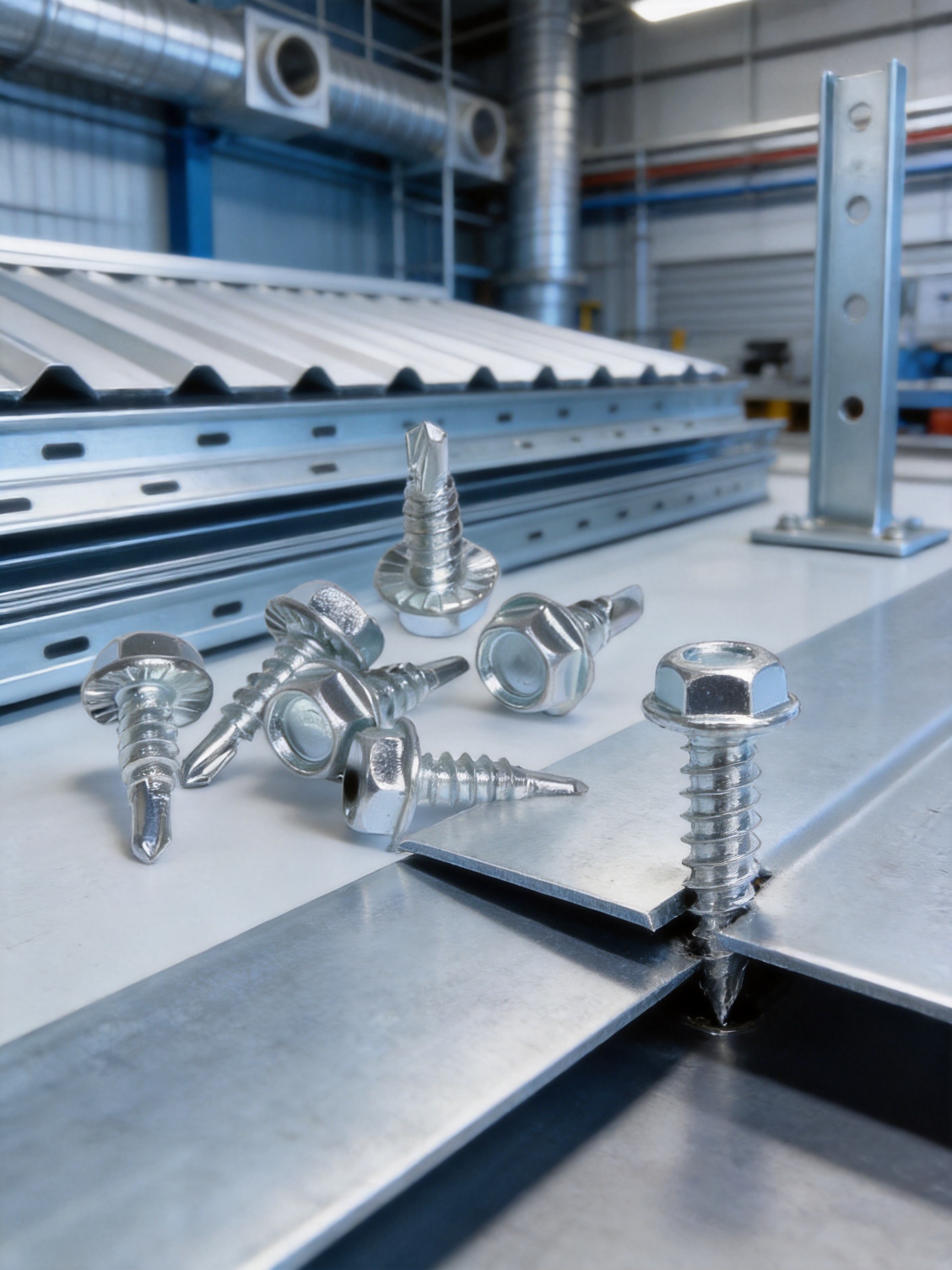
10. Quality Assurance and Testing
Reliable fastener performance depends on more than visual appearance. A professional production system should combine process control with finished-product testing. Quality assurance begins with approved raw materials and continues through forming, rolling, heat treatment, plating, inspection, and packaging.
10.1 Dimensional Inspection
Critical dimensions may include overall length, body diameter, head width, head height, flange diameter, thread length, pitch, point geometry, and drive size. Gauges, optical systems, calipers, micrometers, and thread inspection tools can be used according to the production requirement.
Dimensional consistency is important because even small variations can affect socket engagement, washer seating, installation torque, or material penetration. Sampling plans should be defined according to order size, product criticality, and customer requirements.
10.2 Hardness and Mechanical Testing
Hardness testing helps confirm that heat treatment has achieved the required material condition. A drilling screw must maintain the appropriate relationship between point hardness, body toughness, and head strength.
Additional tests may include torsional strength, tensile performance, head integrity, drilling ability, pull-out resistance, and strip-out resistance. Testing should be performed using representative substrate materials and installation conditions whenever possible.
10.3 Coating Inspection
Plating inspection may cover visual uniformity, coating coverage, adhesion, thickness, and corrosion resistance. Salt spray or equivalent environmental testing can provide comparative information, but laboratory results should not be interpreted as a direct prediction of every field environment.
Coating defects can occur at sharp edges, thread flanks, recesses, or points if pretreatment and process control are inadequate. Careful cleaning, controlled plating, proper rinsing, and suitable drying help reduce these risks.
10.4 Traceability
Batch identification supports investigation and consistency. Raw material records, machine settings, heat-treatment data, coating records, inspection results, and packaging information can be connected to a production batch. This approach helps manufacturers respond efficiently to technical questions and supports customer confidence.
For large projects or regulated industries, buyers may request inspection reports, material certificates, coating records, or samples for approval before mass production. A capable supplier should be prepared to discuss these requirements during the quotation and order-confirmation stages.
11. Manufacturing Strengths of an Experienced Supplier
A supplier with production capabilities covering multiple screw types can provide more than a single catalog item. The described product range includes drilling screws with several diameters, head forms, recess styles, thread types, finishes, and recognized standards. This breadth can simplify sourcing for distributors and project buyers.
One significant strength is the ability to coordinate the entire production sequence. When heading, thread rolling, point forming, heat treatment, plating, inspection, and packaging are managed through an organized system, process feedback can move more quickly between departments. This can help reduce variation and improve response to customer requirements.
Another advantage is the ability to support different market specifications. Products can be developed or selected around ASTM requirements, DIN 7504K, DIN 7504P, or DIN 7504N practices, provided the exact dimensions and performance criteria are confirmed. Standards should never be treated as interchangeable without checking the detailed specification.
Product flexibility is also important. A buyer may require a particular head style for one project, a different surface finish for another, and a special length or package quantity for a third. A manufacturer able to handle varied configurations can reduce the need to coordinate several separate suppliers.
Manufacturing location and logistics can influence supply reliability. The company information provided identifies a factory in Haiyan, Jiaxing, Zhejiang, China, and a warehouse location in Chonburi, Thailand. A factory-and-warehouse arrangement may support production coordination and regional distribution, subject to stock availability, logistics planning, and the agreed delivery terms.
Technical communication is another important strength. Buyers should be able to discuss substrate thickness, drilling capacity, head dimensions, coating requirements, packaging, testing, and standards with a knowledgeable sales or engineering contact. Clear communication before production can prevent mismatched fasteners and costly installation problems.
12. Customization and Purchasing Considerations
When requesting a quotation, buyers should provide the complete product specification rather than only a general description. The request should identify diameter, length, head style, drive type, thread configuration, point type, material grade, surface finish, packaging, quantity, and applicable standard.
Application details are equally important. The supplier should know the base material, total material thickness, environmental exposure, installation tool, expected production volume, and whether the fastener will be visible or concealed. These details help determine whether zinc plating is adequate and whether the drilling point is suitable.
Samples are recommended for new applications. A sample trial can confirm drilling speed, socket compatibility, head seating, torque behavior, coating appearance, and joint holding performance. Testing the actual materials is more informative than relying only on catalog dimensions.
Packaging can be customized for wholesale, industrial, retail, or project use. Bulk packaging may reduce cost for automated production, while smaller labeled packages may be more convenient for distributors and contractors. Packaging should protect against moisture and prevent mixing of similar sizes.
Buyers should also establish acceptance criteria before mass production. These may include allowable dimensional tolerances, coating requirements, defect limits, inspection frequency, documentation, and replacement procedures. A clear quality agreement benefits both the customer and the manufacturer.
13. Storage and Corrosion Protection
Zinc-plated screws should be stored in a clean, dry, and well-ventilated location. Avoid direct contact with water, condensation, chemicals, salt, and treated wood residues. Cartons should not be placed directly on damp floors, and damaged packaging should be replaced or overpacked.
White corrosion on zinc-plated surfaces can develop when moisture is trapped between parts, particularly in sealed packaging exposed to temperature changes. Good ventilation, dry storage, and appropriate packaging materials help reduce this risk.
Fasteners should be rotated according to inventory procedures so that older stock is used appropriately. Before installation, inspect for discoloration, powdery deposits, damaged threads, or surface corrosion. Products that have been exposed to severe conditions should be evaluated before use in critical applications.
For harsh environments, buyers may consider yellow zinc, Ruspert, Magni, or another engineered coating. The appropriate option depends on corrosion exposure, friction requirements, appearance, electrical considerations, and project specifications. Coating selection should be discussed with the supplier rather than based only on color.
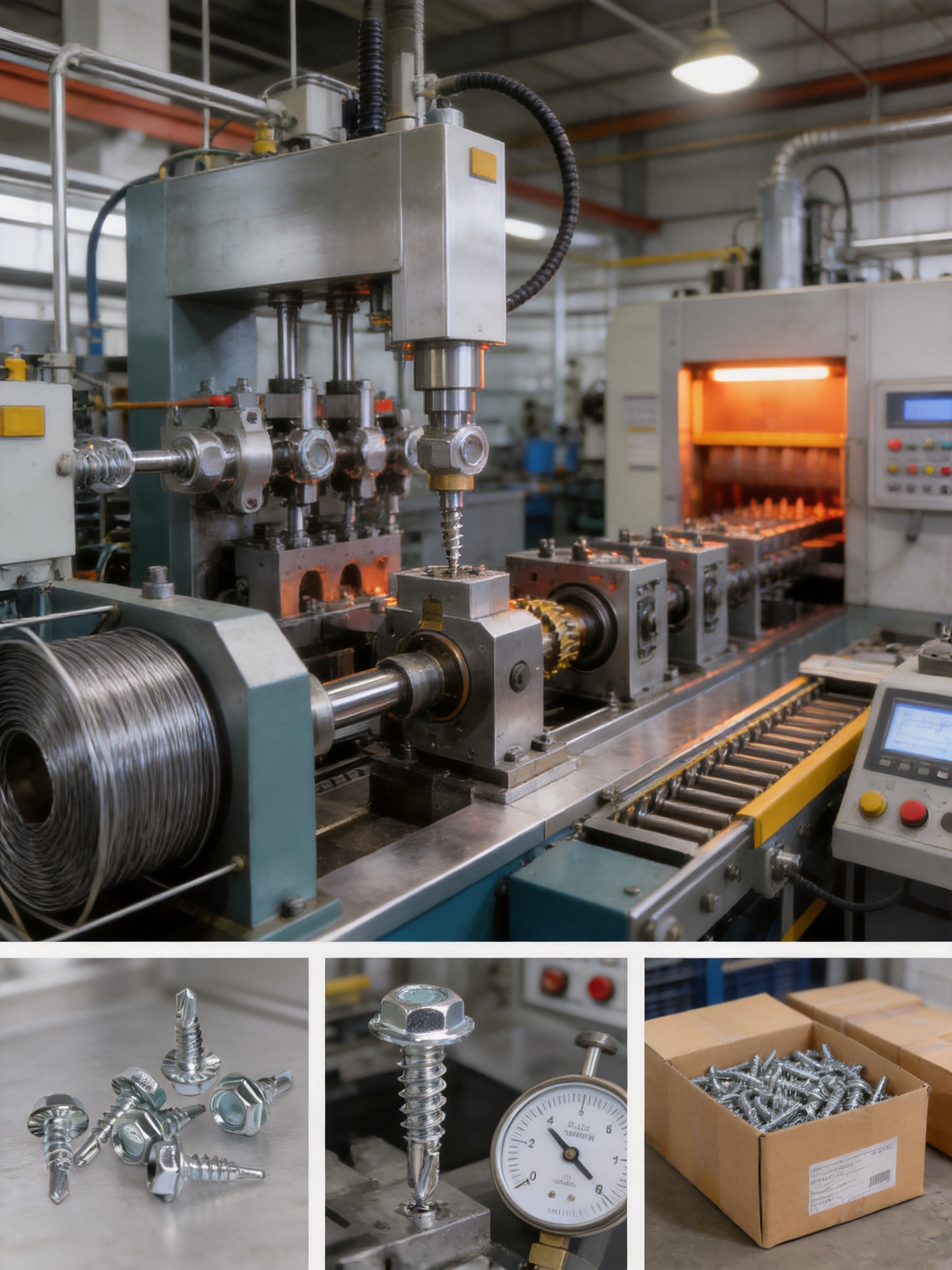
14. Sustainability and Production Efficiency
Fastener production can be made more resource-efficient through cold forming, efficient material utilization, optimized tooling, and controlled process parameters. Cold heading generally produces the head with less machining waste than manufacturing the component entirely through subtractive methods.
Thread rolling also supports efficient material use because the thread is formed by displacement. Longer die life, reduced scrap, stable production settings, and systematic inspection can further improve manufacturing efficiency.
Packaging optimization can reduce unnecessary material use while preserving protection during shipping. Bulk industrial packaging may be appropriate for high-volume customers, whereas retail packaging should balance product visibility, handling convenience, and material consumption.
Environmental responsibility also includes responsible chemical handling during cleaning, heat treatment, and plating. Controlled wastewater treatment, safe chemical storage, worker protection, and compliance with applicable environmental regulations are important parts of a modern surface-finishing operation.
15. Common Failure Causes
15.1 Point Fails to Drill
A point may fail to drill because the substrate is too thick or too hard, the driver speed is incorrect, the tool pressure is insufficient, or the point has been damaged. Selecting a screw with the correct drilling capacity is the first corrective action.
15.2 Head Strips or Deforms
Head damage may result from an incorrect socket, excessive torque, tool misalignment, or a product with inadequate mechanical properties. The installer should verify socket size and tool settings. The supplier should investigate repeated failures through dimensional and mechanical testing.
15.3 Screw Loosens in Service
Loosening can be caused by insufficient clamping force, substrate deformation, vibration, incorrect torque, or unsuitable joint design. The serrated underside helps resist rotation, but it cannot compensate for a poorly designed or improperly tightened joint.
15.4 Corrosion Appears Prematurely
Premature corrosion may be linked to inadequate coating selection, damaged plating, moisture retention, chemical exposure, galvanic interaction, or improper storage. The service environment should be reviewed, and coating performance should be confirmed before ordering.
15.5 Joint Pull-Out or Strip-Out
Pull-out or strip-out problems may occur when the screw diameter is too small, thread engagement is insufficient, the substrate is too thin, or the joint is overloaded. Increasing screw size is not always the correct solution; the number of fasteners, spacing, material thickness, and load direction must also be evaluated.
16. Q&A
Q1: What is the main purpose of the serrated underside?
The serrated underside increases mechanical contact between the washer flange and the fastening surface. Its teeth can help resist rotational loosening caused by vibration and movement. The effectiveness depends on the substrate, coating, clamping force, and installation quality.
Q2: Does this screw always eliminate the need for a pilot hole?
No. It can often drill its own hole in suitable sheet metal and other compatible materials, but the point capacity has limits. Thick, hardened, brittle, or unusually dense materials may still require a pilot hole or a different fastener design.
Q3: Why is the hex washer head useful?
The external hex drive provides positive engagement with a socket and supports efficient torque transfer. The integrated washer flange spreads the clamping load over a broader area and can eliminate the need for a separate washer in many applications.
Q4: What material is commonly used for this product?
The described product range uses C1022A carbon steel. This grade is widely used for screws because it supports cold forming, thread rolling, heat treatment, and reliable mechanical performance when processed under controlled conditions.
Q5: Is zinc plating suitable for outdoor use?
Zinc plating can provide basic protection in many moderate environments, but suitability depends on moisture, salt, chemicals, temperature, and exposure duration. Coastal, industrial, or highly humid applications may require a more durable coating system.
Q6: Which diameters are available?
The stated production range includes #6-3.5, #8-4.2, #10-4.8, #12-5.5, and #14-6.3. Exact dimensions, tolerances, and lengths should be confirmed with the supplier for the intended standard and application.
Q7: What thread options are available?
The production range includes BSD and CSD thread options. The best choice depends on the substrate, material thickness, installation conditions, and required holding performance.
Q8: Which standards may apply?
The listed standards include ASTM, DIN 7504K, DIN 7504P, and DIN 7504N. Buyers should identify the exact standard, dimensional series, point style, and performance requirements because related standards may differ in important details.
Q9: Can the screw be supplied with another head style?
The broader production range includes bugle head, flat head, pan head, wafer head, pan framing head, and hex washer head options. Availability depends on diameter, length, thread, finish, tooling, and order quantity.
Q10: How should the screw be installed?
Use a correctly sized hex socket and a suitable drill driver or impact driver. Keep the tool aligned with the surface, apply steady pressure, allow the point to cut, and tighten until the head is seated without over-compressing or deforming the material.
Q11: Can the screw be used for structural connections?
It may be suitable for certain light-gauge or engineered assemblies, but it should not automatically be treated as a structural bolt. Structural use requires verification of design loads, fastener performance, substrate properties, spacing, and applicable building or engineering requirements.
Q12: What information should be included in a purchase inquiry?
Provide the diameter, length, head and drive type, thread configuration, point style, material grade, finish, packaging, quantity, applicable standard, base material, material thickness, environmental conditions, and any required inspection documents.
17. Conclusion
The zinc-plated hex washer head with serrated self-drilling screw is a practical, efficient, and versatile fastening solution for many metal-to-metal and light construction applications. Its self-drilling point reduces installation steps, the external hex head supports reliable torque transfer, the integrated washer flange distributes clamping pressure, and the serrated underside improves resistance to rotational movement.
The product range can be adapted through different diameters, lengths, thread configurations, finishes, head styles, and standards. C1022A carbon steel provides a suitable foundation for cold heading, thread rolling, point formation, and heat treatment when manufacturing processes are carefully controlled.
Product reliability depends on the complete production chain. Consistent raw material, precision tooling, stable cold forming, accurate thread rolling, properly controlled heat treatment, uniform zinc plating, systematic inspection, and protective packaging all contribute to finished fastener performance.
For buyers, the best results come from selecting the screw according to the actual substrate, thickness, environment, installation method, and load requirement. Sample testing, clear specifications, and communication with an experienced manufacturer can help ensure that the selected fastener performs consistently from the first installation through the service life of the assembly.
References
ASTM International. Standard specifications and test methods applicable to carbon steel screws and mechanical fasteners.
Deutsches Institut für Normung. DIN 7504K, DIN 7504P, and DIN 7504N guidance for self-drilling screws.
Industrial Fasteners Institute. General principles of screw manufacturing, mechanical testing, and fastener quality control.
American Society for Testing and Materials. Guidance concerning metallic coatings, corrosion testing, and zinc-plated steel products.
International Organization for Standardization. General practices for fastener dimensions, mechanical properties, surface finishes, and quality management.
Engineering references on cold heading, thread rolling, heat treatment, drilling-point design, and torque-controlled installation of self-drilling screws.